The short answer
A Japanese garden is nature compressed rather than copied — mountains become stones, the sea becomes raked sand. The idea is called shukkei, and it was already written down in the Sakuteiki, an 11th-century gardening manual from the Heian court and one of the oldest garden books in the world.

How to Read a Japanese Garden
A Japanese garden is not a copy of nature — it is nature compressed, like a poem.
Mountains become stones. The sea becomes raked sand. This idea, called shukkei, was already written down in the Sakuteiki, an 11th-century gardening manual from the Heian court — one of the oldest garden books in the world.
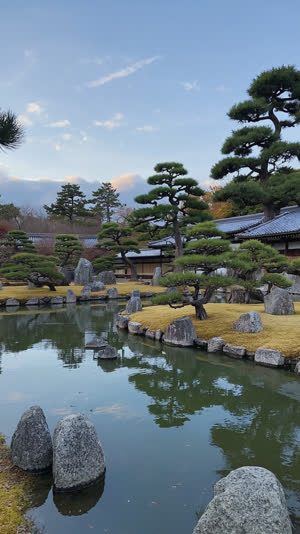
This garden is a sentence
This garden is a sentence.
Not a decorative claim. These gardens have subjects, grammar and reading order, and the rest of the series exists to teach you to see all three.
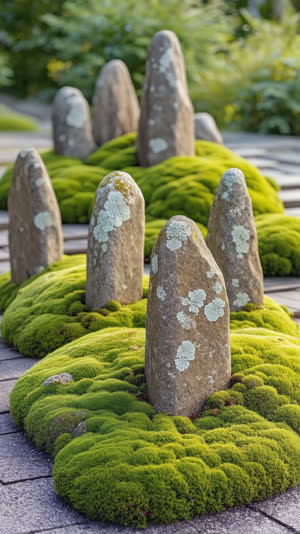
Mountains, shrunk into stones
Mountains, shrunk into stones.
Not a model of a mountain but a substitution for one. The stone is not carved to look like a peak; it is placed so the eye accepts it in the role, which is a different technique entirely.

The sea, raked into sand
The sea, raked into sand.
The rake lines stand in for the water's surface, and they have to be drawn again after rain or wind. A sea that must be restored by hand is a strange kind of permanence.

An island — one rock
An island, condensed into one rock.
The compression is extreme and deliberate. Once the sea is sand and the mountain is stone, an island has only one thing it can be, and the logic of the garden holds together.
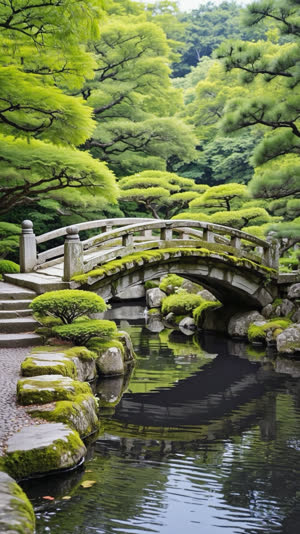
A thousand-year-old idea
This idea is a thousand years old.
Old enough that the technique predates most of what visitors think of as traditional Japan. It also means the vocabulary was fixed early and has been worked within ever since.
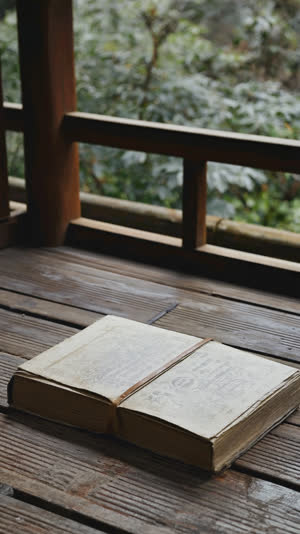
The Sakuteiki: an 11th-century manual
The Sakuteiki: an eleventh-century manual on making gardens.
A manual, not a philosophy — it deals with placement, water and stone. That practical register is why it can still be quoted as instruction rather than as scripture.
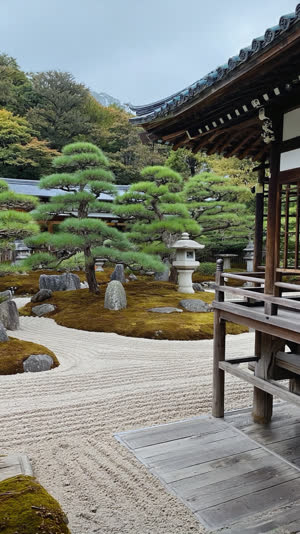
One of the world's oldest garden books
One of the oldest garden books on Earth.
The claim comes from Japanese landscape scholarship rather than from tourism material. What makes it significant is not the age but that the text is still specific enough to be usable.
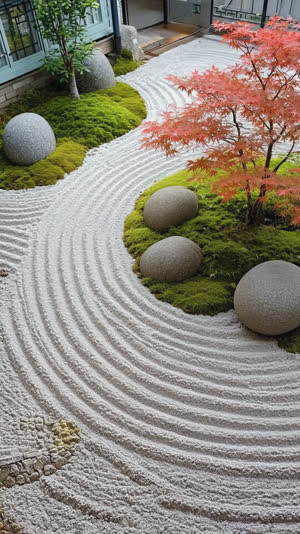
Copy the essence, not the size
Its lesson: copy the essence of nature, not the size.
Shukkei is the word for it: nature reduced symbolically rather than reproduced. Every technique in this series — the dry sea, the borrowed mountain, the half-buried stone — is a way of doing that.
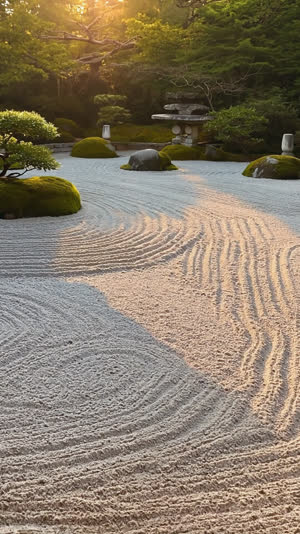
Not seen. Read.
A Japanese garden is not seen. It is read.
The series thesis, and a practical instruction: reading takes time and a position. The parts that follow are the vocabulary you need before the sentence makes sense.
The thread through Gardens
Japan does not impose a garden on nature. It compresses nature until you can read it.
Next: an ocean with no water.
Japanese terms in this story
Sources — primary only
Original Japanese source note
『作庭記』=平安時代・11世紀後半成立、橘俊綱編とされる世界最古級の庭園書(平等院公式コラム・日本造園学会誌)。縮景=山水を石・砂・木で象徴的に縮小する基本概念