The short answer
Ryoan-ji's rectangle of white raked sand holds exactly fifteen stones and nothing else — an ocean with no water. They say no single viewpoint reveals all fifteen at once, and the garden never explains itself: some read islands in a sea, others a tiger crossing a river with her cubs.
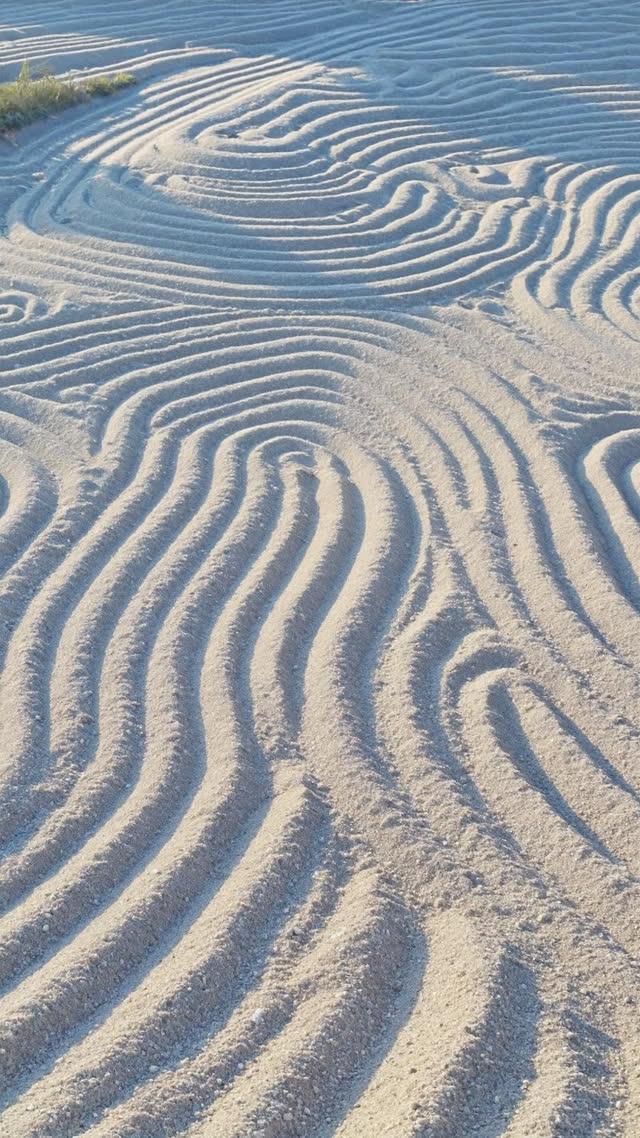
Ryoan-ji: Fifteen Stones
An ocean with no water. At Ryoan-ji in Kyoto, a rectangle of white raked sand holds exactly fifteen stones — and nothing else.
They say no single viewpoint reveals all fifteen at once. Visitors sit on the veranda, count, shift, and count again. Some read islands in a sea; others, a tiger crossing a river with her cubs. The garden never explains itself.
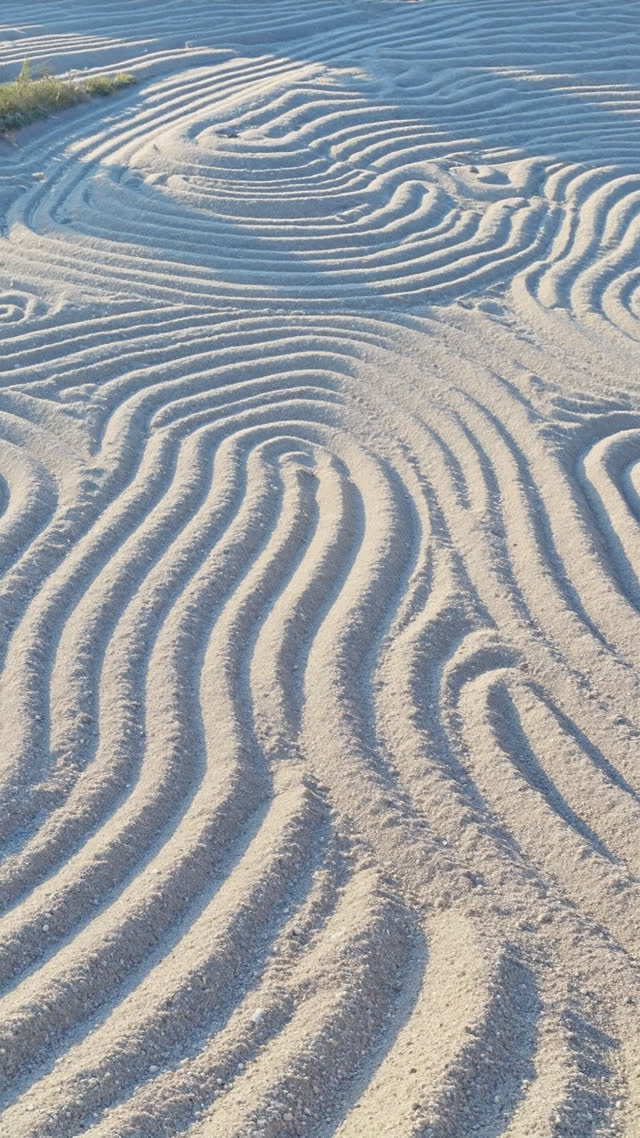
An ocean with no water
This ocean contains no water.
A garden with no water is the hardest version of the idea in the previous part. If the sea can be sand, then nothing in the vocabulary has to be literal.
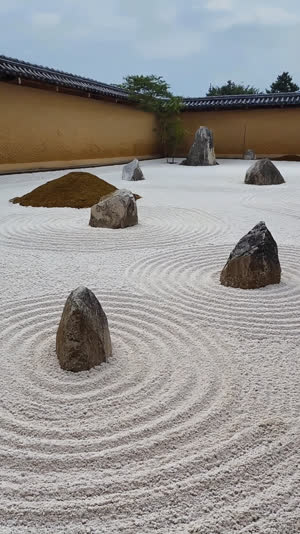
Karesansui: the dry landscape
Karesansui: the dry landscape garden.
Kare means dry and sansui means mountains and water, so the name states the contradiction out loud: a mountains-and-water garden with neither of them in it.
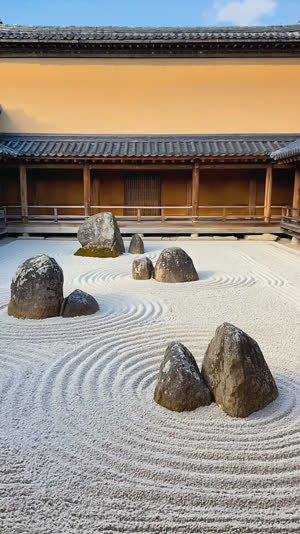
Ryoan-ji, Kyoto: a white rectangle
Ryoan-ji, Kyoto: a rectangle of white sand.
It is enclosed and it is small, and it is looked at from a veranda rather than entered. That framing is what makes it a composition rather than a place.
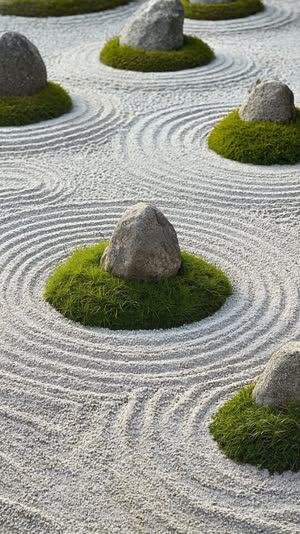
Fifteen stones. Nothing else.
Fifteen stones. Nothing else.
That is the confirmed figure, set in white gravel. What is absent matters as much: no plants, no water, no path, and so nothing to distract from the arrangement.
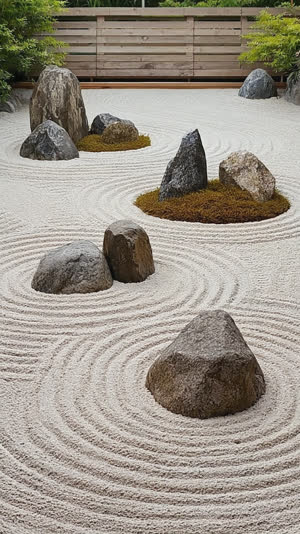
They say you can't see all 15 at once
They say no seat reveals all fifteen at once.
They say is doing real work in that sentence. It is the most repeated claim about the most famous garden in Japan, and we could not find it stated by the temple or the city — so it stays as hearsay.
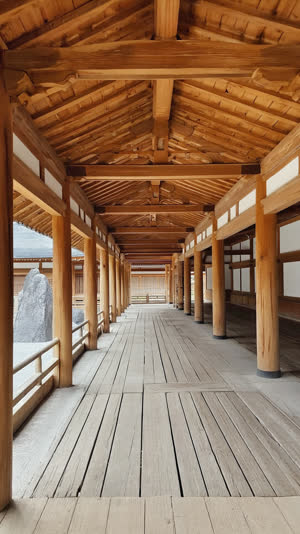
Sit. Count. Shift. Count again.
So visitors sit, count, shift — and count again.
The counting is the experience whether or not the claim is true. A garden that makes people move their heads and start again has already done something no photograph can.
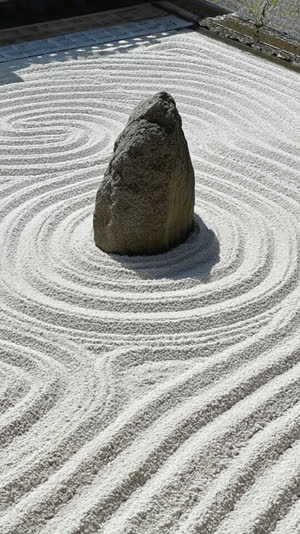
Islands? Or tigers crossing a river?
Some read islands. Others, tigers crossing a river.
Both readings circulate and neither is official. The garden's silence on the matter is why the interpretations multiplied instead of being settled.
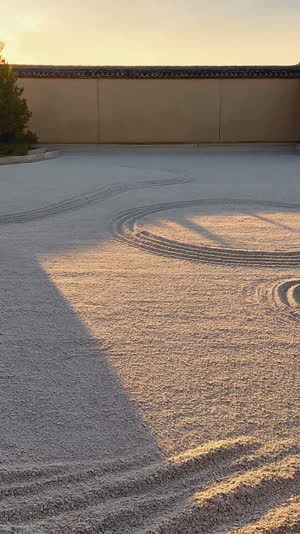
The garden never explains
The garden never explains itself.
No title and no stated intention have come down with it. That absence is what leaves the reading to whoever is sitting on the veranda.
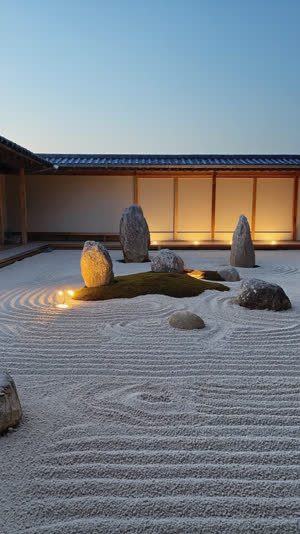
Not solved. Read, again and again
You don't solve it. You read it — again and again.
The series thesis, in its strictest test. If a garden is a sentence, this one has no agreed meaning — and it has held people's attention for centuries anyway.
The thread through Gardens
Japan does not impose a garden on nature. It compresses nature until you can read it.
Next: the garden that borrows mountains.
Sources — primary only
Original Japanese source note
龍安寺石庭=白砂に大小15石(京都市公式・京都観光Navi)。「どこから見ても全部は見えない」は公式記載が確認できず伝聞('They say')で表現。虎の子渡し等の解釈は諸説として提示