The short answer
Shakkei means framing a distant mountain so precisely that it becomes part of the garden. At Tenryu-ji in Kyoto the pond garden borrows the slopes of Arashiyama — laid out by the Zen monk Muso Soseki about 700 years ago and named Japan's first Special Place of Scenic Beauty; at Entsu-ji, clipped hedges frame Mount Hiei itself.
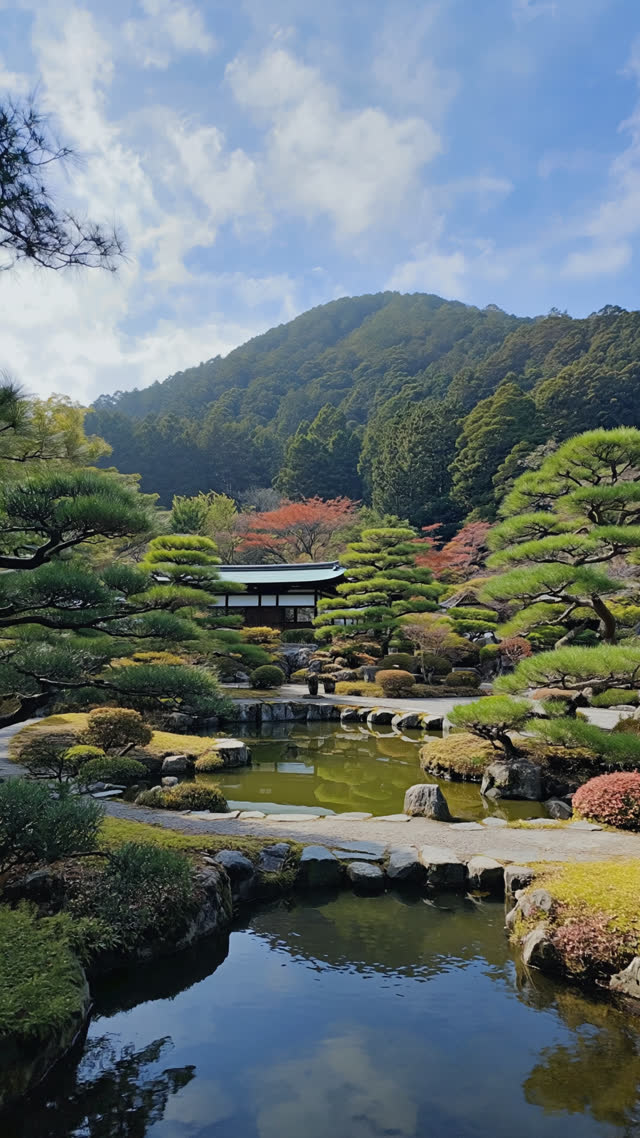
The Garden That Borrows Mountains
Shakkei means "borrowed scenery": a distant mountain, framed so precisely that it becomes part of the garden itself.
At Tenryu-ji in Kyoto, the pond garden borrows the slopes of Arashiyama — designed by the Zen monk Muso Soseki about 700 years ago, and named Japan's first Special Place of Scenic Beauty. At Entsu-ji, clipped hedges frame Mount Hiei itself.
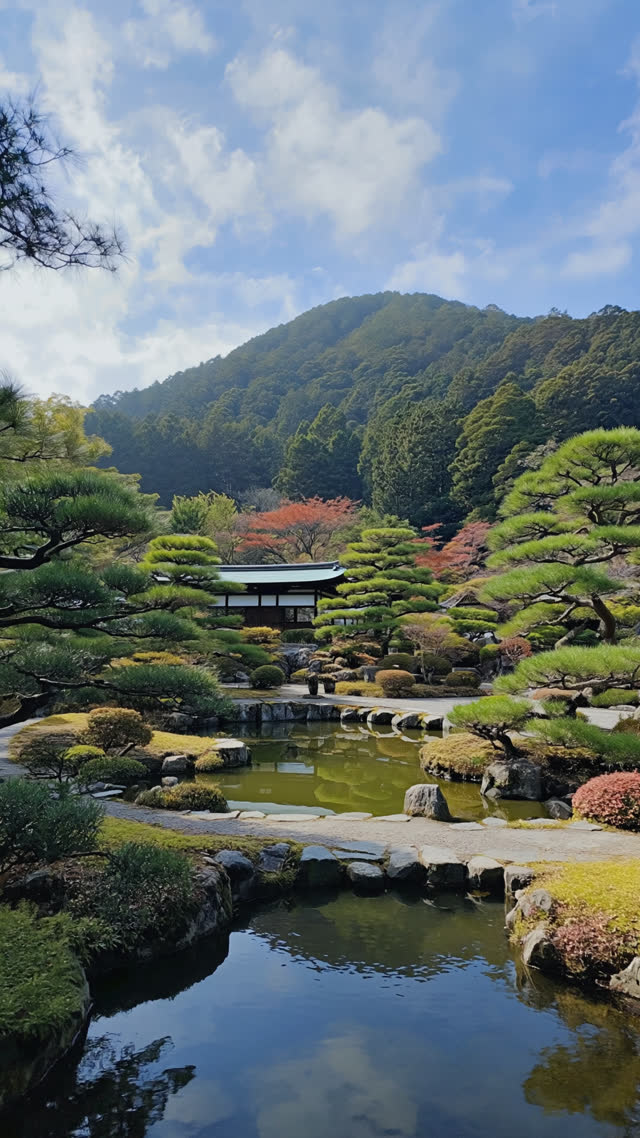
This mountain is part of the garden
This mountain is part of the garden.
Legally and physically it belongs to nobody here — it stands outside the property line. Only the framing brings it inside, and that framing is the entire technique.
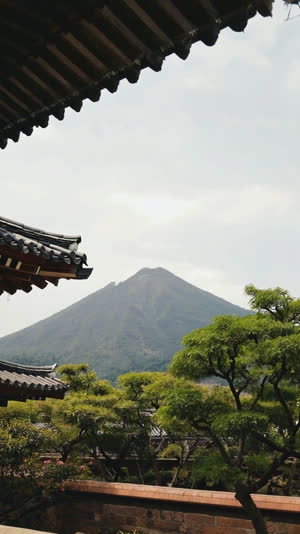
Shakkei: borrowed scenery
Shakkei: borrowed scenery.
Borrowed is the accurate word: the view is used without being owned, and it can be lost if something is built in the way. This is the one garden technique that depends on land the gardener does not control.
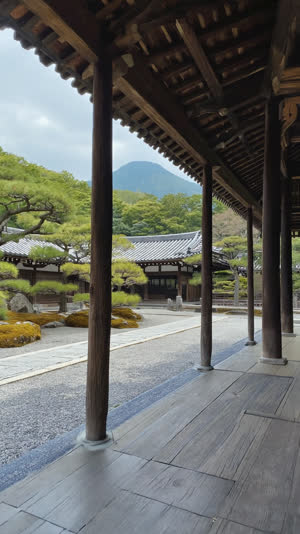
A peak, framed like a painting
The designer frames a distant peak like a painting.
Framing means everything in between is managed — hedge heights, tree lines, the gap left in the planting. The mountain is the subject and the garden is the frame around it.
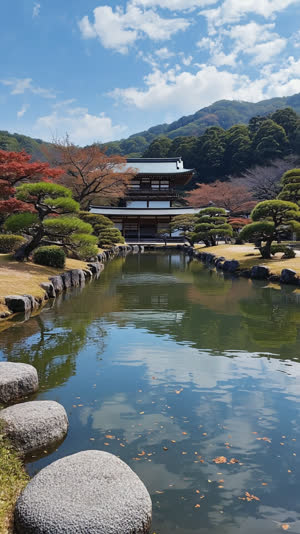
Tenryu-ji: the pond borrows Arashiyama
Tenryu-ji, Kyoto: its pond borrows Arashiyama.
Arashiyama is the wooded hill on the western edge of the city, and the pond sits below it. The water doubles the effect, since the borrowed slope arrives twice: once above, once reflected.
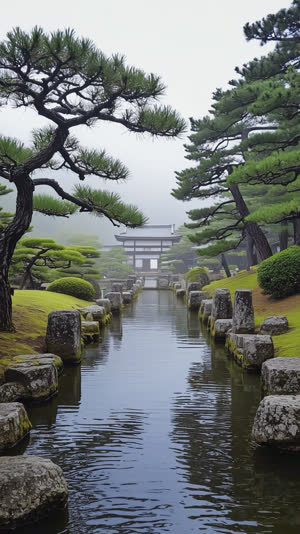
700 years old — Japan's first
Designed 700 years ago — Japan's first Special Place of Scenic Beauty.
First is the notable part. When Japan created the designation, this was the garden it went to, and the layout is attributed to the Zen monk Muso Soseki.
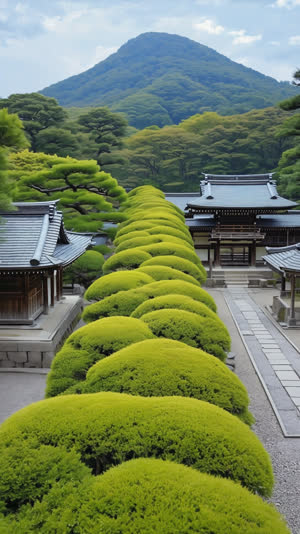
Entsu-ji: hedges frame Mount Hiei
At Entsu-ji, hedges frame Mount Hiei itself.
Hiei is the mountain on Kyoto's north-eastern side, and here the framing is done by clipped hedges rather than by water. The technique is about the frame, not about any particular garden element.
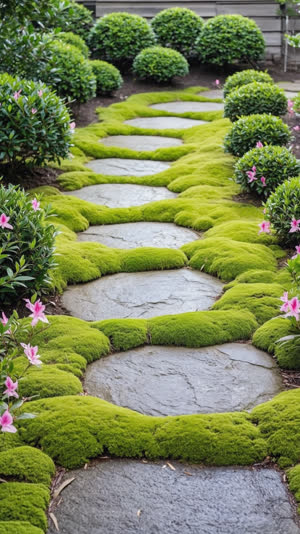
Nothing here is accidental
Nothing you see is accidental.
In a borrowed-scenery garden that includes what you cannot see. Everything between the veranda and the mountain has been kept low, kept planted or kept clear on purpose.
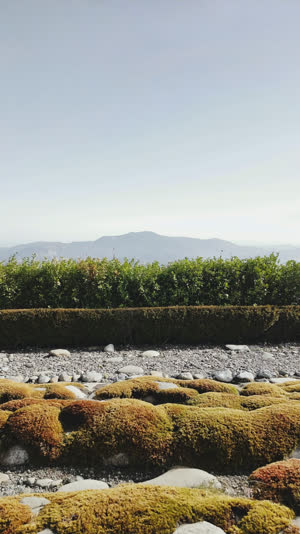
Even the horizon was composed
Even the horizon was composed.
This is where the series thesis stops being a metaphor. A garden that has arranged the skyline has extended its authorship past its own boundary.
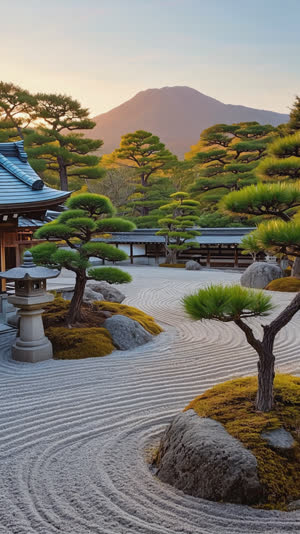
Read the frame. The mountain speaks.
Read the frame — and the mountain becomes a word in it.
The practical instruction is to look at the edges rather than the middle. Where the planting stops is where the designer told you to look, and the mountain is what the gap is for.
The thread through Gardens
Japan does not impose a garden on nature. It compresses nature until you can read it.
Next: a garden wearing 120 kinds of moss.
Japanese terms in this story
Sources — primary only
Original Japanese source note
天龍寺公式: 曹源池庭園は嵐山・亀山を取り込む借景式、わが国最初の史跡・特別名勝指定、夢窓国師作庭(約700年前)。円通寺庭園=比叡山借景の国指定名勝(文化庁・文化遺産オンライン)