Series · Craft · 2 of 8
Japanese temple carpentry: how wood holds without nails
Japan does not fasten wood. It joins it — and lets the building move.
A Japanese temple is assembled the way a puzzle is: pieces cut so precisely that they lock against each other. Fasteners appear here and there, but they are not what holds the building up.
The carpenters who do this work are called miyadaiku, and their skills are recognised formally. In December 2020 UNESCO inscribed the traditional techniques for conserving wooden architecture in Japan — a bundle of seventeen conservation techniques designated by the Agency for Cultural Affairs. What was listed was the knowledge, not any single building.
Across eight parts we follow that knowledge outward: the halls at Horyuji that have stood more than 1,300 years, the roughly two hundred documented joints and the twenty basic forms behind them, the plane shavings measured in microns, a temple construction firm in Osaka that dates its founding to 578, and a museum in Kobe holding over 35,000 tools.
It ends inside Tokyo Skytree, whose damping system is named after the central pillar of a pagoda. Not a technique reused, but an old idea rebuilt — which is the argument the whole series makes.
-
01
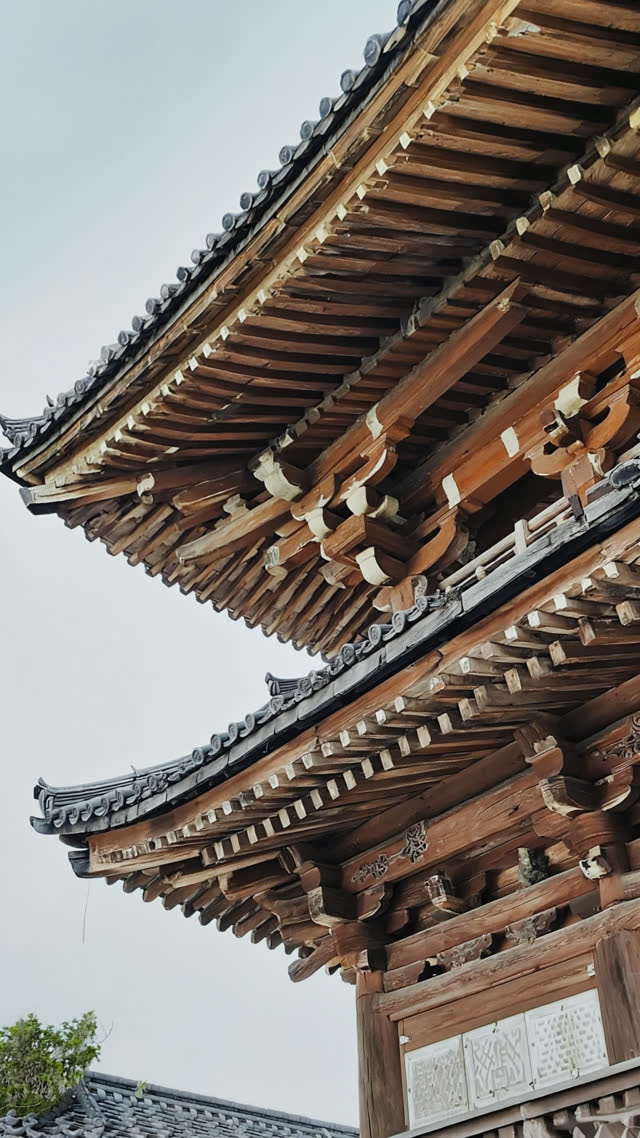
 How do Japanese temples stand without nails?
Wood That Holds Without Nails
Read →
-
02
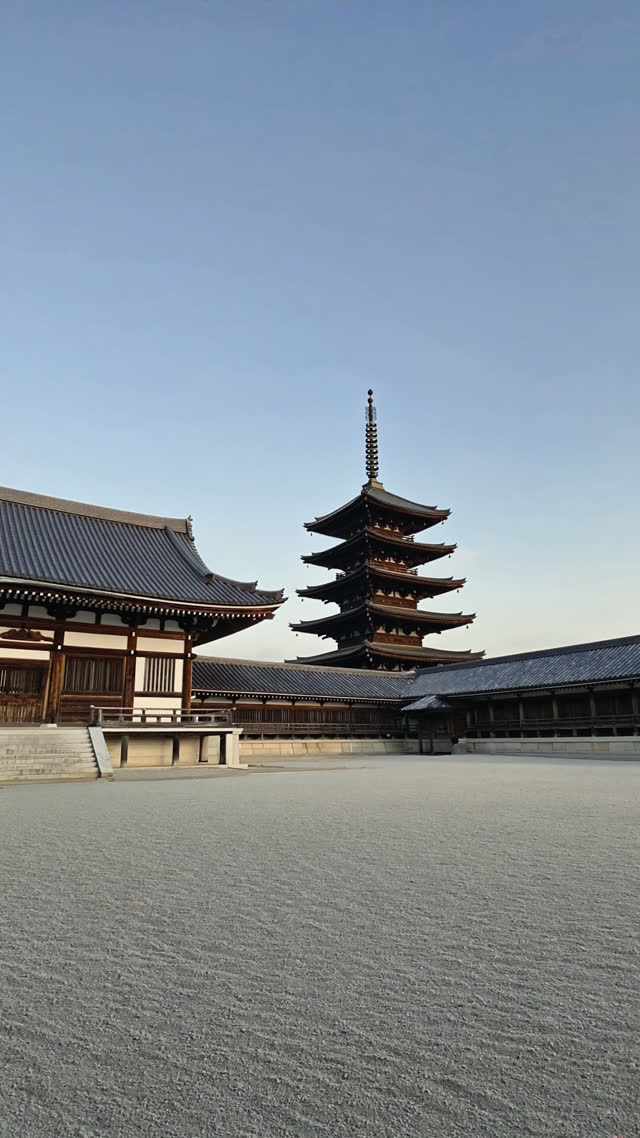
 What is the oldest wooden building in the world?
1,300 Years, Still Standing
Read →
- 08 Still in the forge 6 more parts releasing one by one
2 questions, each answered in one short and one article, and each traced to a primary source you can check yourself.
- How do Japanese temples stand without nails?
- Japanese temple carpenters join timber by cutting interlocking shapes into the wood itself, so the joint holds by geometry rather than by fasteners. Read →
- What is the oldest wooden building in the world?
- The West Precinct of Horyuji Temple in Nara is generally recognised as the oldest surviving group of wooden buildings on earth, standing for more than 1,300 years. Read →
Every part of this series ends somewhere you can actually stand. Here they are together.
- You can stand in front of this work in Nara and Kobe, and once you know what to look for you never see a wooden building the same way.How do Japanese temples stand without nails?
- Admission is around 1,500 to 2,000 yen and the site is about forty minutes from Nara by train and bus.What is the oldest wooden building in the world?
Japanese terms in this collection
Each term is defined on the glossary from the story that uses it.
Sources behind these stories