Why does a nukadoko pickle bed need a human hand?
Why do these pickles need a human hand?
The short answer
Nukadoko is a bed of salted rice bran fermented by lactic acid bacteria, yeasts and other microbes — it is alive, and it stays healthy only if someone stirs it two or three times a week, and daily in the summer heat. Bury a cucumber in it overnight and it comes out sour, salty and deeply savory.
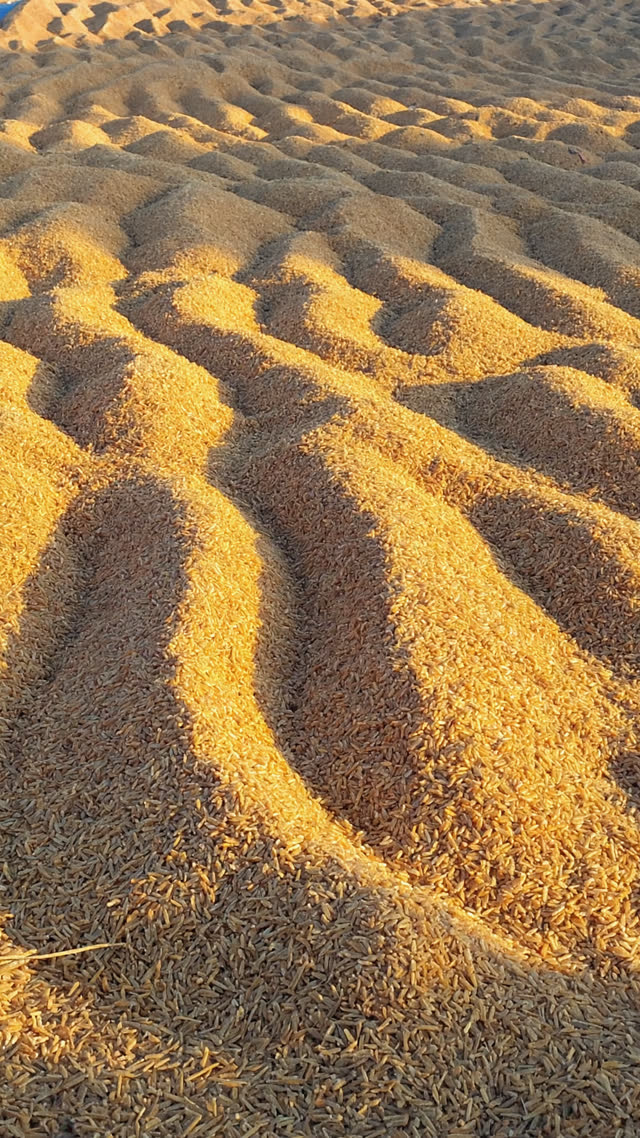
The Pickle Bed That's Alive
In some Japanese kitchens, a pot of rice bran is quietly alive.
Nukadoko is a bed of salted rice bran fermented by lactic acid bacteria, yeasts and other microbes. Bury a cucumber in it overnight and it comes out sour, salty and deeply savory. The bed only stays healthy if someone stirs it — two or three times a week, and daily in the summer heat.
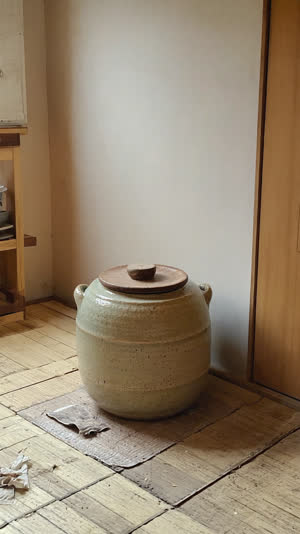
Something here is alive
Something in this pot is alive.
Not alive in the way yeast in a sealed packet is alive. This is a population that has to be fed, disturbed and kept at a temperature, and it can be killed by simple neglect.
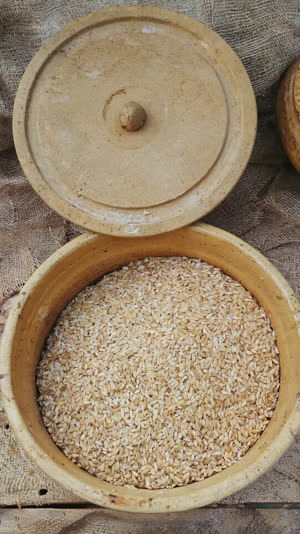
Bran, salt, water
Rice bran, salt, water. That's all it is.
Rice bran is the layer polished off white rice, so this ferment starts from a milling by-product. Nothing in the pot is expensive, which is part of why it belonged in ordinary kitchens rather than in breweries.
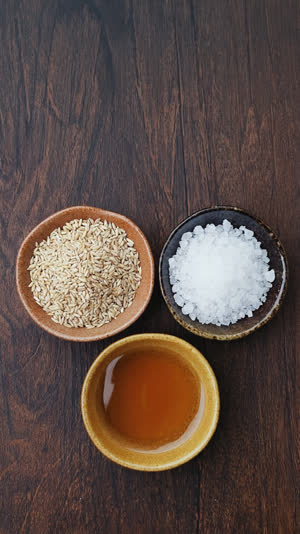
Overnight, a pickle
Bury a cucumber overnight; it comes out a pickle.
Nothing is boiled, canned or vinegared. The vegetable is changed by contact alone, and the same bed will do it again tomorrow with whatever is put in next.
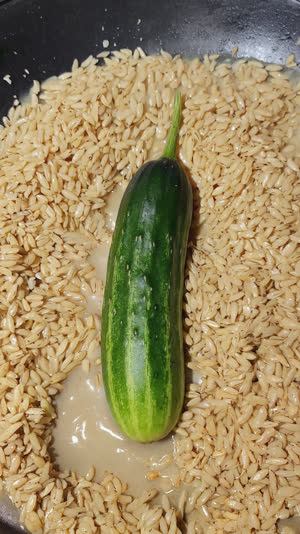
This is nukadoko
It's called nukadoko — a living bed of fermented bran.
Doko means bed, and the word is literal: the bran is a medium vegetables are laid into, not a liquid poured over them. The bed is the thing that is kept; the vegetables come and go.
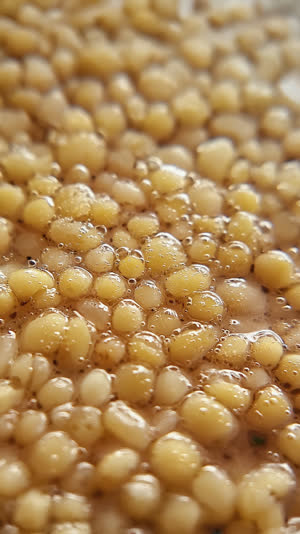
Bacteria and yeasts inside
Lactic acid bacteria and yeasts work inside it.
This is a mixed population rather than a single hired organism, which makes it the least controlled ferment in the series. Nobody chose these microbes; the salt and the bran selected for them.
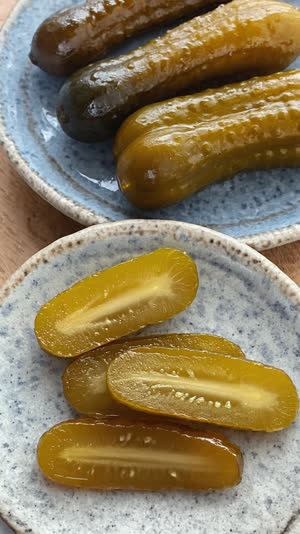
They sour and season
They sour the bran and season whatever you bury.
The souring is what keeps unwanted organisms out, so flavor and food safety are the same mechanism here. A bed that stops turning acid is a bed that stops protecting what is buried in it.
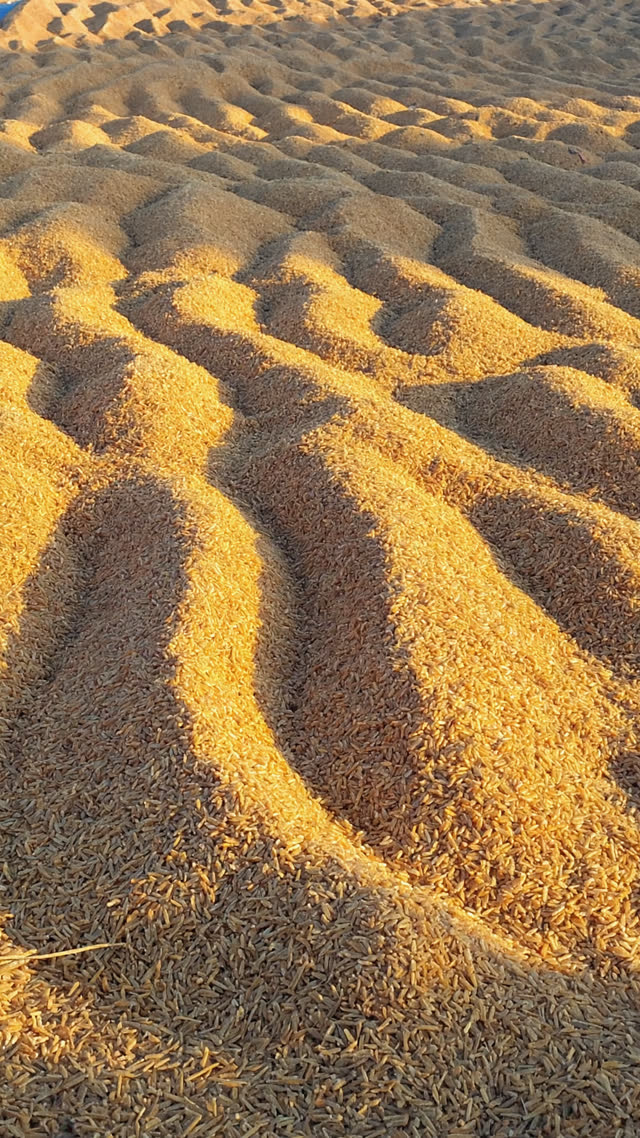
It needs a hand
But it only survives if someone puts a hand in.
Stirring moves the microbes and the air around, and doing it by hand is the traditional method rather than a flourish. It is also how the keeper notices the bed changing before it goes wrong.
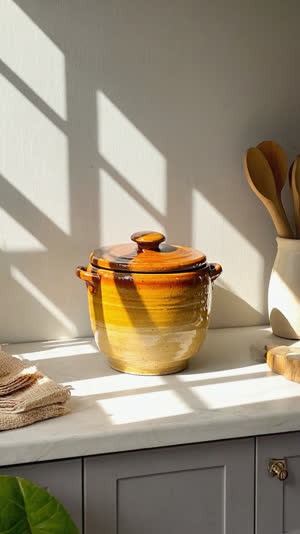
Daily in summer
Two or three times a week — in summer, every day.
Heat speeds everything up, including the parts you do not want. The summer schedule is not devotion; it is the rate at which a bed will spoil if left alone through a Japanese August.
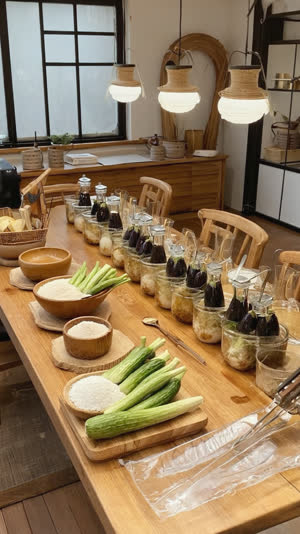
Make it at Mori, Kyoto
In Kyoto, Mori's Sanjo shop teaches it: 2,750 yen, 45 minutes.
Under an hour is enough to make a small bed and bury something in it. The point of the class is the hand feel — how wet the bran should be — which is the one part that does not survive being written down.
The thread through Fermentation
Japan never fought the mold. It hired it.
Now you know Japan's oldest partnership — the microbes alive inside its food. Taste it in Japan — miso, dashi, natto, pickles.
Japanese terms in this story
Sources — primary only
- Kyo-tsukemono Mori
Original Japanese source note
ぬか床は乳酸菌・酵母など複数の微生物による発酵で夏場は毎日ほか週2〜3回のかき混ぜが必要・体験:京つけもの もり本社三条店(京都市右京区)のぬか漬づくり教室2750円・約45分・要予約