The short answer
The noren tells you. The fabric curtain marked “yu” (hot water) hangs at the sento entrance: noren out means the bath is open, noren in means the day is done — no sign and no words, just cloth doing the talking.

One Curtain Says It All
At a Japanese bathhouse, you never have to ask whether it's open — the curtain already told you.
This short reads the noren, the fabric curtain marked "yu" (hot water) at the sento entrance. The custom is simple: noren out means the bath is open; noren in means the day is done. No sign, no words — just cloth doing the talking.
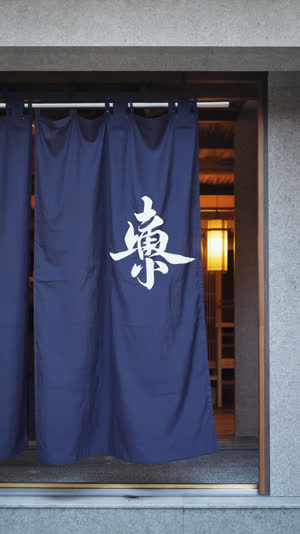
The curtain that speaks
This curtain tells you everything — without a single word.
Bathhouses generally have no opening hours posted and no lit sign. The information a visitor needs is carried entirely by whether a piece of cloth is hanging up.
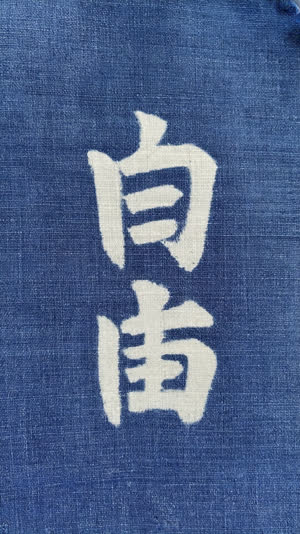
One character: 'yu'
At the entrance hangs a noren marked yu — hot water.
A noren is the split fabric curtain hung in a Japanese doorway, and yu is the single character for hot water. Together they identify the building without spelling out what it is.
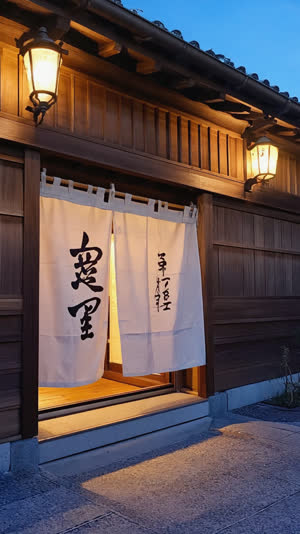
Noren out = open
When the noren is out, the bath is open.
This is the whole system. The signal is binary, visible from a distance, and it costs nothing to operate — you hang it, or you take it in.

Duck under and enter
Duck under the cloth, and the water is waiting inside.
Ducking is part of it: the curtain hangs low enough that entering means lowering your head slightly. That is true of every noren, not only a bathhouse one.

Noren in = closed
When the noren comes in, the day is done.
Taking it in is the closing procedure, and it usually happens before the lights. If you arrive and the doorway is bare, the answer has already been given.

A silent signboard
No sign, no lights — just cloth doing all the talking.
A cloth signal has one advantage a sign does not: it cannot be out of date. A posted schedule can be wrong, but a curtain is the current state of the business.

Readable from down the street
One glance from down the street says it's bath time.
This is why the curtain rather than the door does the work. A door tells you nothing until you are standing at it, while a noren is readable at the distance you would decide from.

A quiet signal
Simple, quiet, and unmistakably Japanese — communication by curtain.
We are describing the custom as it is practiced. The origin stories attached to it, and the regional differences in the cloth, are not things we could trace to a primary source, so they are left out.

Read the noren
Learn to read the noren, and the city opens up.
The same logic runs across Japanese shopfronts. Once you notice that the cloth is the status indicator, a whole category of closed-looking buildings turns out to have been telling you.
The thread through Sento
Japan built its neighborhoods in the bath.
Inside, two small rules protect the shared water. That's next.
Japanese terms in this story
Sources
We could not trace this one to a primary source. This story describes the custom as it is practised — the popular origin stories you may read elsewhere are not confirmed by any ministry, association or operator we could check, so we do not repeat them here.