The short answer
Because it was an advertisement. The yellow bucket debuted in 1963 as an ad for the painkiller Kerorin by Naigai Yakuhin, first placed at Tokyo Onsen, and proved so indestructible it was nicknamed the “eternal bucket” — over 2.5 million have been delivered across Japan.
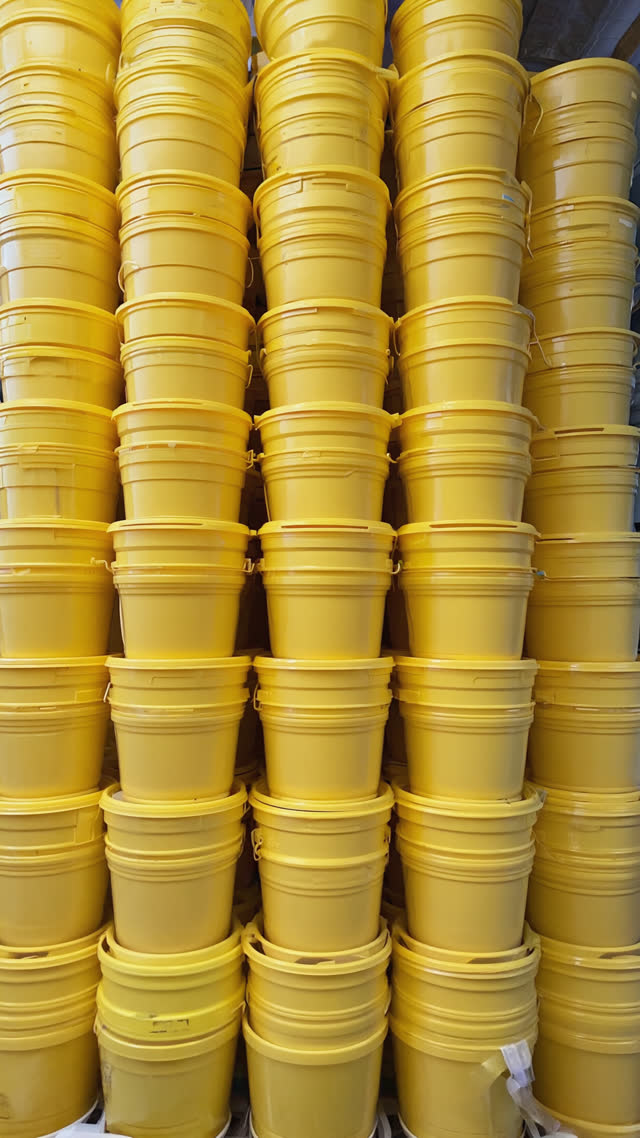
The Yellow Bucket Was an Ad
Japan's most beloved bath bucket was never designed to be an icon — it was designed to sell painkillers.
The yellow Kerorin bucket debuted in 1963 as an ad for the painkiller Kerorin by Naigai Yakuhin, first placed at Tokyo Onsen — and proved so indestructible it was nicknamed the "eternal bucket." Over 2.5 million have been delivered across Japan.
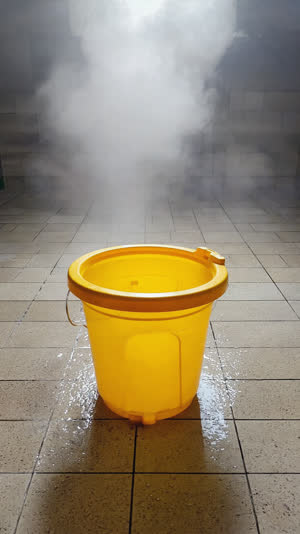
Japan's most famous bucket
Japan's most famous bucket was never meant to sell baths.
The bucket is a genuine icon — reproduced, recognized instantly, associated with the whole institution. None of that was the plan when it was made.
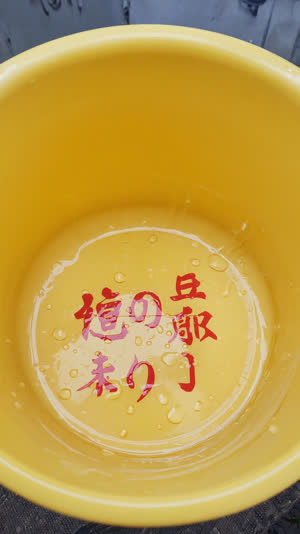
The Kerorin bucket
The yellow Kerorin bucket — a fixture of every sento.
The color is what makes it recognizable at a glance, and it belongs to the advertisement rather than to the bath.
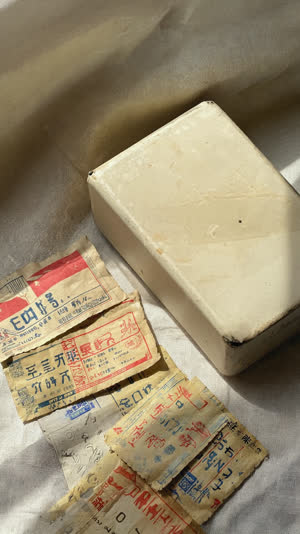
It's a painkiller brand
Kerorin is actually a painkiller, made by Naigai Yakuhin.
This is the fact that reframes the whole object. The word stamped on a bathhouse bucket is a medicine brand, and it has been read by bathers for decades without being noticed as advertising.
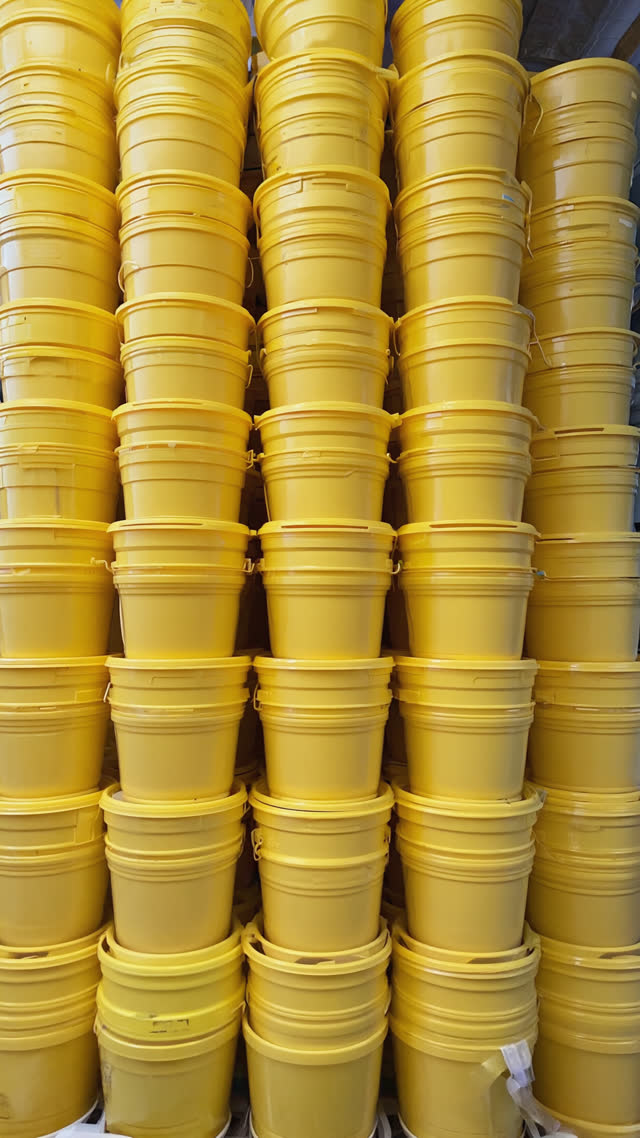
Born as an ad in 1963
In nineteen sixty-three, the company put ads on bath buckets.
Advertising inside a bathhouse makes sense as media buying: a captive audience, a long dwell time, and an object every customer picks up and looks into.
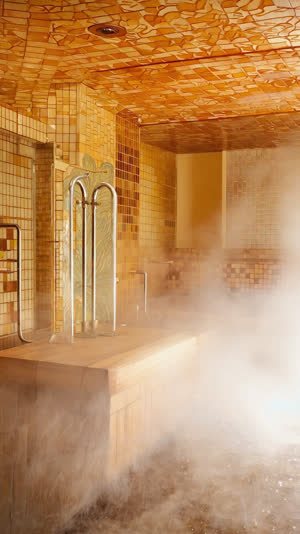
First placed at Tokyo Onsen
The first ones appeared at a facility called Tokyo Onsen.
A single venue was the trial. What makes the story unusual is that the trial format spread nationally and then outlasted the campaign it was made for.
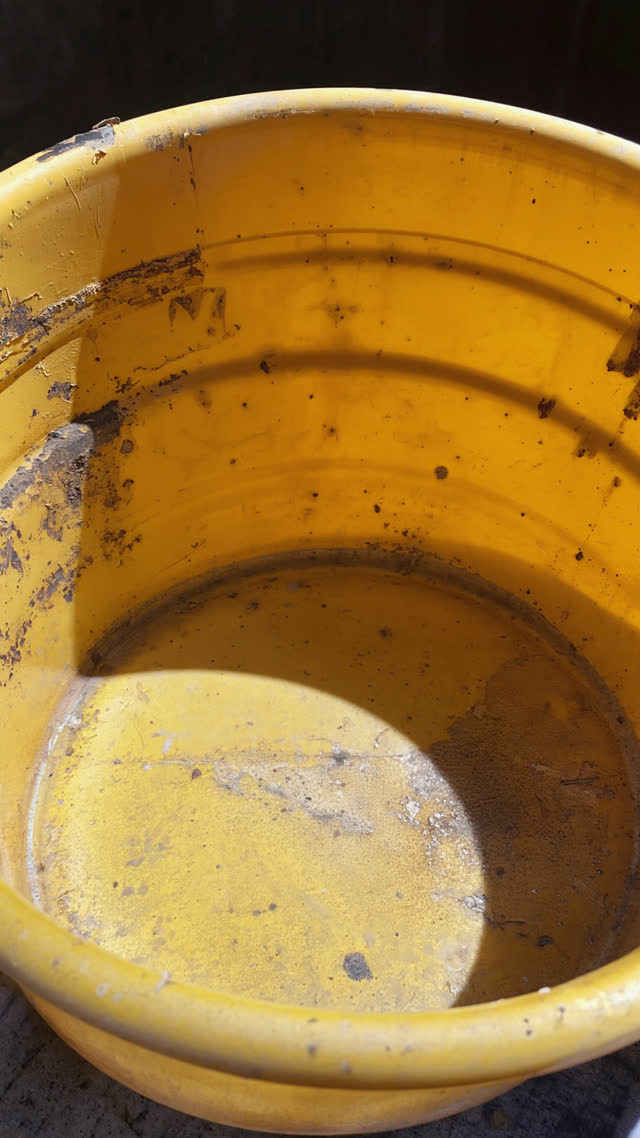
The 'eternal bucket'
The buckets proved so tough, people called them eternal buckets.
Durability is what turned a promotion into a fixture. A bucket that does not break is never replaced, so the advertisement stayed in service long after anyone was buying the space.
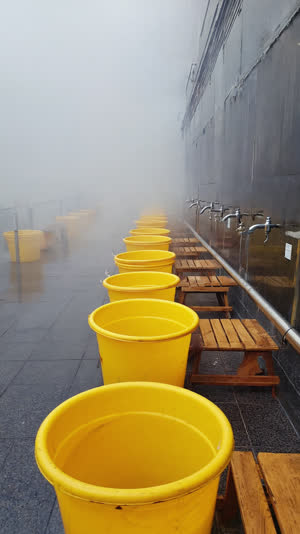
2.5 million delivered
Over two point five million have been delivered across Japan.
That figure is a distribution number for an advertising medium, which is how it should be read. It also explains the recognition: at that volume, almost every bather in the country has held one.
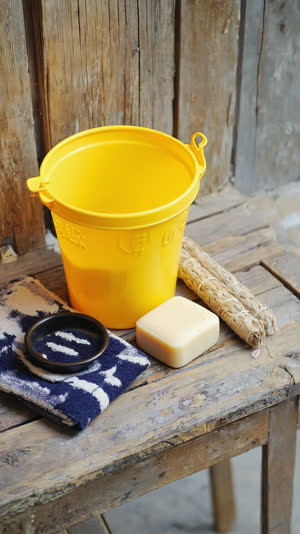
An ad became culture
The advertisement outlived its era — and became the icon itself.
The object detached from its message. It now reads as a symbol of the bathhouse rather than of the medicine, which is an unusual fate for a piece of advertising.
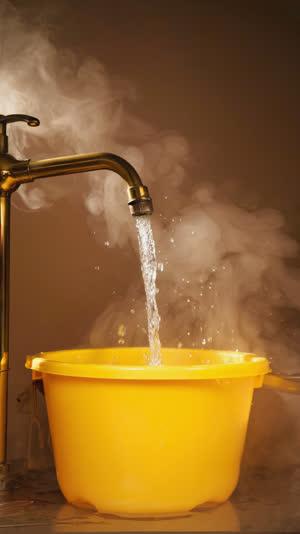
History in your hands
Grab the yellow bucket, and you're holding bathhouse history.
It is also just a good bucket — the right size to scoop and pour for kakeyu, which is the first thing you will do in the room. The history is free.
The thread through Sento
Japan built its neighborhoods in the bath.
Next: the curtain at the door that speaks without words.
Japanese terms in this story
Sources — primary only
Original Japanese source note
ケロリン公式で1963年に内外薬品の広告として東京温泉から設置開始・丈夫さから「永久桶」と呼ばれ延べ250万個納入(ケロリン公式・富山めぐみ製薬)