The short answer
Seven. The Bizen Osafune Japanese Sword Museum lists the trades a finished blade passes through: the smith, the polisher, the habaki maker, the metal fitter, the scabbard carver, the lacquerer and the hilt wrapper. Each is a lifetime's work, and no one person masters them all.
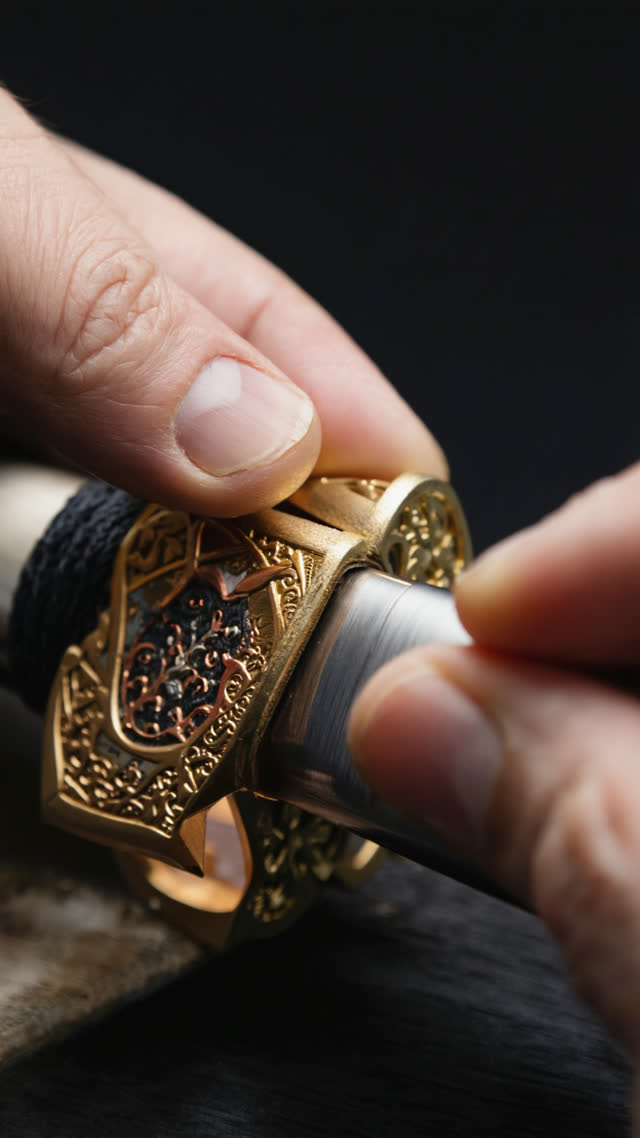
One Katana, Seven Masters
A swordsmith forges the blade — and then hands it away.
According to the Bizen Osafune Japanese Sword Museum, a finished katana passes through seven specialist crafts: the smith, the polisher, the habaki maker, the metal fitter, the scabbard carver, the lacquerer, and the hilt wrapper. Each is a lifetime's work. No one masters them all.
One katana, seven masters
A swordsmith cannot finish a katana.
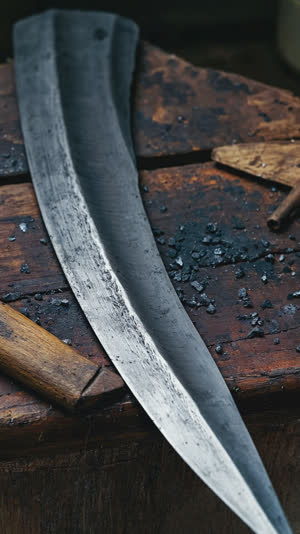
The museum's own account of how a sword is made lists seven separate trades. The smith is the first of the seven, not the whole of it.
He forges it — then hands it away
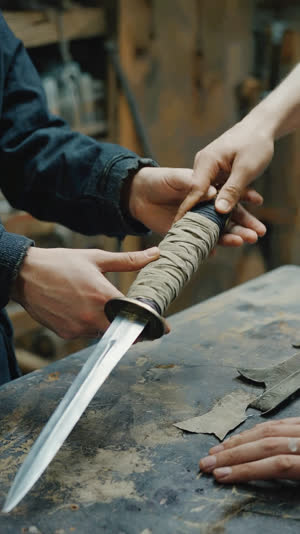
He forges the blade. Then he hands it away.
Handing it away is structural rather than modest. Each of the remaining trades has its own tools, its own materials and its own workshop, so the object physically travels.
The polisher: two weeks per blade
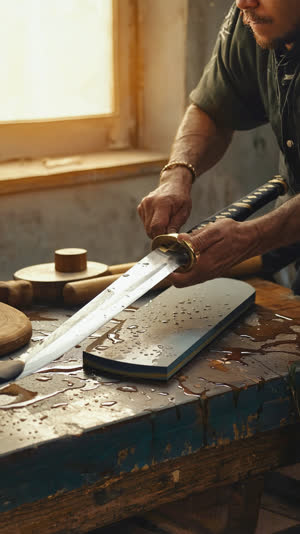
The polisher spends two weeks revealing the steel.
This is the trade an earlier part of the series covered on its own. That much time per blade, after the forging is finished, is the single largest block of work in the sequence.
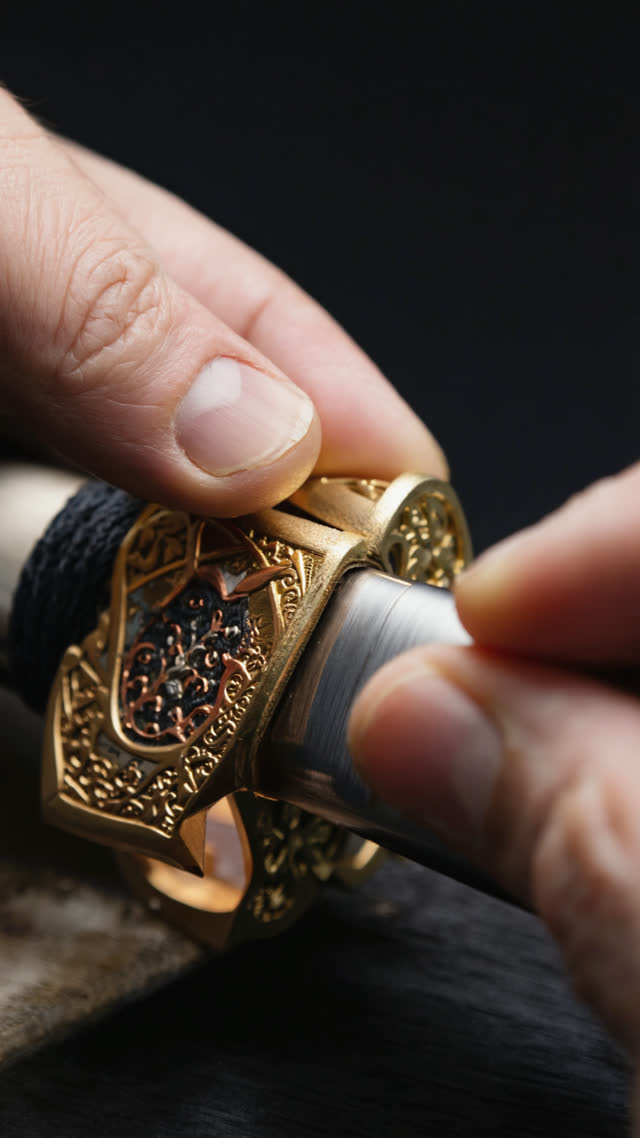
The habaki maker: one copper collar
The habaki maker builds one small collar of copper.
The habaki is the small collar at the base of the blade, and it is an entire trade for one component. That is the shape of this whole sequence: one part, one specialist.
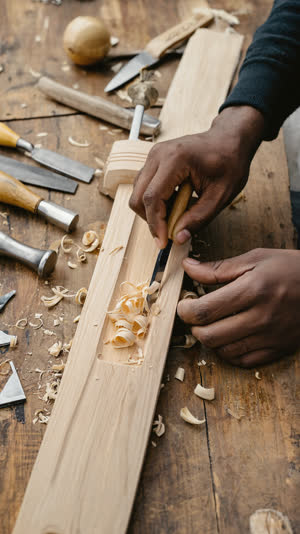
The scabbard carver: fit by feel alone
The scabbard carver fits magnolia wood by feel alone.
Magnolia is the wood, and the cavity is cut to one blade. By feel alone is the operative phrase, because the fit has to be judged where it cannot be looked at.
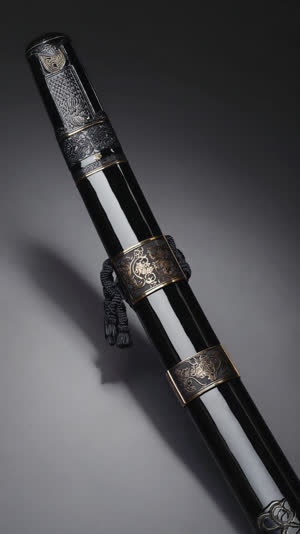
The lacquerer. The metal fitter.
A lacquerer seals it. A metalworker dresses it.
Two more trades, and neither of them touches the blade. By this point the specialists are working on the mounting, which is a separate object with its own crafts.
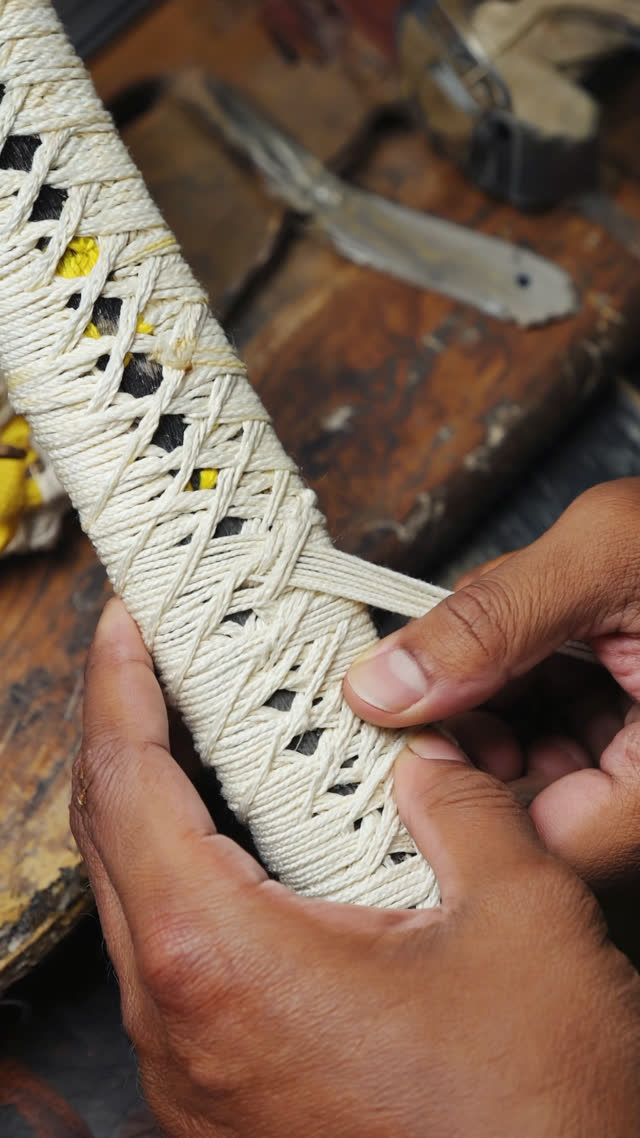
The hilt wrapper: silk into diamonds
The hilt wrapper crosses silk cord into diamonds.
The wrapping is the last thing done and the first thing a hand touches. Silk over the same blade the smith started, six trades later.
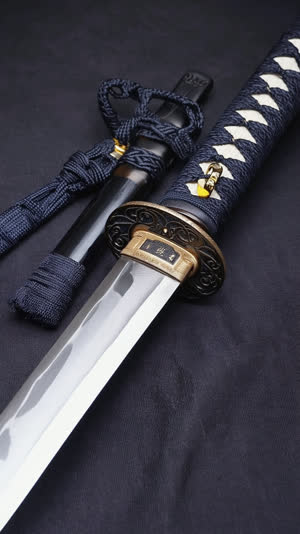
Seven crafts — no one masters all
Seven crafts. Seven lifetimes. No one masters them all.
The museum lists them as a division of labor rather than as a hierarchy. No trade here is a subordinate step; each is a career, which is why the sword is a collaboration and not a signature.
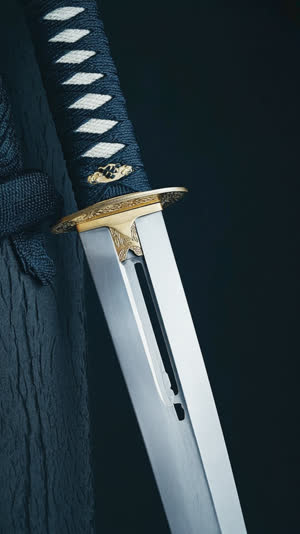
It survives in seven pairs of hands
The katana survives — not in one pair of hands, but in seven.
The series thesis, in its final form. What Japan preserved was never one skill but an interlocking set of them, and a set survives only if every trade inside it does.
The thread through Katana
Japan stopped needing swords. It never stopped perfecting them.
Watch them work at the Bizen Osafune Token Village in Okayama. In Tokyo? The Sword Museum in Ryogoku holds National Treasures.
Japanese terms in this story
Sources — primary only
- City of Setouchi
- NBTHK — Society for Preservation of Japanese Art Swords
- Bizen Osafune Japanese Sword Museum
Original Japanese source note
瀬戸内市公式(備前長船刀剣博物館)「日本刀が出来るまで」: 刀鍛冶・研師・白銀師・装剣金工師・鞘師・塗師・柄巻師の7職種の分業を明記/刀剣の里: 入館一般500円・古式鍛錬毎月第2日曜・常駐職方の作業公開/日本美術刀剣保存協会: 刀剣博物館(両国)一般1,000円・国宝「太刀 銘 延吉」等所蔵 ※「刀匠は最後まで仕上げない」の文言自体は一次ソースになく、7職種の列挙事実で語る