Why do people in Japan queue without being told?
Why does Japan queue without being told?
The short answer
Because the line is official infrastructure, not improvisation: organized boarding, seiretsu-josha, is a defined term in the Japan Private Railway Association's glossary, and JR East's FAQ asks riders to form two lines at marked positions. In June 2011 Highlighting Japan recorded foreign journalists' awe at queues that held after the earthquake.
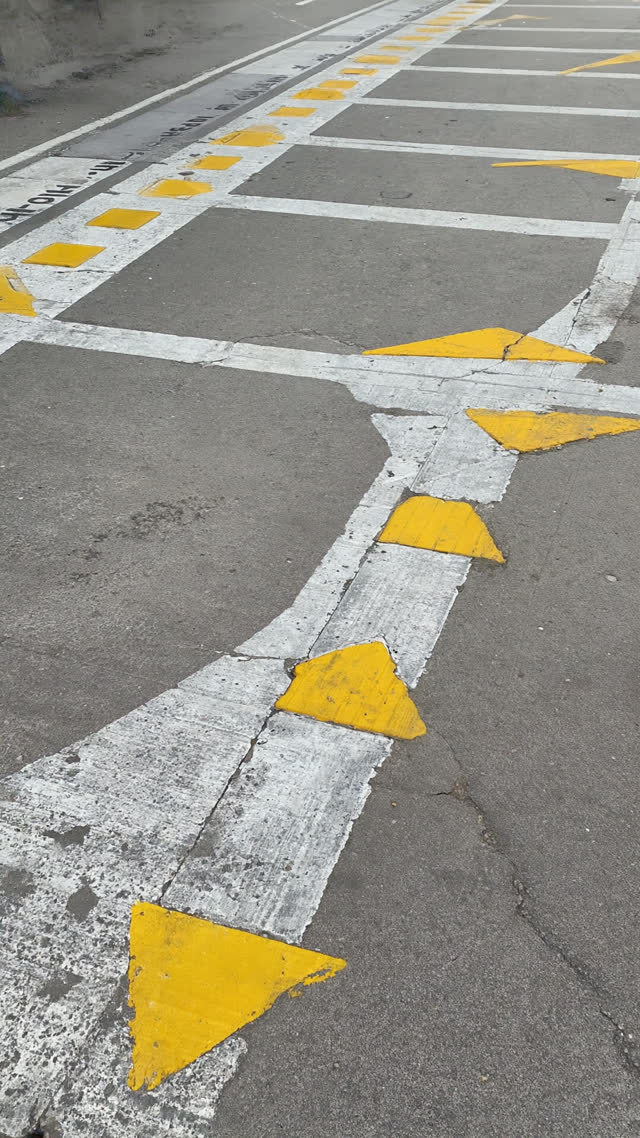
Why Japan Trusts the Line
No guards, no shouting — just painted lines and people who trust them.
Organized boarding, seiretsu-josha, is an official term in the Japan Private Railway Association's glossary, and JR East's FAQ asks riders to form two lines at marked positions. In June 2011, Highlighting Japan recorded foreign journalists' awe at queues that held after the earthquake.
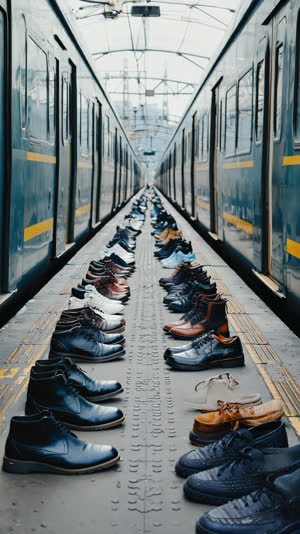
Nobody told them
Nobody told them to line up.
No announcement precedes the line and no staff member shapes it. The queue assembles from the markings and from whoever arrived first, and then it holds.
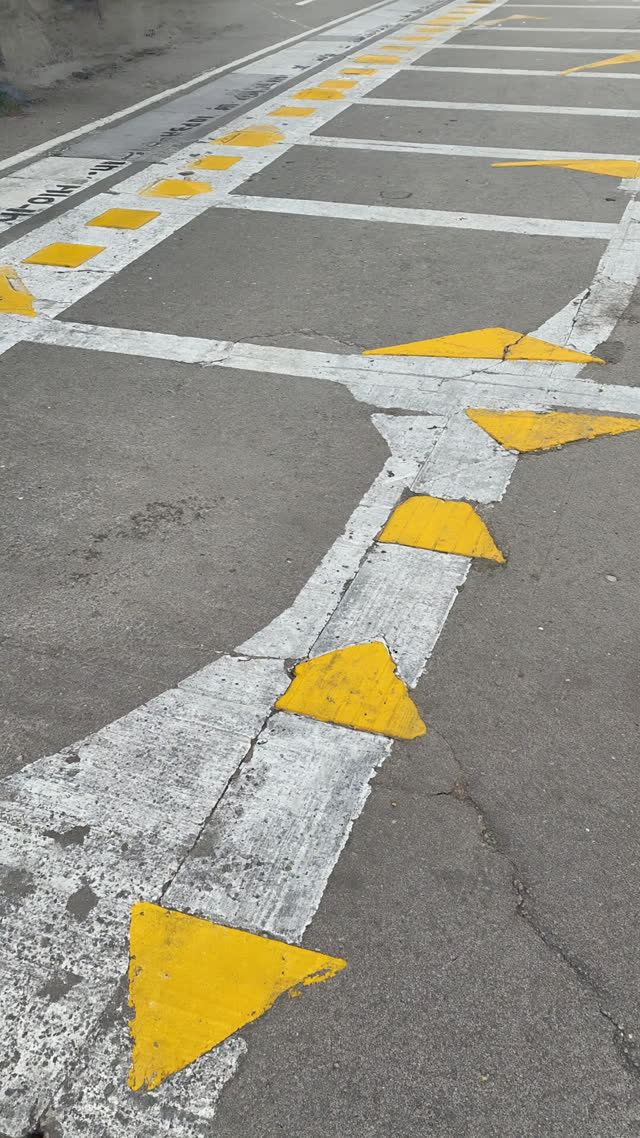
Painted marks, two lines
Painted marks on the platform. Two lines. Quiet order.
The markings are the whole apparatus. They tell you where the doors will be and how many lines to make, and they do it before the train is in sight.
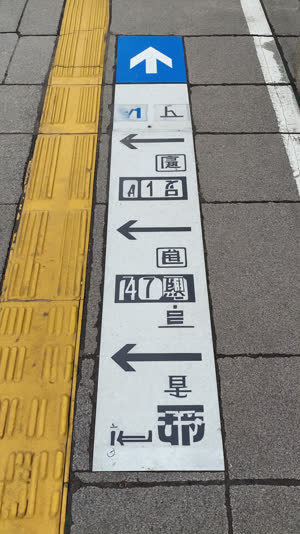
Seiretsu-josha: organized boarding
It has an official name: seiretsu-josha — organized boarding.
Having a name is what separates this from a habit. A named practice can be specified, taught and referred to, which is what allows every station to do it the same way.
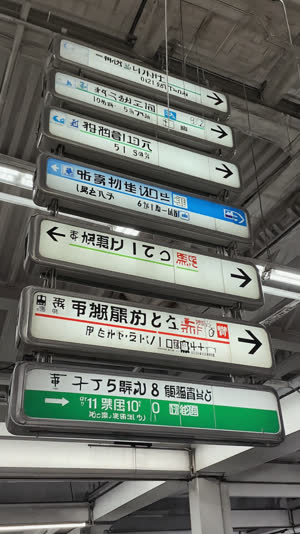
An official railway term
It appears in the private railway association's official glossary.
A glossary entry means the industry treats this as terminology rather than as courtesy. The Japan Private Railway Association is defining an operational practice, not describing good behavior.
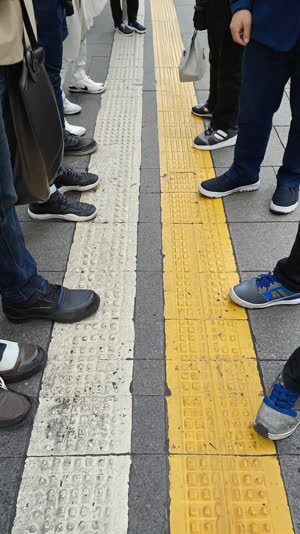
Two lines at the marks
JR East's FAQ: wait in two lines at the marked spots.
Two lines, not one, and at the marks rather than near them. The specificity is what makes the arrangement work at volume: everyone is solving the same problem the same way.
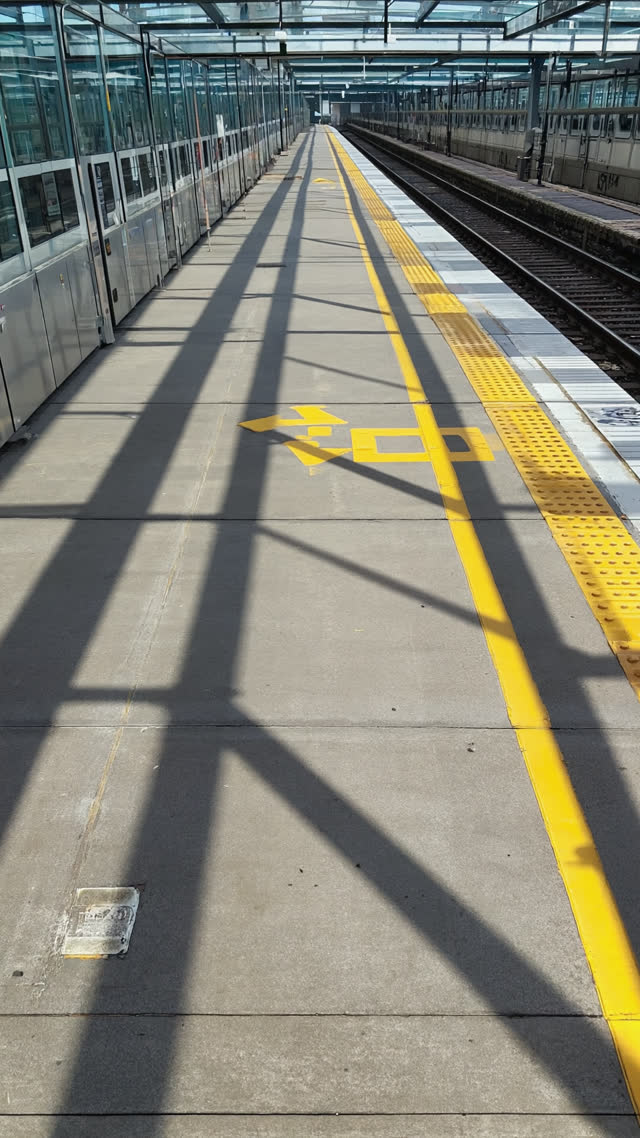
Held by trust alone
No one enforces it. The line holds on trust alone.
This is the load-bearing observation of the series. The markings coordinate but do not compel, so what actually holds the line is each person's expectation that the others will hold it too.
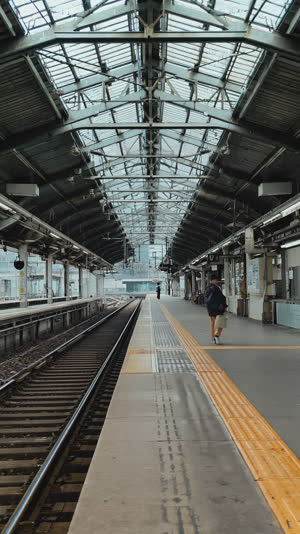
Manners: strangers sharing space
That was this series all along: manners are strangers sharing space.
Nine parts, one mechanism. A tip refused, a phone silenced, a bin absent, a shoe removed, a tray offered — each is the same agreement expressed in the vocabulary of a different situation.
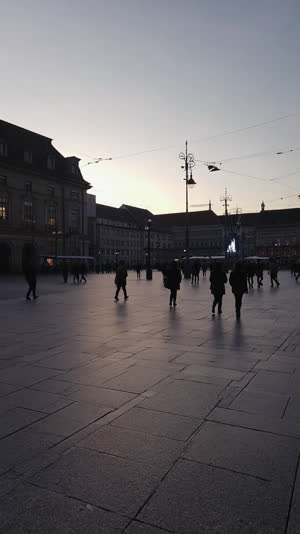
2011: the lines quietly held
After the 2011 earthquake, foreign reporters wrote of lines that quietly held.
Disruption is the real test of an unenforced arrangement, because that is when the incentive to break it is highest. What the reporting recorded was lines continuing when nothing was compelling them to.
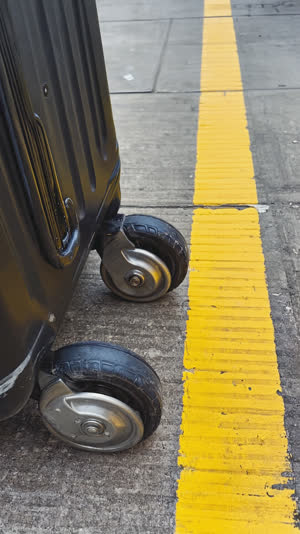
Find the lines on day one
Day one: look down on the platform — the painted lines wait.
Looking down is the instruction. Everything you need in order to take part is already on the floor, and joining is the fastest way to feel why nine parts were needed to explain it.
The thread through Manners
Japan's rules are not enforced. They are agreed.
Nine manners, one idea: know the why, and rules become rituals. Come practice them in Japan. The line makes room for you.
Japanese terms in this story
Sources — primary only
- Japan Private Railway Association
- JR East
- Highlighting Japan
Original Japanese source note
日本民営鉄道協会の鉄道用語事典に「整列乗車」の項・JR東日本公式FAQも乗車位置での2列整列を案内・政府広報誌が震災後の整然とした行列への海外記者の驚嘆を掲載(日本民営鉄道協会・JR東日本・Highlighting Japan 2011年6月)