The short answer
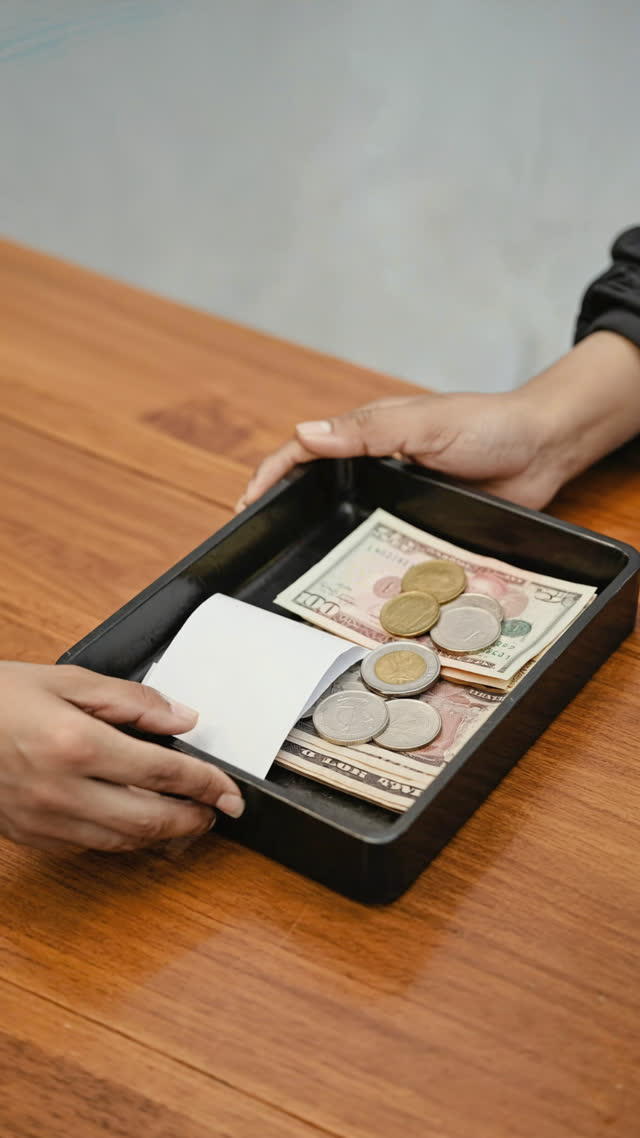
The small counter tray is called a karuton, a word taken from the French “carton” and already listed in a Japanese dictionary in 1918. It keeps every coin visible and turns payment into one clean, calm exchange between strangers.
Why Cash Goes on a Tray
In Japan, the clerk may not take cash from your hand — and it isn't rudeness.
Money is placed on a small counter tray called a karuton. The word came from the French 'carton' and was already listed in a Japanese dictionary in 1918. The tray keeps every coin visible and turns payment into one clean, calm exchange between strangers.
They wouldn't take it
They wouldn't take my money.
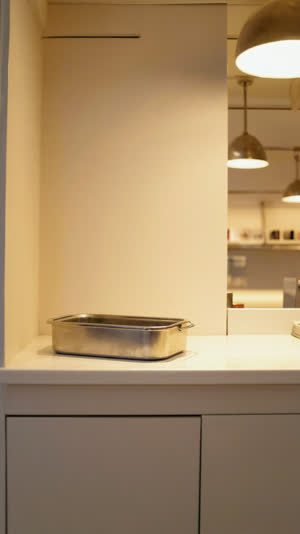
The hand stays out and the money is not taken from it. To a visitor this reads as a refusal, and the tray sitting on the counter is not yet legible as the alternative.
Cash goes on the tray
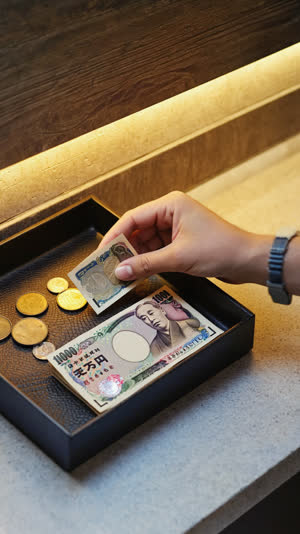
In Japan, cash goes on a small counter tray.
It is on almost every counter in the country, in shops, clinics and taxis. Once you know to look for it, the whole transaction has an obvious place to happen.
Not coldness — the custom
Not coldness — the tray is how money changes hands here.
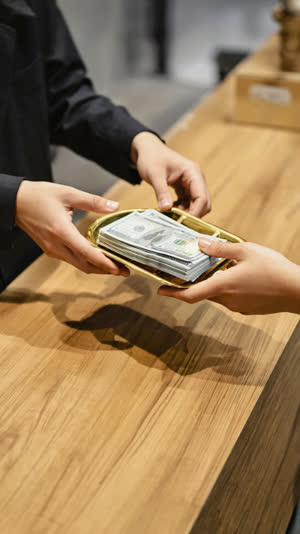
Nothing is being avoided about you specifically. The tray is the designated surface for the exchange, in the same way the counter is the designated surface for the goods.
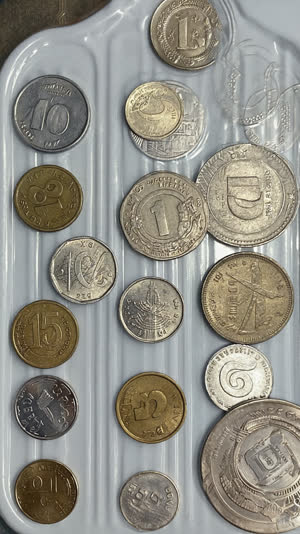
Every coin visible
Every coin lies visible: no fumbling, no miscounts, no doubt.
Transactions here are still frequently in cash and often involve several coins. Laying them flat makes the count checkable by both people without either handling the other's money.
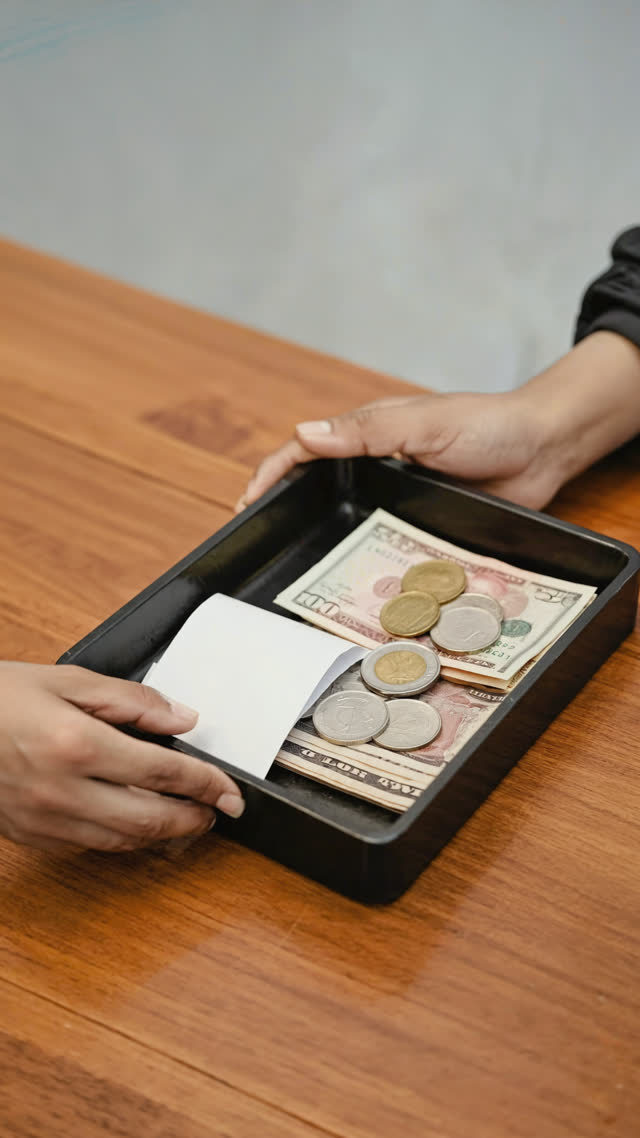
One clean calm exchange
And no awkward grab — two strangers, one clean, calm exchange.
The tray removes the moment of contact that a hand-to-hand pass requires. That is a small piece of friction taken out of an interaction that happens dozens of times a day.
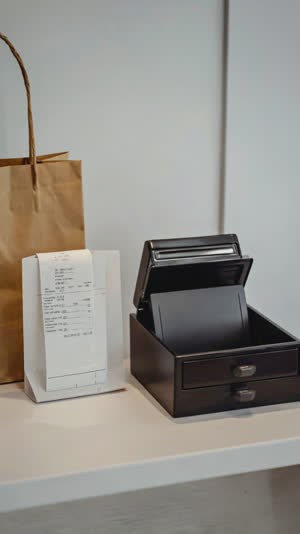
A tool for sharing space
Small tools like this are how strangers share one smooth moment.
The series thesis, in a piece of counter equipment. Most of these customs are supported by an object or a marking — a painted line, a raised step, a towel, a tray — that makes the right behavior the easy one.
Its name: karuton
The tray even has a name: karuton — from French 'carton'.
The loanword suggests the object arrived with Western commercial practice rather than out of older Japanese custom. In French, carton means heavy paper.
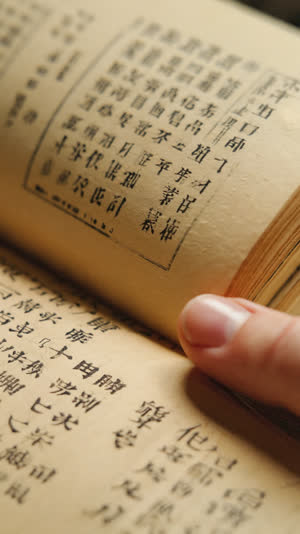
In dictionaries by 1918
By 1918, it was already in a Japanese dictionary.
A dictionary entry is a useful dating tool: the word had to be current enough to need defining. So this quietly ordinary object has been on Japanese counters for over a century.
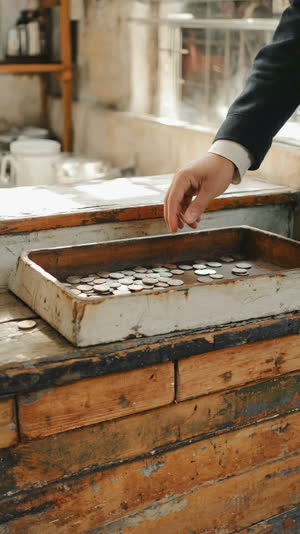
Place coins like a local
Day one: lay your coins flat on the tray, like a local.
Flat rather than in a pile, so the count stays visible. Change comes back the same way, which is the cue to take it from the tray rather than wait for a hand.
The thread through Manners
Japan's rules are not enforced. They are agreed.
Final episode: why Japan queues — and why the line holds.
Japanese terms in this story
Sources — primary only
- NDL Collaborative Reference Database
- Shimojima
Original Japanese source note
現金はカルトン(釣銭トレー)に置くのが一般的・語源はフランス語carton(厚紙)で1918年(大正7年)刊の辞書に「カルトン」掲載(国立国会図書館レファレンス協同DB・シモジマ)