Why does rice sit on the left in a Japanese meal?
Why does rice always sit on the left?
The short answer
Rice sits front-left and miso soup front-right, a layout so standard that Japan's agriculture ministry publishes placement charts. One old theory says the left side ranked higher in Japan, so rice — the heart of the meal — takes the seat of honor, though several explanations exist.
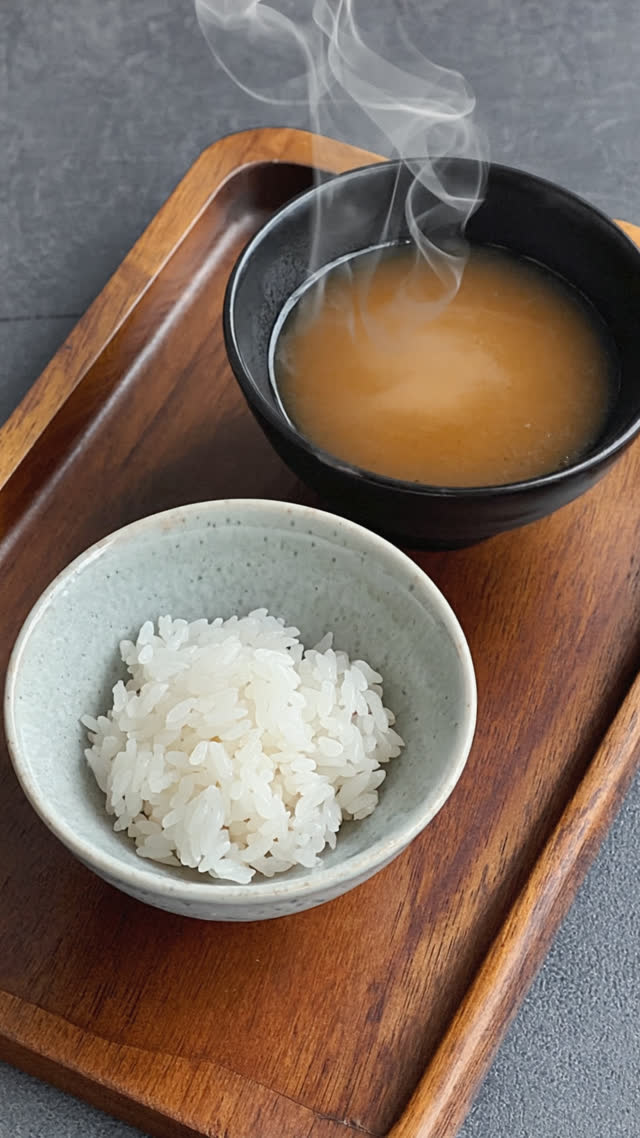
Rice Left, Soup Right. Why?
Look down at a Japanese meal — it is arranged like a map.
Rice sits front-left and miso soup front-right, a layout so standard that Japan's agriculture ministry publishes placement charts. Why the left? One old theory says the left side ranked higher in Japan, so rice, the heart of the meal, takes the seat of honor — though several explanations exist.
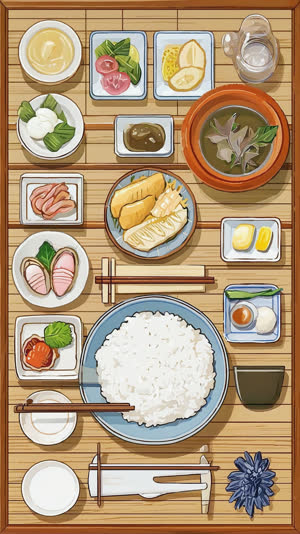
Dinner has coordinates
In Japan, dinner has coordinates.
A Japanese meal arrives as several separate vessels rather than one plate, so something has to decide where each goes. The answer is fixed enough to be published, which is unusual for a table setting.
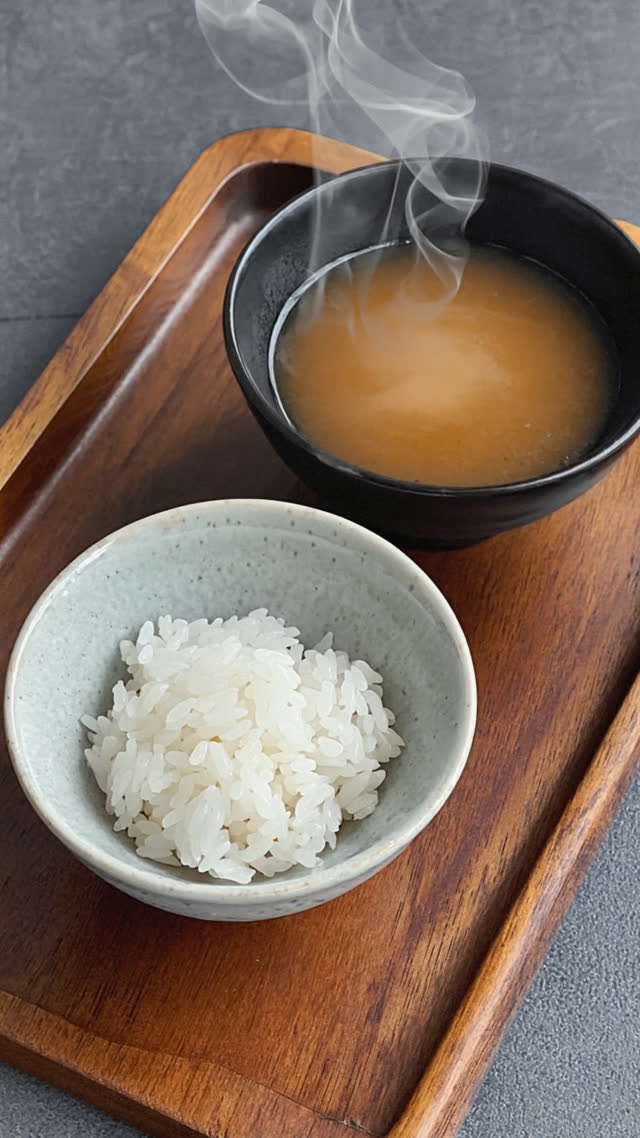
Rice left, soup right
Rice sits front-left, miso soup front-right. Always.
Front means nearest to you. The two staples take the two closest positions, and everything else sits behind them, further from the hand.
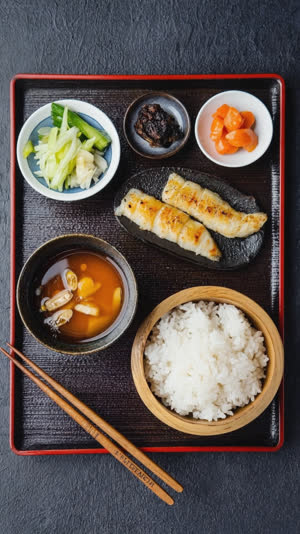
Swapped? Instantly noticed
Swap them, and Japanese eyes notice in a second.
The recognition is automatic rather than judgmental. The arrangement is repeated at practically every meal, so a reversed tray reads as wrong before anyone works out why.
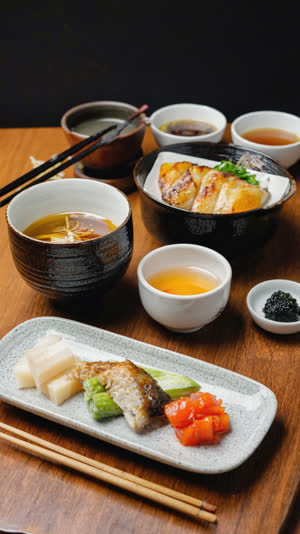
Every bowl has an address
Every bowl has an address on this small map.
What makes this a map rather than a habit is that it is written down. The positions are published, which means a cook setting a tray is following a layout rather than improvising one.
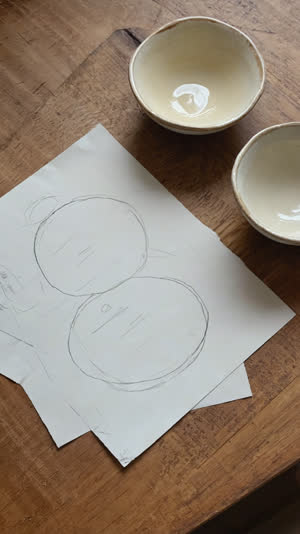
The ministry charts it
Japan's agriculture ministry even publishes the placement chart.
The chart comes from a regional agriculture bureau's material on setting a tray. That is the register this belongs to: ordinary guidance about how a meal is put together, not etiquette instruction.
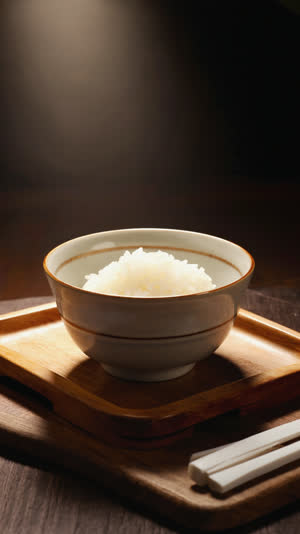
One theory: left was higher
Why left? One old theory: left ranked higher in Japan.
The word to hold onto is theory. Several explanations circulate and the ministry does not settle the question, so this is offered as the most commonly cited one rather than as the answer.
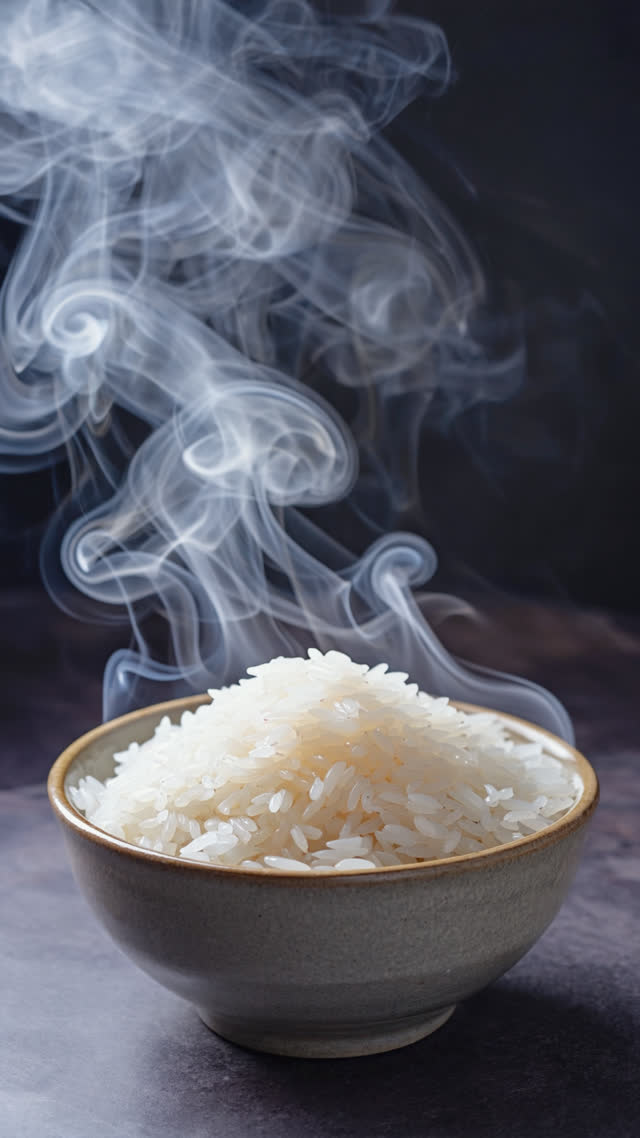
Rice takes the honored seat
So rice, the meal's heart, takes the honored seat.
If the left really did rank higher, the placement is a statement about rice rather than about convenience. That reading fits the rest of the series, where the staple is the thing being thanked.
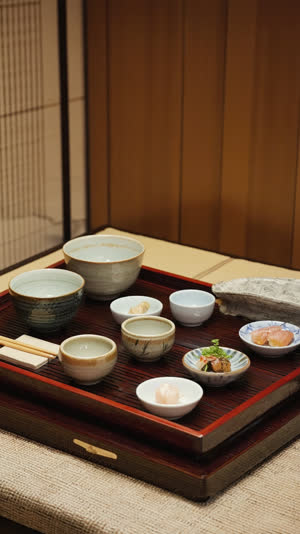
Gratitude, arranged in space
Whatever the origin, this tray plots its gratitude in space.
The series thesis, in the arrangement itself. Even with the reason unsettled, the effect is that the most important thing on the tray occupies the position the culture treats as first.
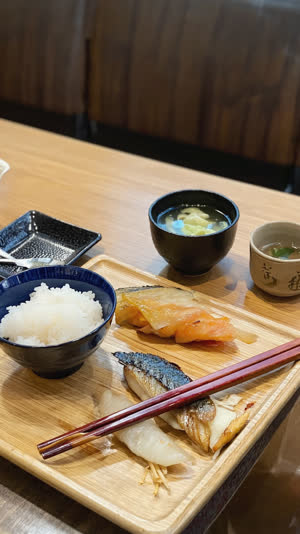
Read your teishoku map
Order any teishoku in Japan — the map is already set.
A teishoku is a set meal, and it arrives pre-arranged. Nothing is required of you except to notice it, which is the easiest test in this series available for the price of lunch.
The thread through Washoku
Japanese table manners are not etiquette. They are gratitude, made physical.
Next: the small dish you never ordered — but got anyway.
Japanese terms in this story
Sources — primary only
Original Japanese source note
農水省(中国四国農政局)配膳資料でご飯左手前・汁物右手前を確認・理由は左上位説など諸説あり(農林水産省)