Which side do you stand on an escalator in Japan?
Escalators: Tokyo stands left, Osaka right
The short answer
Tokyo stands on the left and Osaka on the right, but Japan's official answer is not to walk at all. In October 2021 Saitama passed Japan's first ordinance asking riders to stand still, Nagoya followed in October 2023, and the Japan Elevator Association and some sixty rail operators run a nationwide stand, don't walk campaign.

Tokyo Left, Osaka Right?
Tokyo stands on the left, Osaka on the right — but Japan's official answer is: don't walk at all.
In October 2021, Saitama passed Japan's first ordinance asking riders to stand still on escalators, and Nagoya followed in October 2023. The Japan Elevator Association and some sixty rail operators run a nationwide stand, don't walk campaign. The famous left-right custom is real — and officially discouraged.
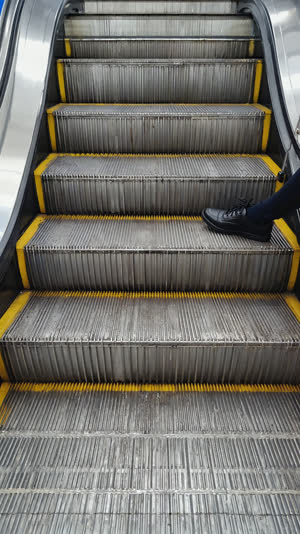
Osaka flips the side
In Osaka, everyone switches sides.
The switch happens without signage, at the point where one convention gives way to another. Nobody can say exactly where the boundary lies, which is a good sign that neither side is official.

Tokyo left, Osaka right
Tokyo stands on the left. Osaka stands on the right.
Both are real and both are consistent within their region. That is why the pattern is worth learning at all, and also why it looks like a rule from outside.

A local code
Travelers memorize the sides like a secret local handshake.
The memorizing is where visitors go wrong. Learning which side to stand on assumes the walking lane is intended, and the walking lane is exactly what the authorities are trying to remove.
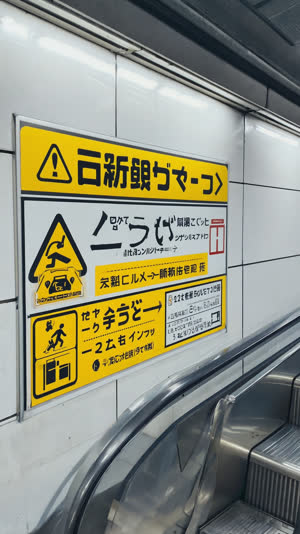
The official answer?
But ask Japan officially, and the answer is neither side.
The official position and the observed behavior point in opposite directions here, which is unusual for this series. Most of these customs are endorsed by the bodies that explain them; this one is not.
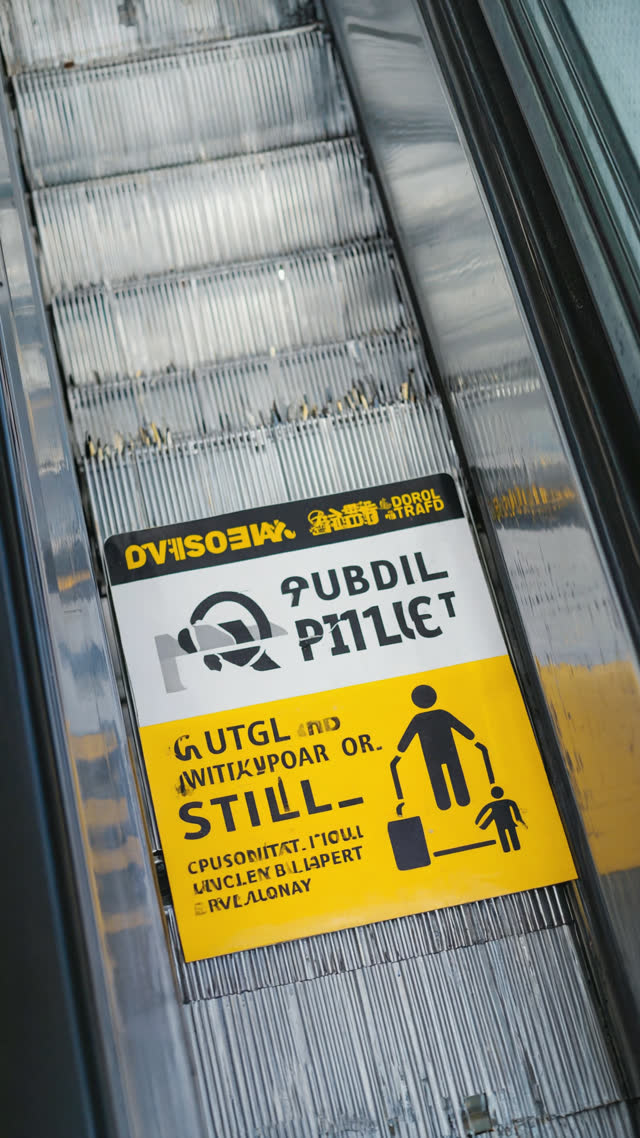
Stand still — it's an ordinance
Don't walk at all. Saitama made it an ordinance in 2021.
An ordinance is a stronger instrument than a poster, and this was the first in the country. It carries no penalty, which makes it a statement of position rather than a law with teeth.
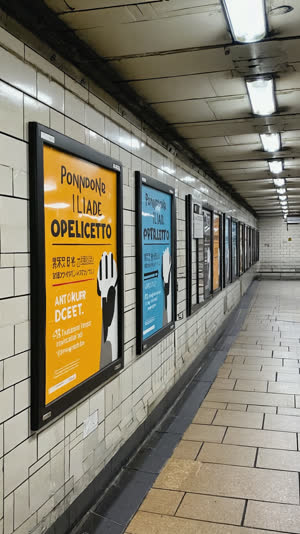
60 railways agree
Nagoya followed in 2023. Sixty rail companies campaign: stand, don't walk.
Two city-level moves and a nationwide industry campaign is a coordinated push, not a local experiment. The Japan Elevator Association runs it with the operators rather than against them.

Courtesy, renegotiated
Because manners aren't frozen rules — they're strangers renegotiating shared space.
The series thesis, caught mid-negotiation. This is the one custom here that is currently being changed, and watching it change is more instructive than any settled example.

Standing moves more people
The walking lane causes falls. Two standing rows move more people.
Both halves are the argument the campaign makes. The escalator is a shared resource again, and the claim is that the polite habit was optimizing the wrong thing.
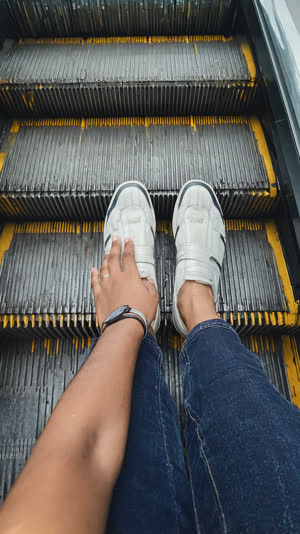
Hold the rail, stand still
Day one: plant your feet, hold the rail, ride like locals.
If someone wants past, they will say so. Standing still is now the position with official backing behind it, which makes it the easier choice to defend.
The thread through Manners
Japan's rules are not enforced. They are agreed.
Next: almost no trash cans — so why are streets spotless?
Sources — primary only
Original Japanese source note
埼玉県が2021年10月に全国初のエスカレーター立ち止まり条例・名古屋市も2023年10月施行(罰則なし)・日本エレベーター協会と鉄道60社局が「歩かず立ち止まろう」キャンペーン(埼玉県・名古屋市・日本エレベーター協会)