How does koji create so many Japanese flavors?
How does koji create five Japanese flavors?
The short answer
Koji is a mold grown on steamed rice that produces enzymes in enormous amounts, breaking starch into sugar and protein into the amino acids we taste as umami. Japan's agriculture ministry states plainly that miso, soy sauce, mirin, vinegar and sake are all made using it.
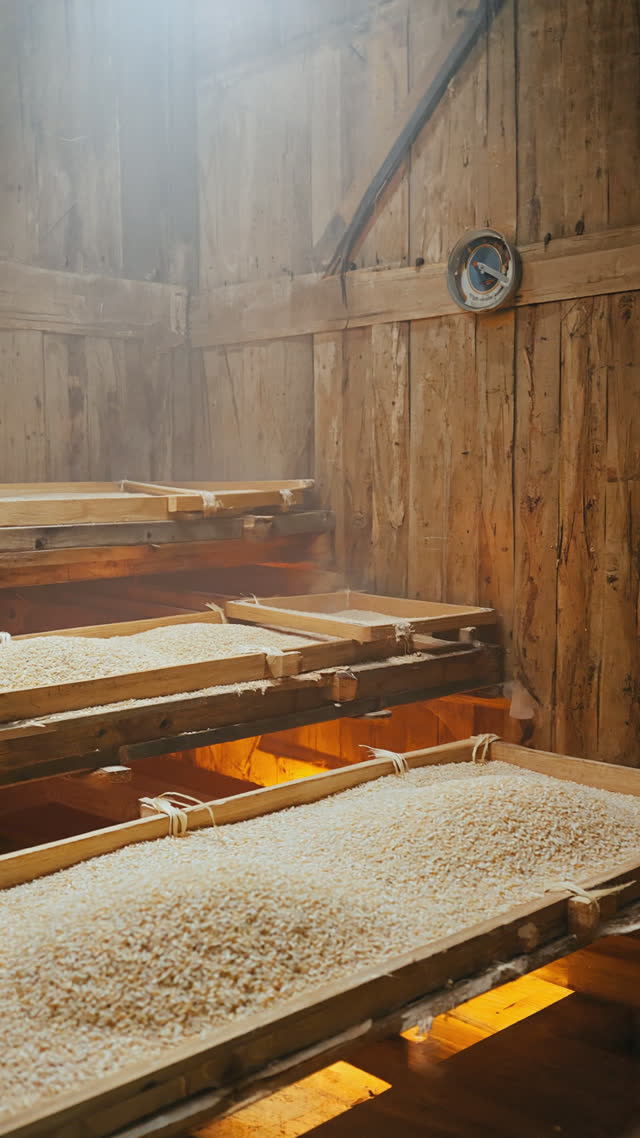
The Mold Behind Every Flavor
Miso, soy sauce, mirin, vinegar, sake — Japan's five great flavors all begin with a mold.
Koji is a mold grown on steamed rice. Japan's agriculture ministry describes it as a fungus that produces enzymes in enormous amounts, breaking starch into sugar and protein into the amino acids we taste as umami — and states plainly that miso, soy sauce, mirin, vinegar and sake are all made using koji.
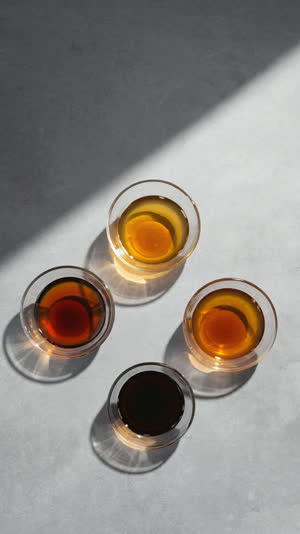
What do these five share?
What do these five have in common?
The five are not related as dishes. They belong to different meals, different courses and different centuries of use, which makes the single shared step underneath them easy to miss.
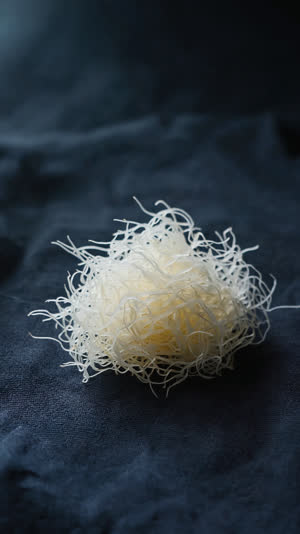
Miso, soy sauce, mirin, vinegar, sake
Miso, soy sauce, mirin, vinegar, sake.
Between them these season almost every savory dish in Japanese cooking. Take them away and what is left is rice, fish and vegetables with nothing to bind the flavors together.
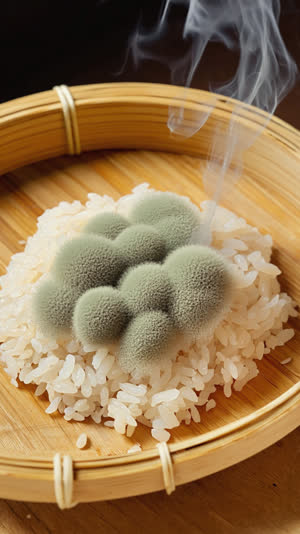
The answer is koji
The answer is koji — mold grown on steamed rice.
The rice is not the ingredient here; it is the growing medium. Steaming makes its starch available, and what the brewer actually harvests is the enzyme factory the mold builds while it feeds.
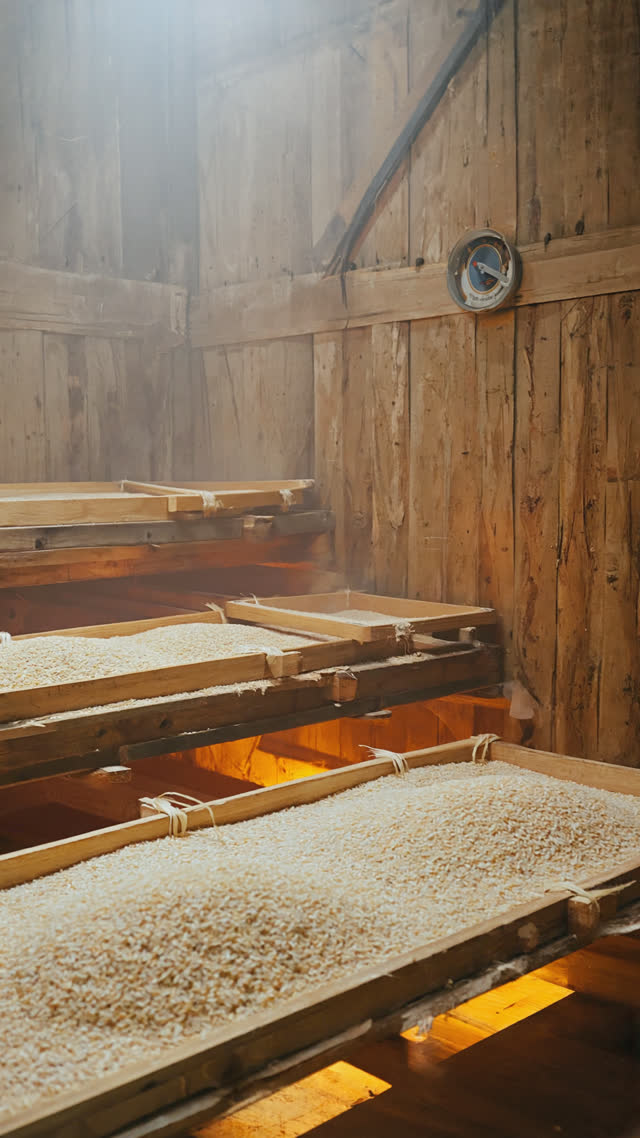
Spores dusted by hand
Spores are dusted over the warm grains by hand.
Warmth matters more than precision at this stage. The grain has to be cool enough not to kill the spores and warm enough for them to start, which is why the step is still judged by hand and by feel.
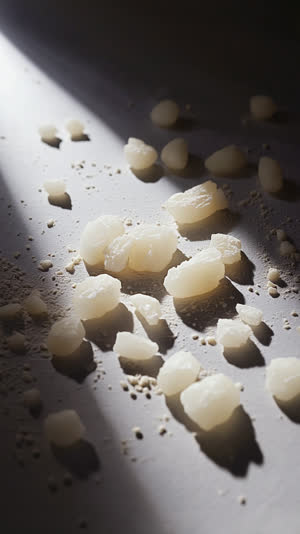
Two days: all white
Two warm days later, every grain turns white.
The white is the mold's own growth spreading over the surface of each grain. That is short for a fermentation, and it is only the preparation — nothing has been brewed yet.
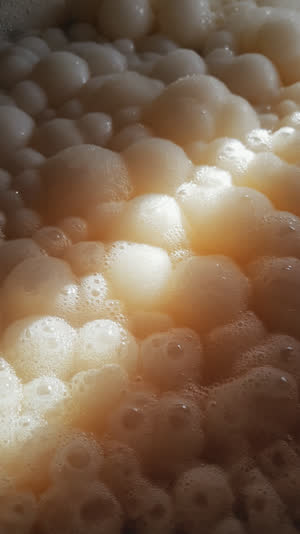
Enzymes, in huge amounts
Japan put this mold to work. Its job: enzymes — in enormous amounts.
Enzymes are tools, not flavor. They cut large molecules into small ones, and the reason this mold is worth cultivating is that it makes them in quantities no cook could add by hand.
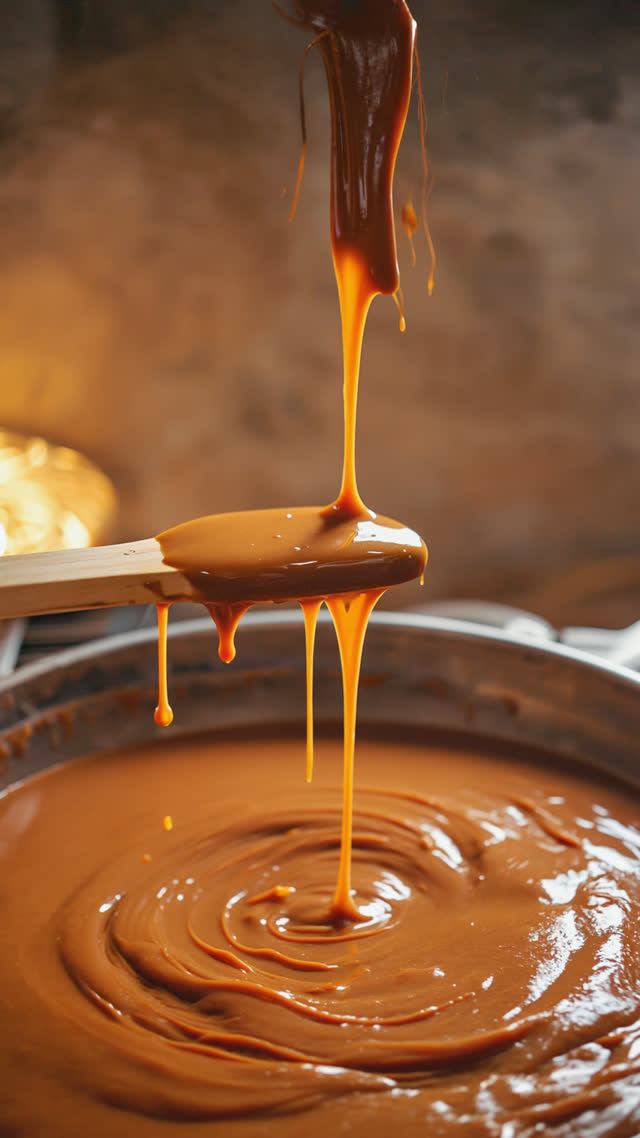
Starch to sugar, protein to umami
Starch becomes sugar. Protein becomes the amino acids we taste as umami.
Those two conversions explain the entire list. Yeast needs sugar to make alcohol, and free amino acids are what the tongue reads as savoriness — so one organism supplies both the fuel for brewing and the taste of the result.
The ministry states it plainly
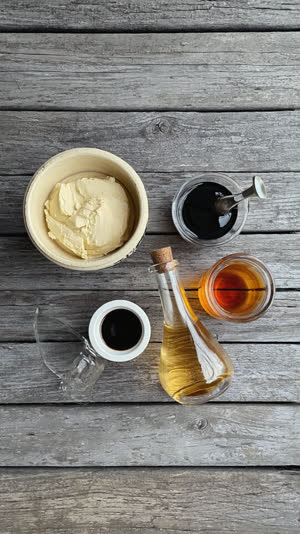
Japan's agriculture ministry says plainly: all five use koji.
The wording matters. This is not an industry group's claim about its own product but a plain statement in a government explainer, which is why it can carry the weight of the series.
Try amazake in Japan
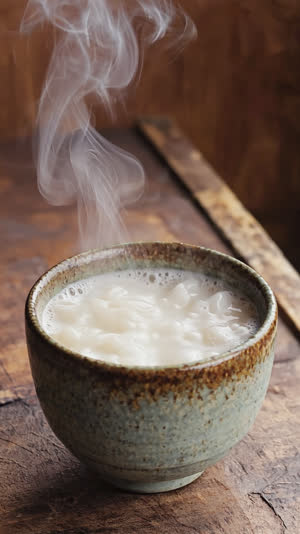
Sip amazake in Japan — that sweetness is koji, not sugar.
Amazake is the shortest route to tasting the enzyme step on its own. Nothing has been added to sweeten it; the sugar is what the mold made out of the rice while you were not watching.
The thread through Fermentation
Japan never fought the mold. It hired it.
But in sake, koji does something no other drink can.
Japanese terms in this story
Sources — primary only
Original Japanese source note
農水省aff「発酵の不思議」に麹菌はでんぷんを糖に分解する酵素を大量に作るカビで「味噌・醤油・みりん・酢・酒はすべて麹を使ってつくられます」と明記(農林水産省)