The short answer
About 33,000. The Japanese Sword Museum's official forging guide (NBTHK) states that the outer steel is folded roughly fifteen times, which calculates to some 33,000 layers — each fold driving impurities out as flying sparks and evening the metal.
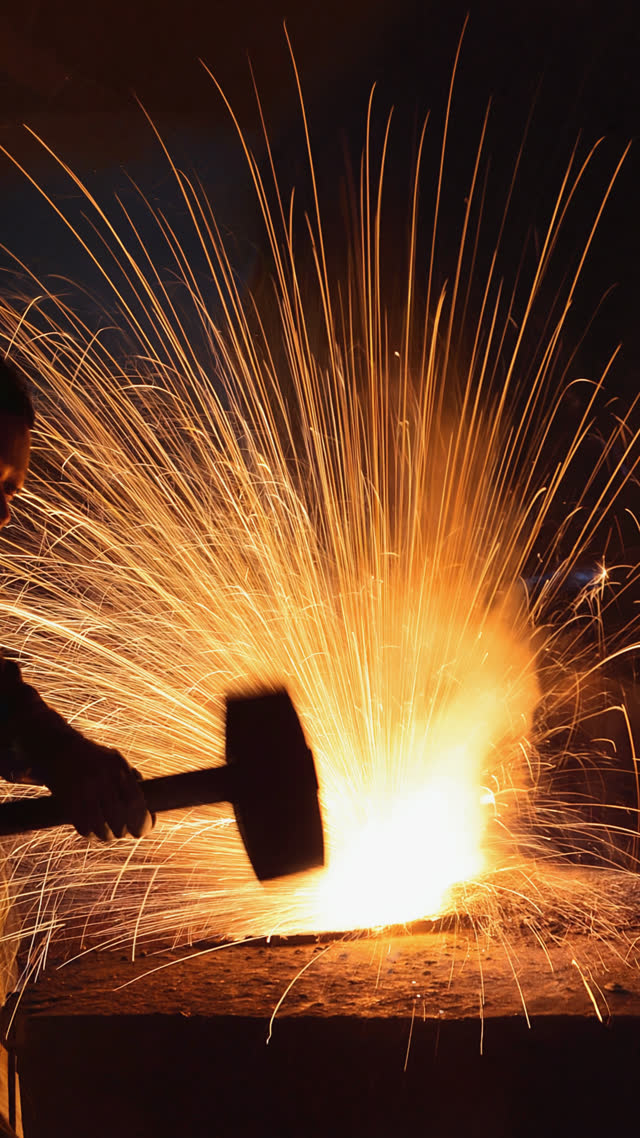
Fold 15 Times: 33,000 Layers
Fold hot steel about fifteen times, and the math reaches 33,000 layers.
The Japanese Sword Museum's official forging guide (NBTHK) states that the outer steel is folded roughly fifteen times — calculating to about 33,000 layers. Each fold drives impurities out as flying sparks and evens the metal, leaving it uniform and strong.
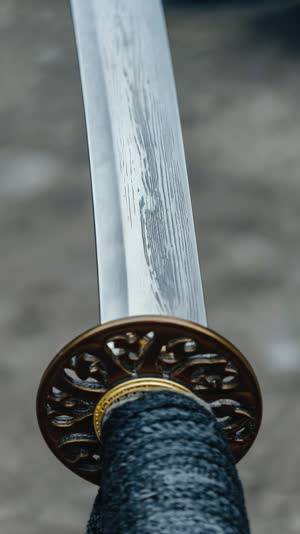
33,000 layers hidden
This blade hides thirty-three thousand layers.
The figure is arithmetic rather than a count. Doubling a single piece enough times produces it, which is why the museum states the fold count and the layer count together.
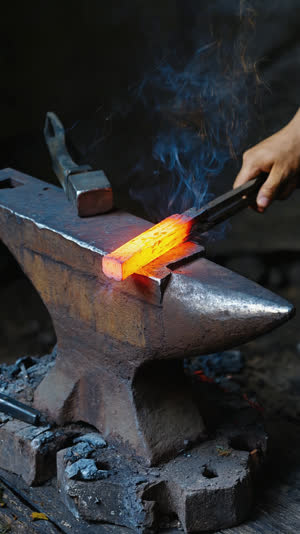
Folded onto itself
Watch — the smith folds white-hot steel back onto itself.
Each cycle doubles the layers and halves the length, and it has to happen at a heat where steel will weld to steel. That is what the white in white-hot is for.
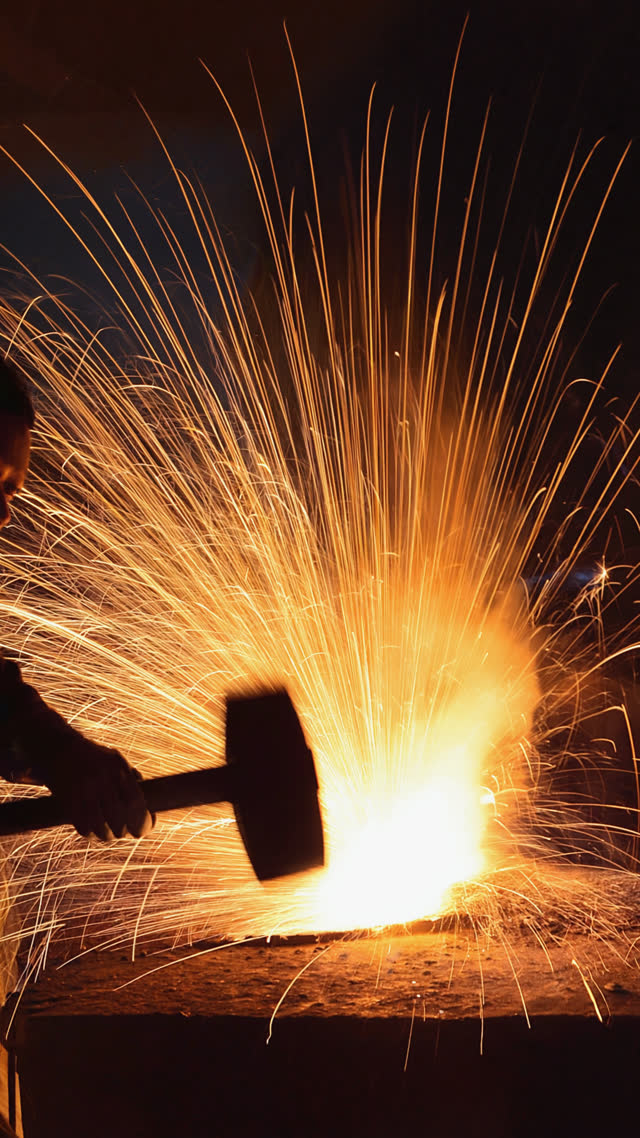
Sparks: impurities leaving
Every hammer blow sends sparks flying — impurities leaving the steel.
The sparks are the process working rather than a side effect. The museum's own account gives this as the purpose of folding: impurities are driven out, and what remains is more even than what went in.
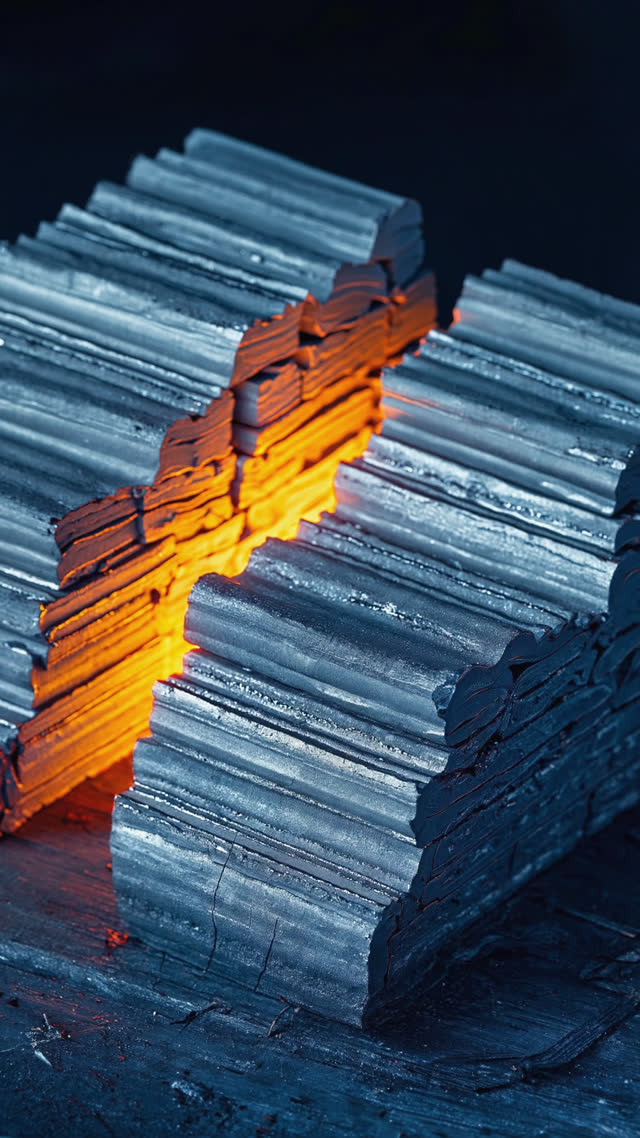
15 folds = 33,000 layers
Fifteen folds. The math says about thirty-three thousand layers.
That is roughly the number, and the museum publishes both figures as approximate. The layer count is a consequence of the folding, not a specification anyone set out to hit.
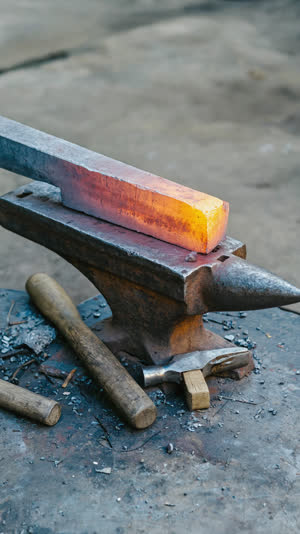
Not for battle. For beauty
No battle ever demanded this much. But art always did.
The series thesis, in a hammer blow. Whatever the process began as, the effort now goes into a material whose only test is how it looks and how it holds up as an object.
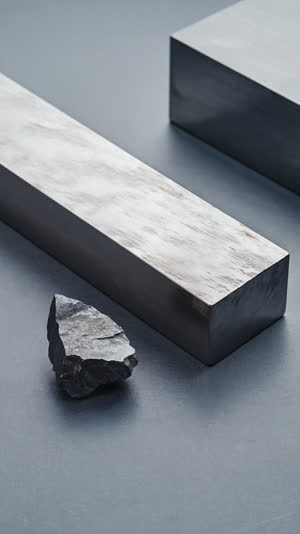
Uniform and strong
Folding drives out impurities, leaving the steel uniform and strong.
Those are the museum's two words for the result: uniform and strong. Both matter for a blade that has to hold a hard edge without breaking, and both come from the same repetitive operation.
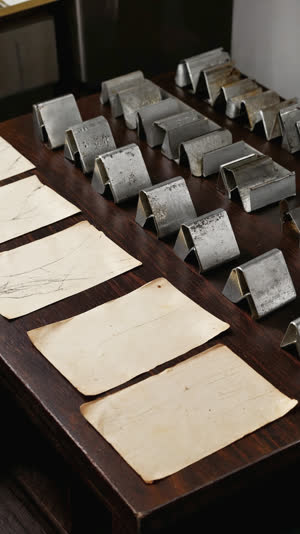
Officially documented
The count is official — the Token Museum documents every step.
This is why a number that dramatic can be stated plainly. It comes from the association's own published account of the forging process rather than from folklore about swords.
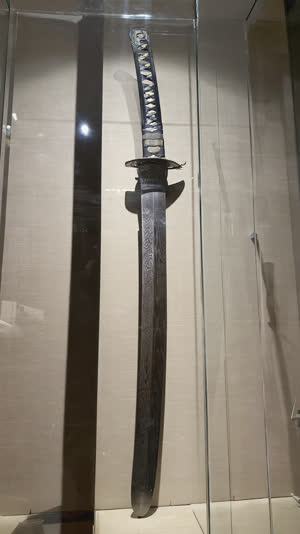
Token Museum, Tokyo
At Tokyo's Token Museum, stand close — the layers surface as grain.
The layers do not read as lines. They surface as a grain in the steel, and only after polishing — which is why the next part of this series is about the polisher.
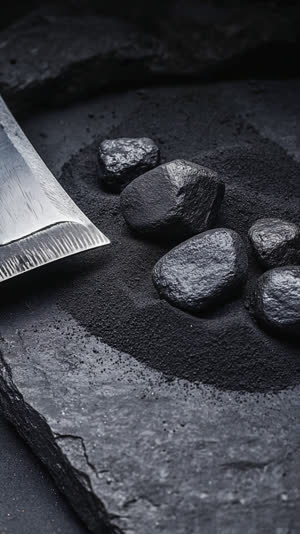
From sand to steel
Fold by fold, the steel forgets it was ever sand.
The previous part began with iron sand in a clay furnace. This many folds later, nothing in the bar recalls where it came from, and that is the point at which the clay goes back on.
The thread through Katana
Japan stopped needing swords. It never stopped perfecting them.
Then fire signs its name — the wavy line. That's next.
Japanese terms in this story
Sources — primary only
Original Japanese source note
刀剣博物館(NBTHK)公式「作刀工程」に皮鉄の折り返し鍛錬は約15回・計算上約33000枚の層と明記・不純物を除き均質で強靭な鋼になる(日本美術刀剣保存協会・刀剣博物館公式)