The short answer
The wavy line is a border between two natures, not a decoration. Before quenching, smiths coat the blade with yakibatsuchi — clay, charcoal powder and whetstone powder — thin along the edge and thick over the body; quenched from about 800°C the thin-coated edge hardens while the body cools slower and stays resilient, and the hamon marks where they meet.
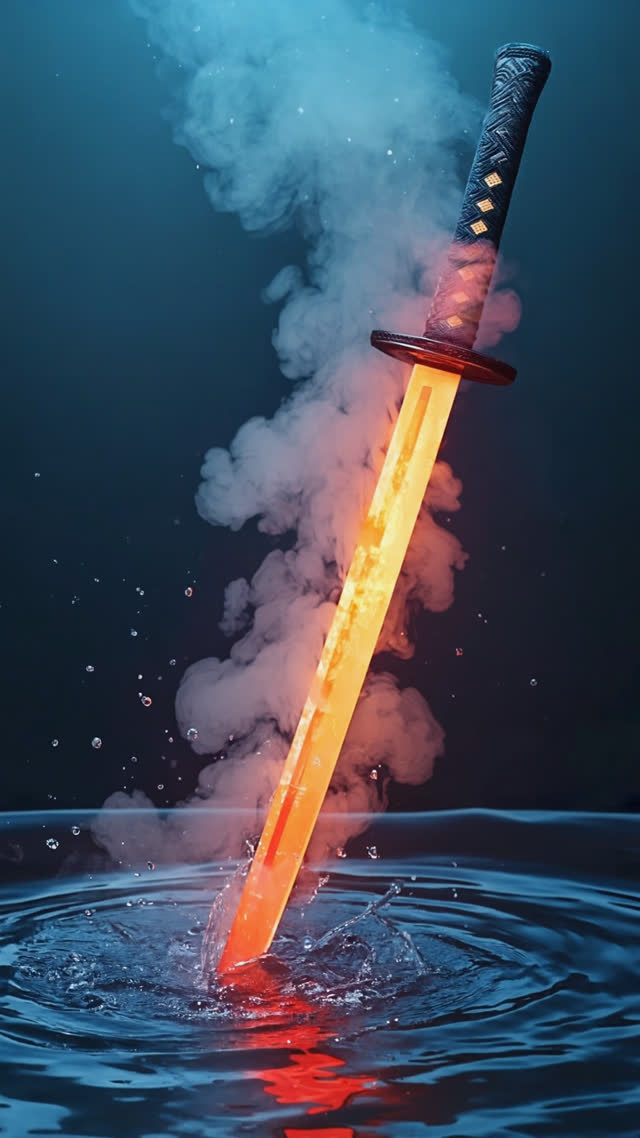
Born at 800°C: The Hamon
The wavy line on a katana is not a decoration — it is a border between two natures.
Before quenching, smiths coat the blade with yakibatsuchi, a mix of clay, charcoal powder and whetstone powder — thin along the edge, thick over the body. Quenched from about 800°C, the thin-coated edge hardens while the thick-coated body cools slower and stays resilient. The hamon marks where they meet.
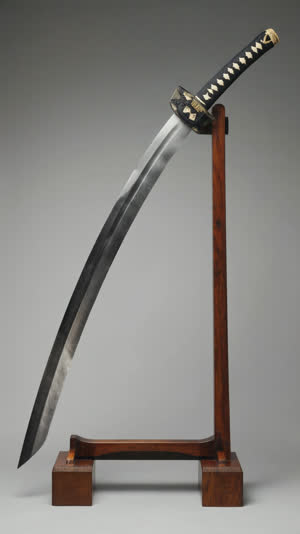
Not a pattern
This wavy line isn't a pattern.
It looks applied, like an etch or an inlay, and that is the assumption worth removing first. Nothing was drawn on the blade — the line is where two different states of the same steel meet.
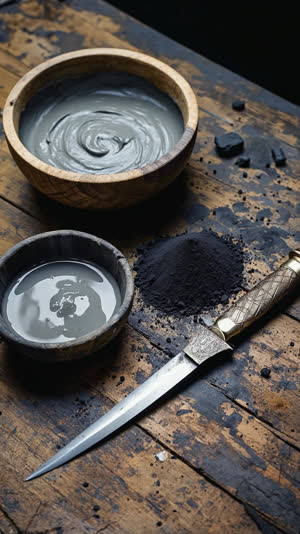
Clay, fire, water
It's the hamon — born from clay, fire, and water.
Three materials, and no decoration among them. The clay decides where the effect falls, the fire brings the steel to the right state, and the water fixes it.
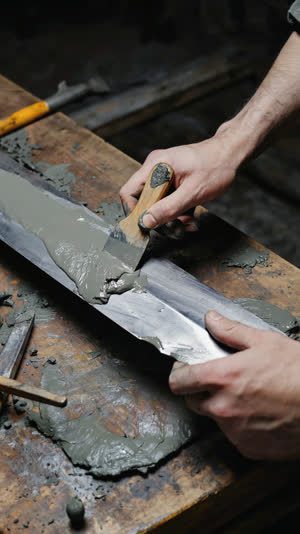
Painted with clay
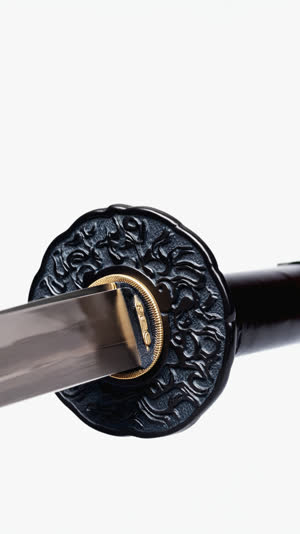
Smiths paint the blade with yakibatsuchi — clay, charcoal, whetstone powder.
Yakibatsuchi is the coating mixture, and its three components are chosen for how they hold and release heat. The blade goes into the fire already carrying the plan.
Thin edge, thick body
Thin along the edge, thick over the body — every millimeter chosen.
This is the whole design decision, made before any heat is applied. Where the clay is thin the steel will harden; where it is thick it will not, so the smith is drawing the line by hand in mud.
800°C into water
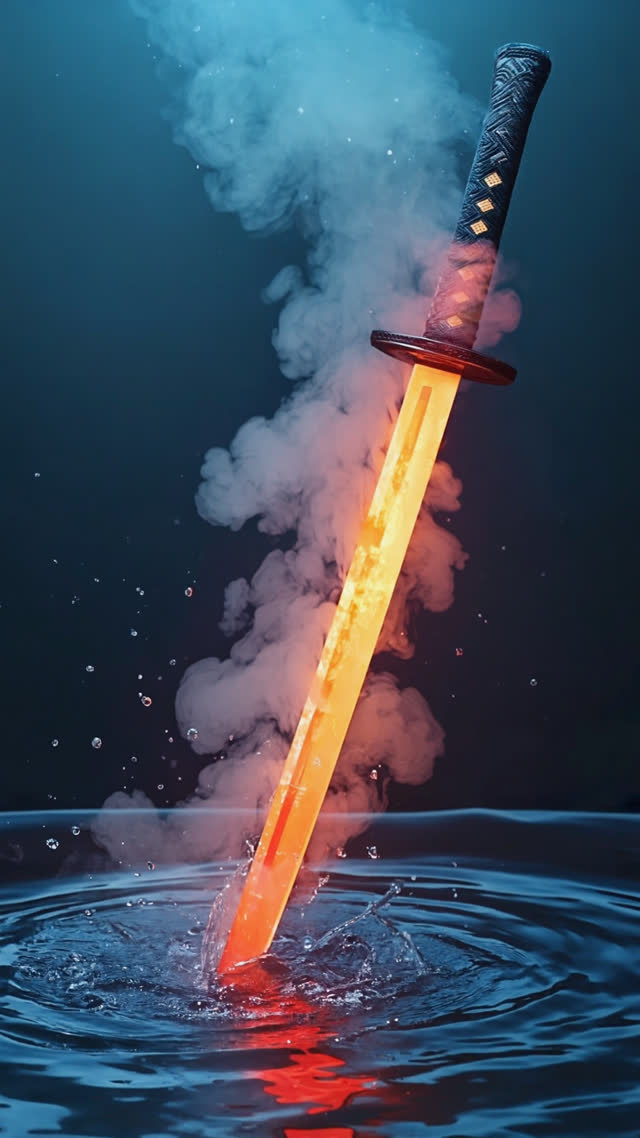
Heated to eight hundred degrees, the blade meets the water.
That figure is the one the museum records for the quench. The number matters because the effect depends on the whole blade reaching it together and then leaving it at different speeds.
Two speeds of cooling
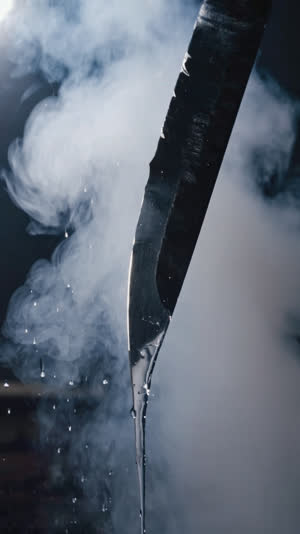
The thin-clad edge cools fast and hardens; thick clay cools slow.
Fast cooling makes steel hard and brittle; slow cooling leaves it tougher and more flexible. A sword needs both, which is impossible in one uniform piece — so the clay makes two out of one.
The border of two natures
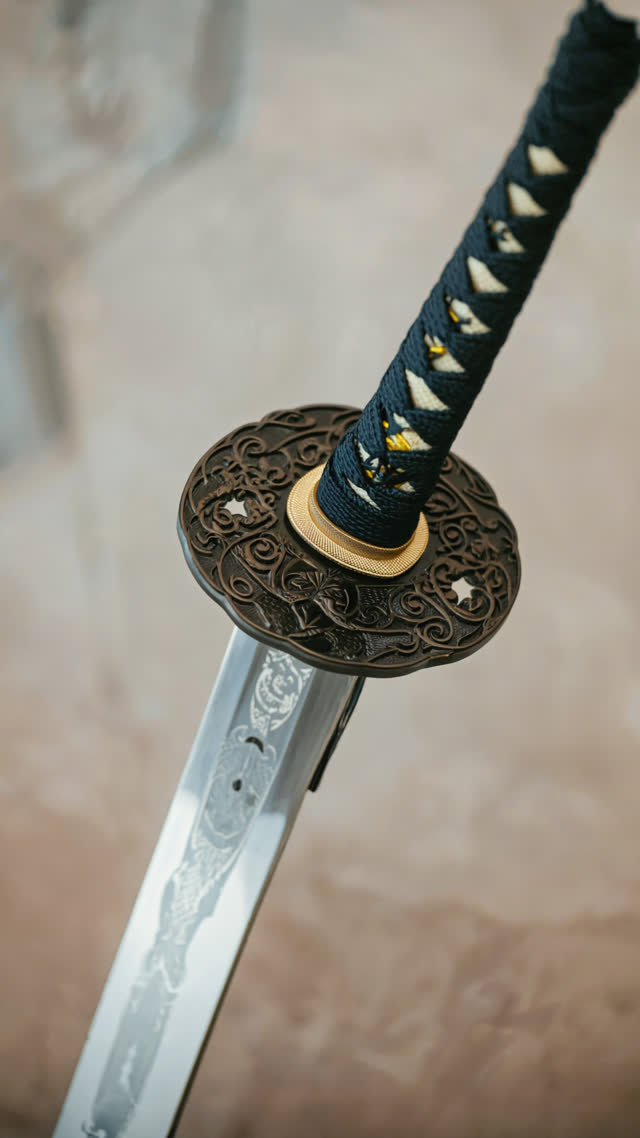
One blade, two natures: the hamon is the border between.
So the line is a map of the quench. Its shape was set by where the clay was thick, which means the pattern is a record of a decision made in mud hours earlier.
Art needs it beautiful
A weapon only needs an edge. Art needs the edge beautiful.
The series thesis, at the moment the two purposes separate. The hard edge is functional; that its boundary is looked at, compared and valued is what happens after function stops being the point.
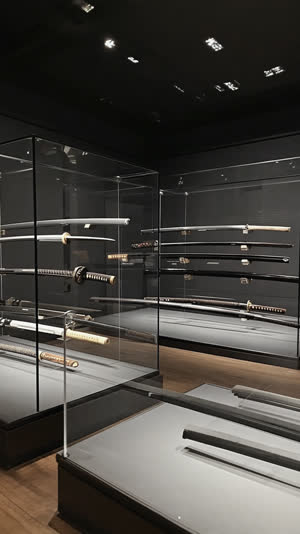
Nagoya Token Museum
At the Nagoya Token Museum, compare them — no two hamon match.
Comparison is what the line is for now. Different smiths and schools produce recognizably different boundaries, and a museum case is where that becomes visible rather than theoretical.
The thread through Katana
Japan stopped needing swords. It never stopped perfecting them.
But the smith doesn't finish the sword. A polisher does. Next.
Japanese terms in this story
Sources — primary only
- NBTHK — Society for Preservation of Japanese Art Swords
- Nagoya Token Museum
Original Japanese source note
焼刃土(粘土+木炭粉+砥石粉)を塗り分け約800度から急冷する焼き入れで刃文が生じる(刀剣博物館公式)・刃部は薄塗りで硬く・地は厚塗りで冷却が遅く粘る(名古屋刀剣博物館の解説)