The short answer
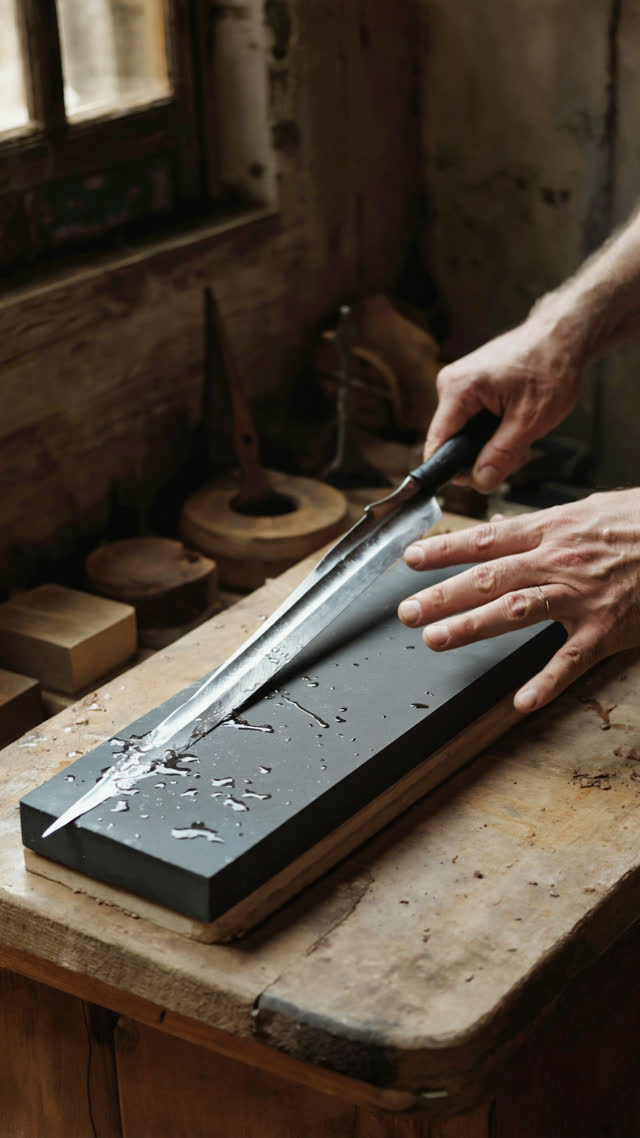
Not the smith, but the togishi — the polisher. Working through more than ten stages with around ten kinds of whetstones, a polisher spends ten days to two weeks on a single blade, and only under those final stones does the hamon truly appear.
Who Really Finishes a Katana
The swordsmith forges the blade — but he never finishes it.
That final honor belongs to the togishi, the polisher. Working through more than ten stages with around ten kinds of whetstones, a polisher spends ten days to two weeks on a single blade. Only under those final stones does the hamon, the temper line, truly appear.
The smith never finishes it
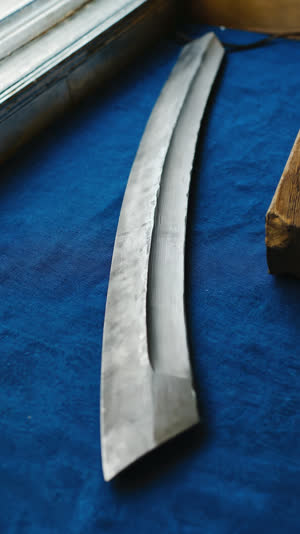
The swordsmith never finishes the sword.
This is the fact that reorganizes the whole craft. The person whose name goes on the blade stops working on it before it can be looked at, and hands it to somebody else.
The polisher: the togishi
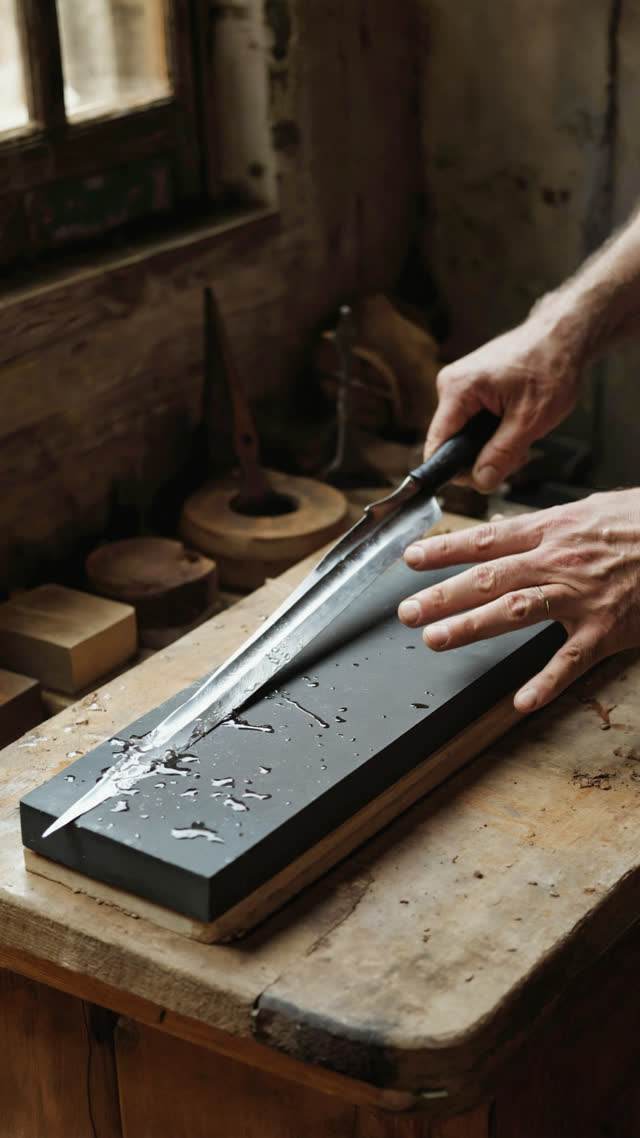
A polisher does. Japan calls this craftsman the togishi.
Togishi is a separate trade with its own training and its own tools, not a finishing step a smith performs. The blade changes hands, which is the pattern the final part of this series is built on.
Straight from the forge
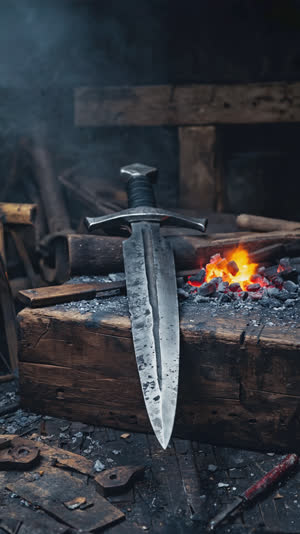
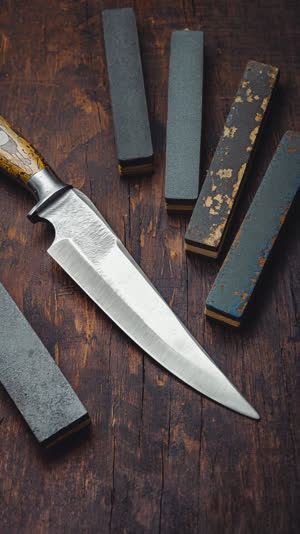
Fresh from the forge, a blade is grey and blind.
Everything the earlier parts produced — the folding, the quench, the boundary in the steel — is invisible at this stage. The work exists but cannot be seen, and that is the polisher's problem to solve.
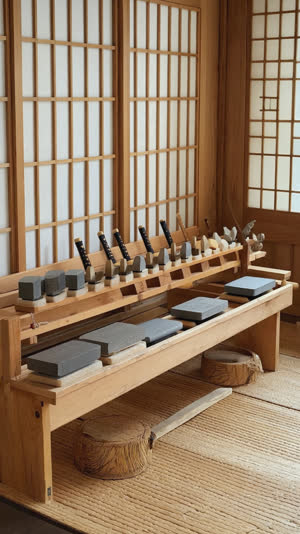
A craft of its own
For generations, polishing has been its own separate craft.
Separate means a different workshop, a different training and a different set of hands. The division is old enough that nobody treats it as an unusual arrangement.
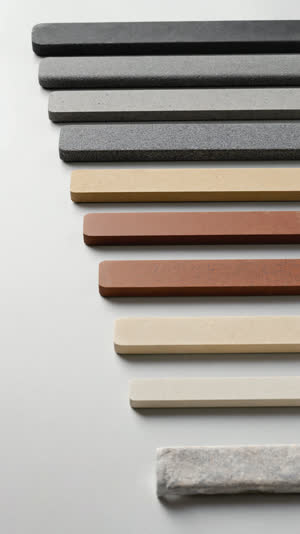
Ten stones, ten stages
Around ten kinds of whetstones, more than ten stages.
The stones run from coarse to fine, and each stage removes the marks left by the one before it. That is why the count is given in stages rather than in hours.
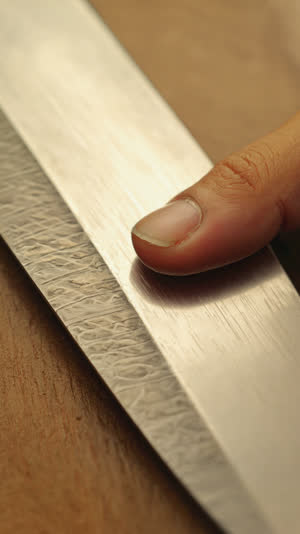
Ten days to two weeks
One blade takes ten days to two weeks of work.
Two weeks on one object, by hand, after the forging is already complete. Set against a smith's output of a few blades a month, this is not a finishing touch but a second full production step.
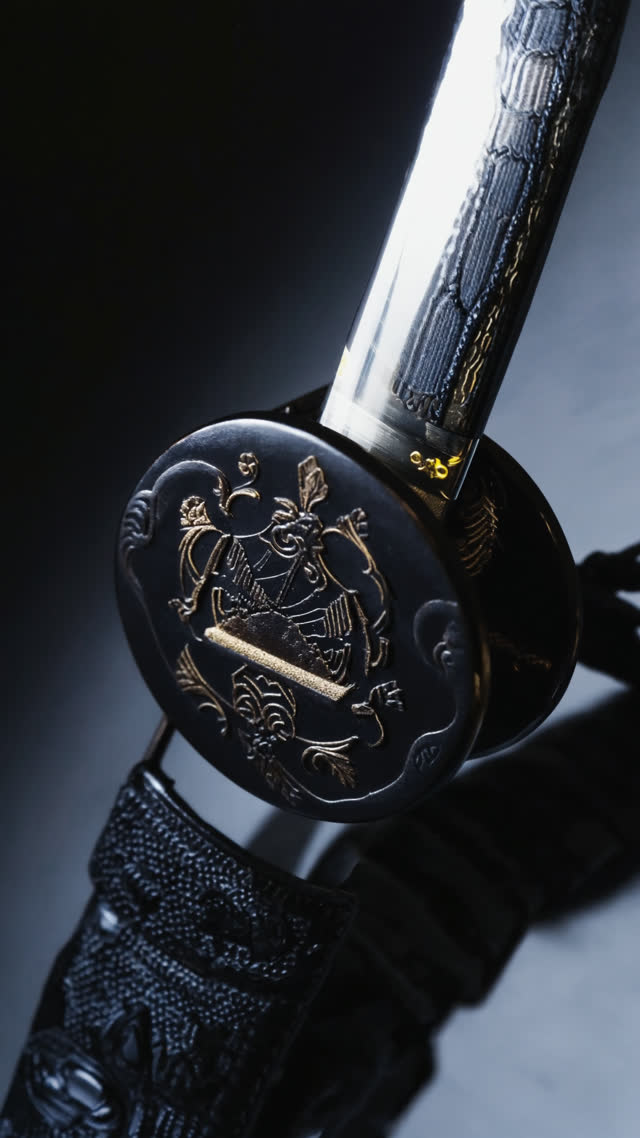
The hamon appears
Then the steel opens — the hamon surfaces like frozen mist.
The boundary described in the previous part becomes visible here for the first time. It was created in the quench and revealed under the stones, so two different trades share the credit for it.
The polishing never stopped
The wars ended centuries ago. The polishing never did.
The series thesis, from the polisher's side. Nothing about a display object requires an edge, and yet the full sequence of stones is still worked through — because what is being finished is the surface.
Nagoya Token Museum
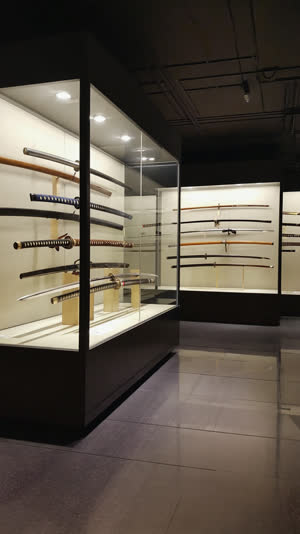
At the Nagoya Token Museum, you can read that polish yourself.
Museum lighting is set up for exactly this. Blades are angled so that the grain and the boundary catch the light, which is a viewing condition a photograph cannot reproduce.
The thread through Katana
Japan stopped needing swords. It never stopped perfecting them.
Next: the sword town that became a knife town.
Japanese terms in this story
Sources — primary only
- Nagoya Token Museum
Original Japanese source note
研師は約10種の砥石を使い10段階超の工程で仕上げる・一振りの研ぎに10日〜2週間(名古屋刀剣博物館)※修業年数の言及は一次資料未確認のため使わない