The short answer
No — it is exactly right. Japan's Ministry of Agriculture describes holding the rice bowl and soup bowl as proper washoku manners, because the bowls are small, light and made for one hand. In Korea politeness flips: the bowl stays down and a spoon does the lifting.
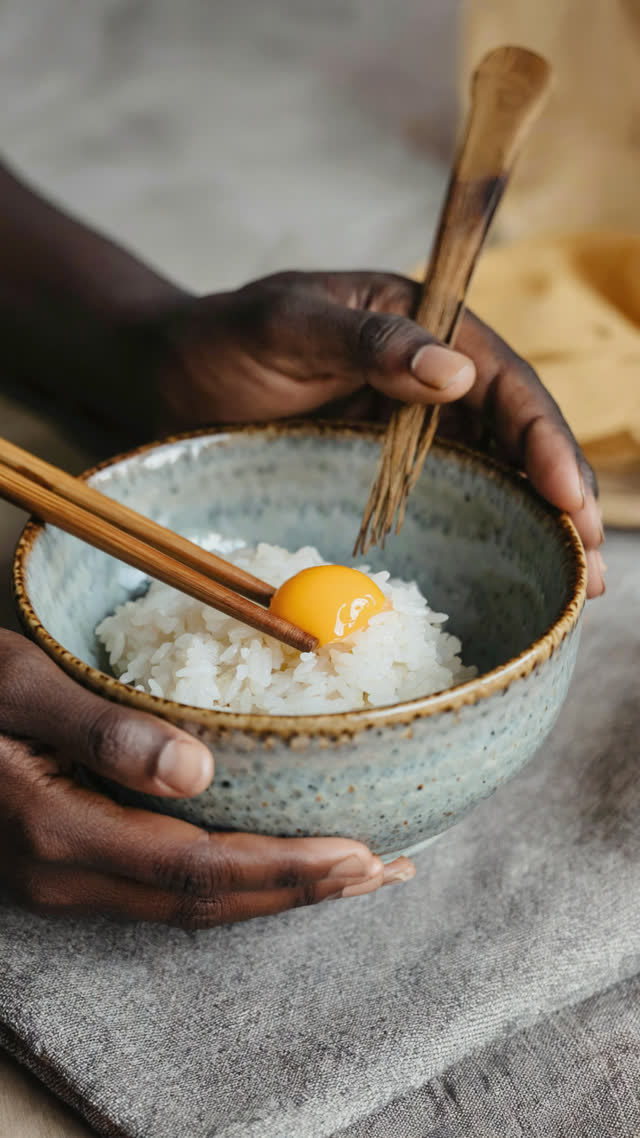
In Japan, Lift the Bowl
In Japan, lifting your bowl to your mouth isn't rude — it's exactly right.
Japan's Ministry of Agriculture describes holding the rice bowl and soup bowl as proper washoku manners: the bowls are small, light and made for one hand. In Korea, politeness flips — the bowl stays down and a spoon does the lifting. Neither is wrong; each is respect in a different shape.
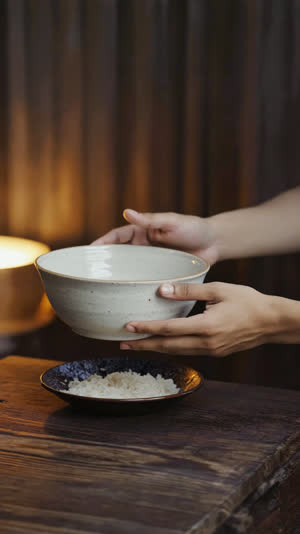
Is this rude?
Is lifting your bowl bad manners?
In much of Europe and North America, bringing a bowl to your face reads as greedy or childish. The instinct visitors arrive with is therefore to leave it on the table, which is the wrong instinct here.
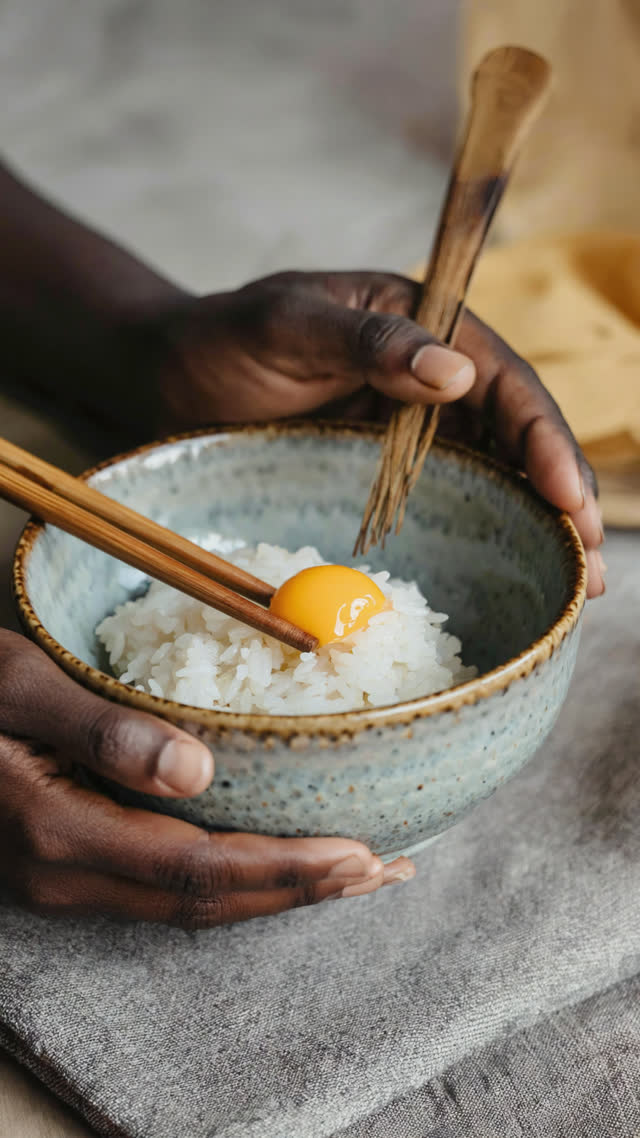
Lift the bowl
In Japan, the rice bowl belongs in your hand.
Not as a permitted exception but as the default position. A bowl left flat on the table for a whole meal is the thing that looks slightly off to a Japanese eye.
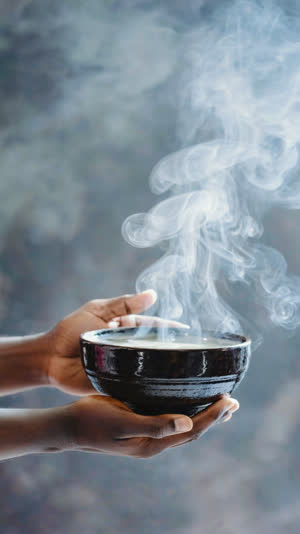
Soup bowl too
Miso soup too — the lacquer bowl comes straight to your lips.
There is no spoon in a standard Japanese setting, so the soup has to be drunk from the bowl. The lacquer is what makes that possible: it insulates well enough to hold hot liquid in bare hands.
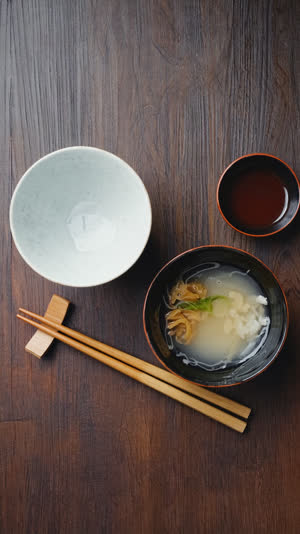
Official washoku manners
Japan's agriculture ministry lists it as correct washoku manners.
This is worth noting because it moves the practice out of the realm of etiquette advice. When a ministry publishes the posture, it is describing a national norm rather than a preference.
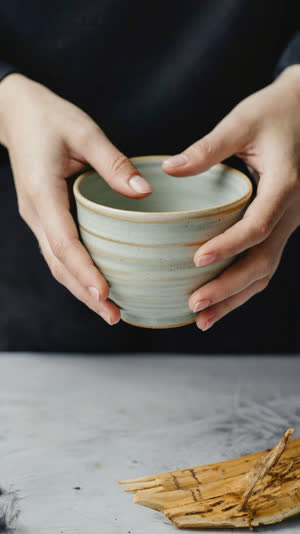
Made for one hand
The bowls are small, light, footed — designed for one hand.
The design and the manner arrived together. A footed bowl gives the fingers somewhere to sit away from the heat, and the size is set by what one hand can hold comfortably for a whole meal.
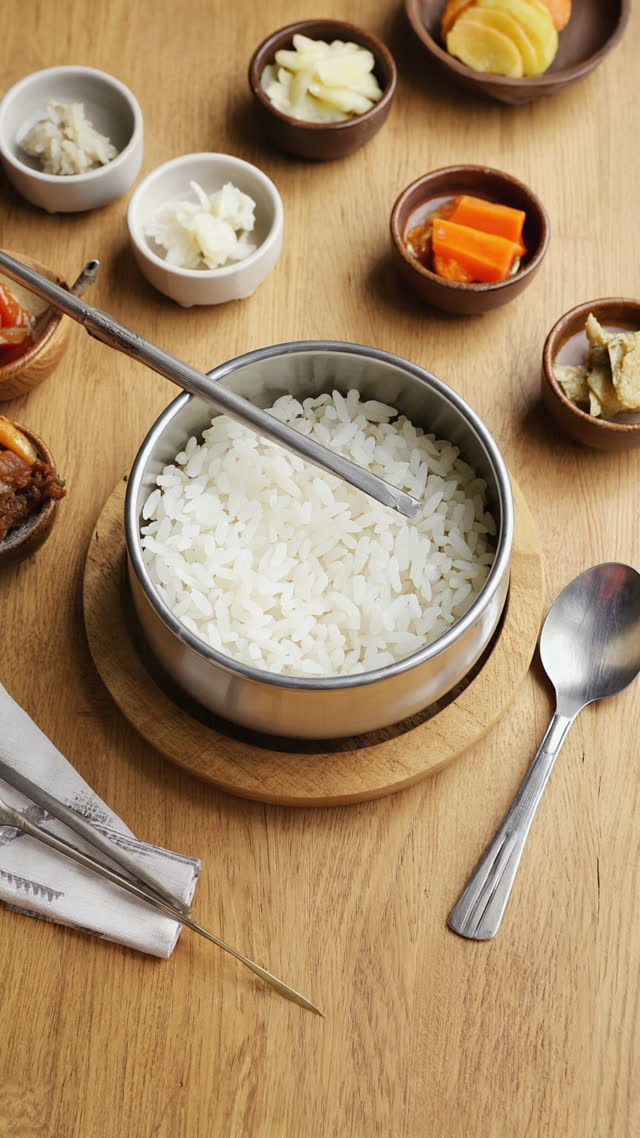
In Korea, it flips
In Korea, politeness flips: the bowl never leaves the table.
Same region, same staple, opposite rule. The comparison is useful because it shows the manner is not a natural consequence of eating rice — it is a choice, and a neighbor made the other one.
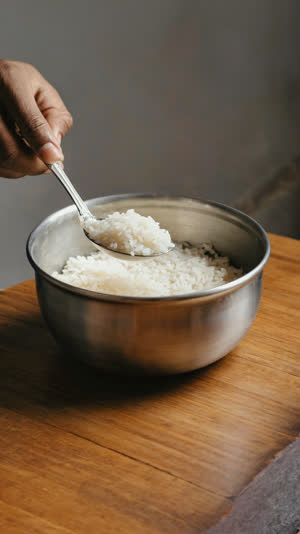
Bowl down, spoon up
Korea's food agency teaches spoon up, bowl down — equally polite.
Korean settings include a spoon as standard, so food can come up to the mouth without the vessel. Once that tool exists, lifting the bowl becomes unnecessary and then impolite.
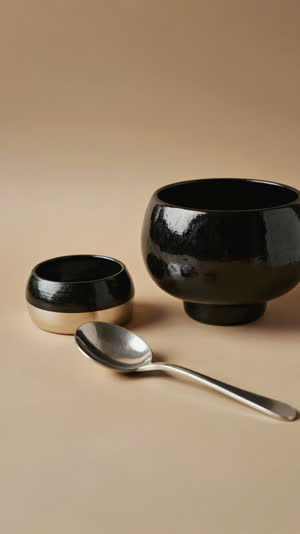
Same respect, different shape
Different shapes, same heart — respect for the meal, made visible.
The series thesis reads clearly here. Both countries express care for the meal through the body; they differ only in which movement they made carry it.
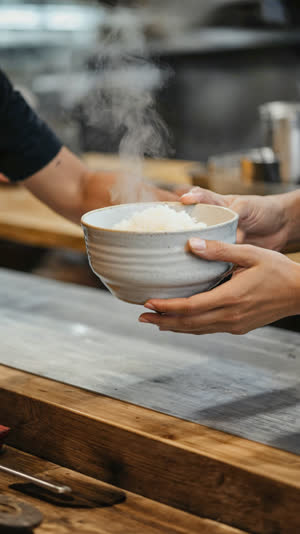
Lift it with confidence
Tonight in Japan, lift the bowl — you're doing it right.
The practical test is your own posture. If you are leaning down toward the table, the bowl should be coming up instead — that is the arrangement everything else on the tray assumes.
The thread through Washoku
Japanese table manners are not etiquette. They are gratitude, made physical.
Those chopsticks you snap apart? They were born from sake barrels.
Japanese terms in this story
Sources — primary only
- Ministry of Agriculture, Forestry and Fisheries
- Korea Agro-Fisheries & Food Trade Corporation
Original Japanese source note
農水省広報誌が茶碗・椀を手に持つのを和食の作法と解説・韓国では器を持たずスプーン使用がマナー(農林水産省・韓国農水産食品流通公社)