The short answer
From sake barrels. In 1862 the monk Sugihara Soan in Yoshino, Nara saw fine cedar offcuts left over from sake-barrel making — too good to waste — and carved them into chopsticks, so waribashi began as recycling. Today about half of Japan's domestic waribashi still come from Nara.
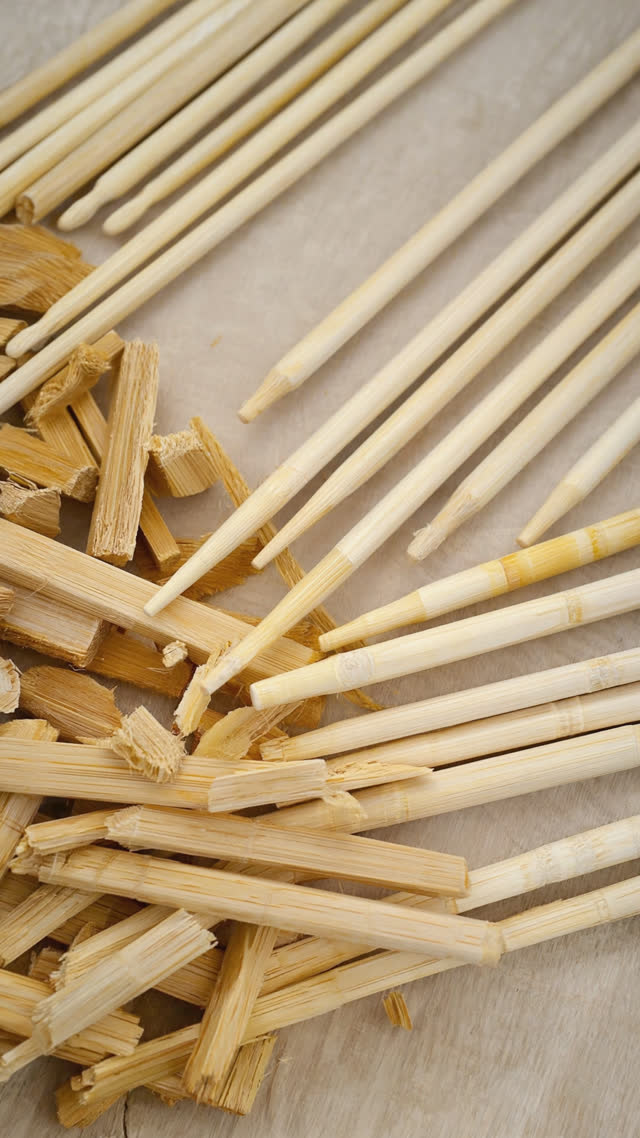
Chopsticks From Sake Barrels
The disposable chopsticks you snap apart were born from sake barrels.
In 1862, the monk Sugihara Soan in Yoshino, Nara saw fine cedar offcuts left over from sake-barrel making — too good to waste — and carved them into chopsticks. Waribashi began as recycling: the mottainai spirit in wooden form. Today about half of Japan's domestic waribashi still come from Nara.
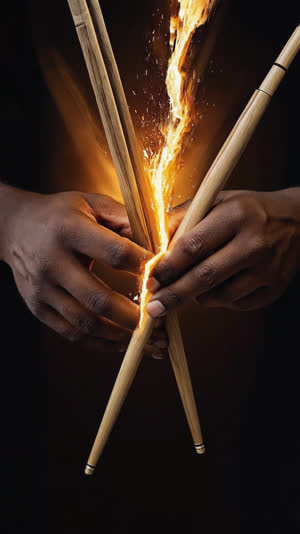
This snap has a story
This snap is older than it sounds.
The sound is the only part of the object anyone thinks about. What it marks is a pair made joined on purpose, so that the diner is the first person ever to open them.
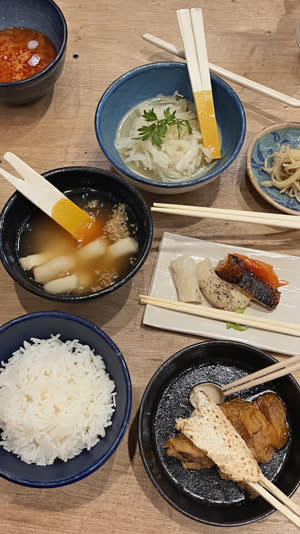
Waribashi
Waribashi — the disposable chopsticks split fresh before every casual meal.
Waru means to split, so the name describes the action rather than the object. That is a clue that the joint was the selling point: proof, before any packaging existed, that nobody had used them.
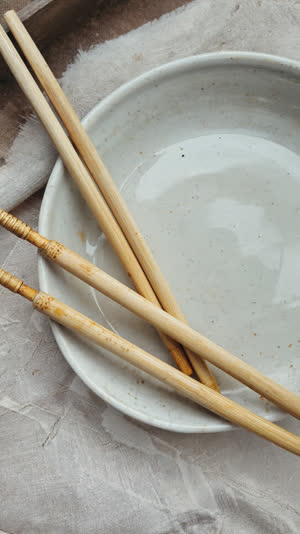
Used for minutes
Used once, tossed in minutes. Wasteful? The truth is opposite.
The charge of waste assumes the wood was cut for this. The origin says the reverse — the object was invented to use up material that had already been cut for something else.

1862, a monk in Yoshino
Eighteen sixty-two: a monk named Sugihara Soan, in Yoshino, Nara.
Yoshino is a cedar-growing district in Nara, and in that period its timber was going into sake barrels. A monk was in a position to notice what the barrel makers were throwing out.
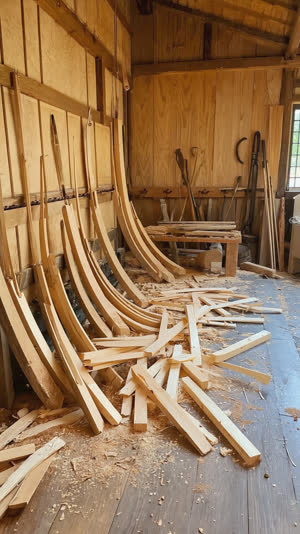
Sake-barrel offcuts
Sake-barrel makers left fine cedar offcuts — too good to burn.
Barrel staves are cut to a curve, so the waste comes off in straight, clear-grained strips. That is close to the shape a chopstick needs, which is why this by-product suggested this product.
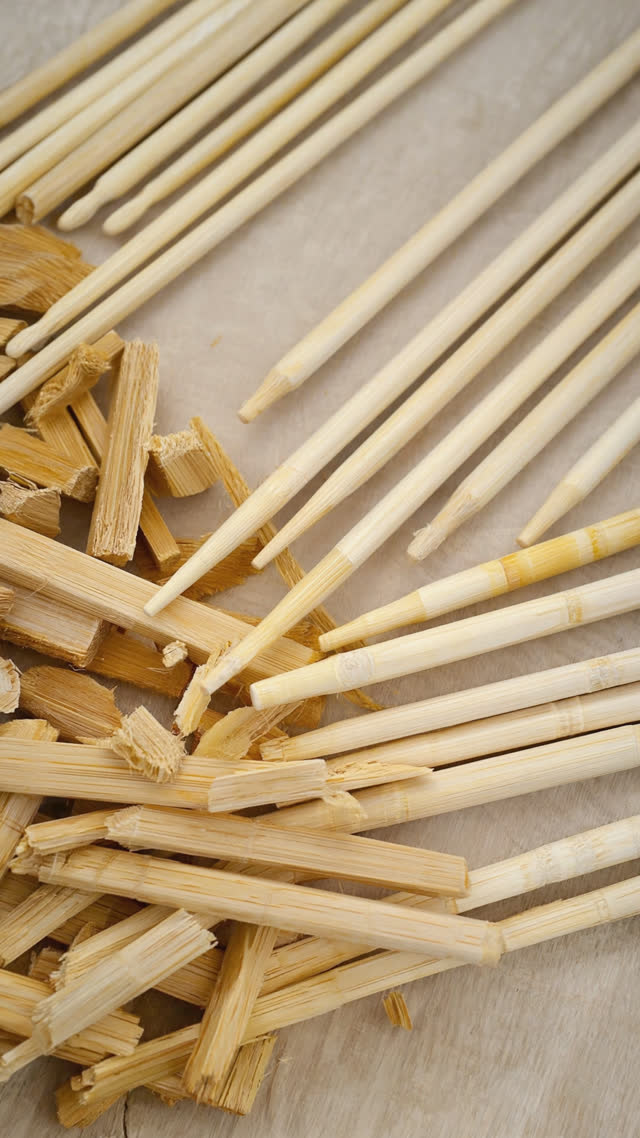
Waste became the product
He carved them into chopsticks. The scrap became the product.
The economics inverted at that moment. What had been a disposal problem for the cooper became a saleable good, and an industry grew on the back of another trade's leftovers.
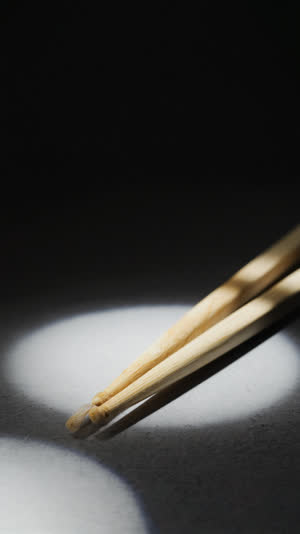
Mottainai, made visible
Mottainai — gratitude for the wood itself, made visible in cedar.
Mottainai is the sense that waste is regrettable, and here it is not a sentiment but a business model. The series thesis holds: the manner and the object both begin in gratitude for what the meal cost.
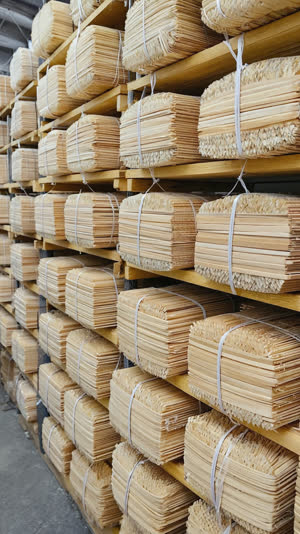
Half still made in Nara
Today, about half of Japan's waribashi still come from Nara.
That concentration is what remains of the origin. Domestic production stayed in the district that had the cedar and the skill, long after the barrels that started it stopped being the point.
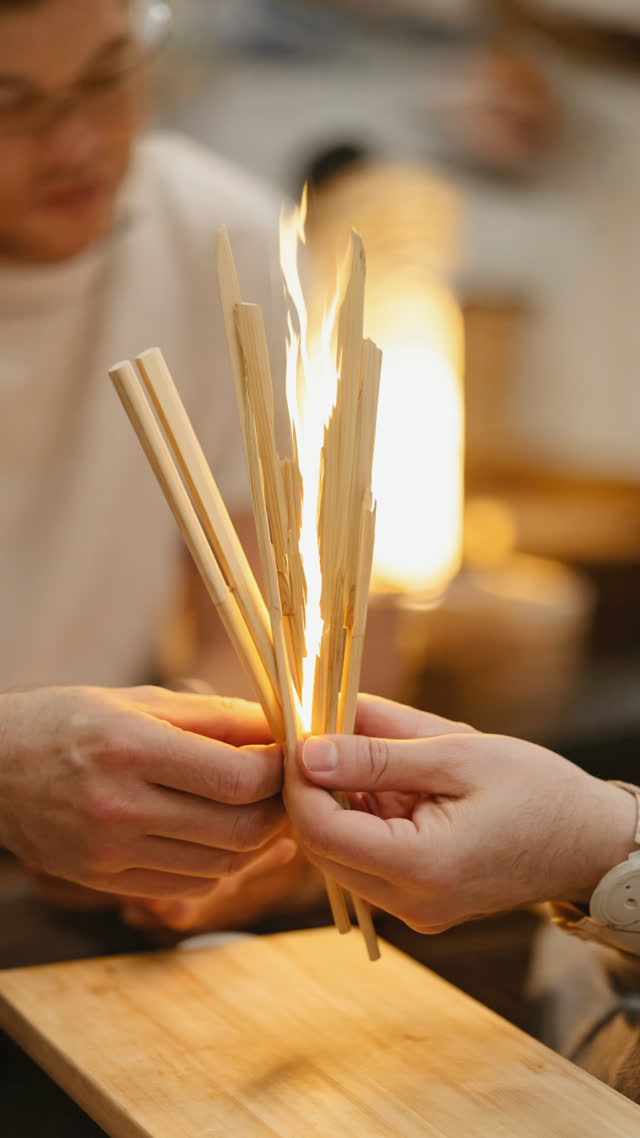
Snap and smell the cedar
Snap a cedar pair anywhere in Japan — smell it. That's Yoshino.
Cedar has a resinous smell that survives the splitting, and it is strongest at the fresh face. That is the only sensory trace left of the barrel yard the whole thing came out of.
The thread through Washoku
Japanese table manners are not etiquette. They are gratitude, made physical.
Next: the free wet towel nobody asks for — the oshibori.
Japanese terms in this story
Sources — primary only
- Yoshino Chopstick Manufacturing Cooperative
- Nara Prefecture
Original Japanese source note
文久2年(1862年)僧・杉原宗庵が吉野の酒樽材の余材から杉箸を考案・国産割り箸の約半数が奈良県産(吉野製箸工業協同組合・奈良県)