The short answer
It began as a gift for children. In 1912 a bathhouse called Kikai-yu in Kanda Sarugaku-cho, Tokyo, wanted kids to enjoy bath time and commissioned the Western-style painter Kawagoe Koshiro to decorate its wall; he painted Mount Fuji — the first sento mural ever — and bathhouses across Japan followed.
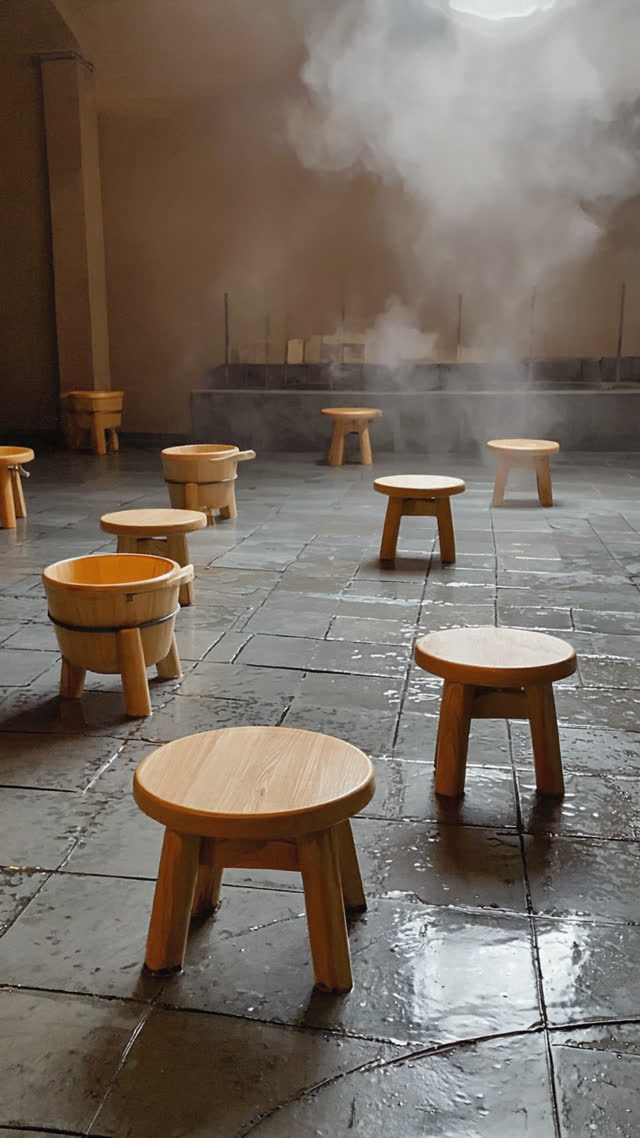
Why Mt. Fuji Is on the Wall
The Mount Fuji towering over Japanese bathhouse tubs began as a gift for children.
In 1912, a bathhouse called Kikai-yu in Kanda Sarugaku-cho, Tokyo, wanted kids to enjoy bath time, so it commissioned Western-style painter Kawagoe Koshiro to decorate its wall. He painted Mount Fuji — the first sento mural ever — and bathhouses across Japan followed, creating a tradition that survives to this day.
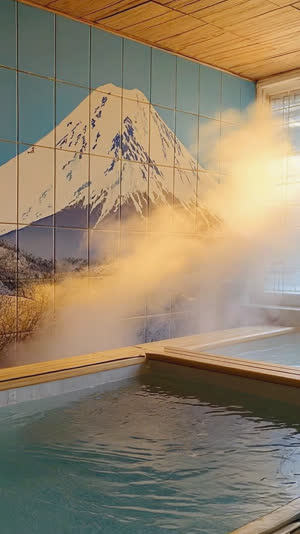
Why Fuji above the tub?
That mountain above the bathtub? It began with children.
The obvious guesses are wrong: it is not religious, not a regional boast, and not there to make the room look larger. The reason recorded on the plaque is simpler and smaller than any of them.
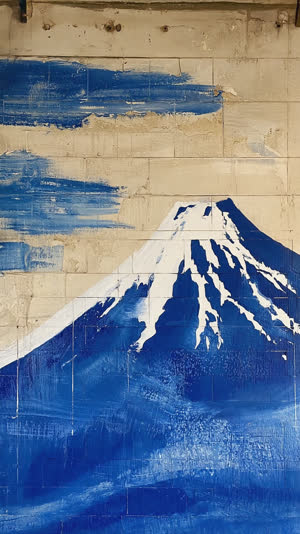
Fuji fills the wall
Nearly every classic Tokyo sento has Mount Fuji on the wall.
The consistency is what makes it feel ancient. A motif repeated across thousands of buildings reads as tradition, even when its first appearance can be dated precisely.
It began in 1912
The very first one appeared in nineteen twelve.
That is recent enough to have a named painter, a named bathhouse and a named district. Most things that look this traditional in Japan cannot be pinned to a single year.
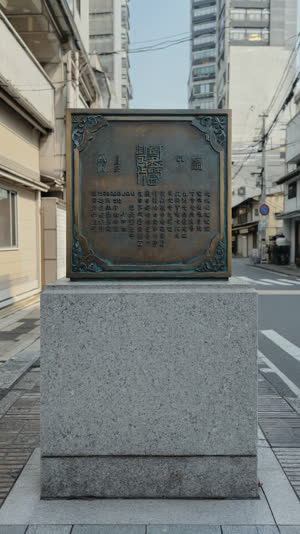
Kikai-yu, Kanda, Tokyo
The place: Kikai-yu, a bathhouse in Kanda Sarugaku-cho, Tokyo.
Kanda is central Tokyo, and the site carries a commemorative plaque. The specificity is why this story can be told at all — one building, one commission, one wall.
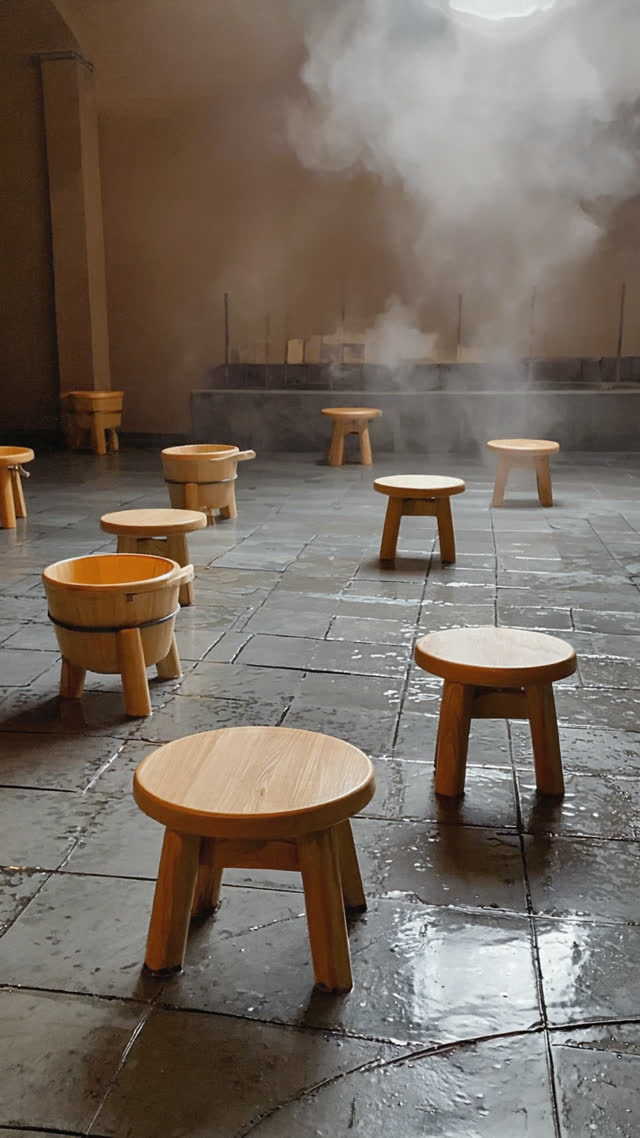
Made for children
Its owner wanted children to actually enjoy bath time.
The motive is worth holding onto: this was a customer-service decision about a difficult audience. Nothing about the first mural was intended as heritage.
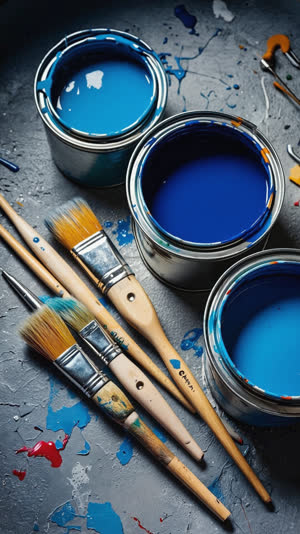
Painter Kawagoe Koshiro
So he hired Western-style painter Kawagoe Koshiro for the wall.
The commission went to a painter working in the Western style rather than to a traditional decorator, which is a clue that the wall was treated as decoration for children rather than as anything ceremonial.
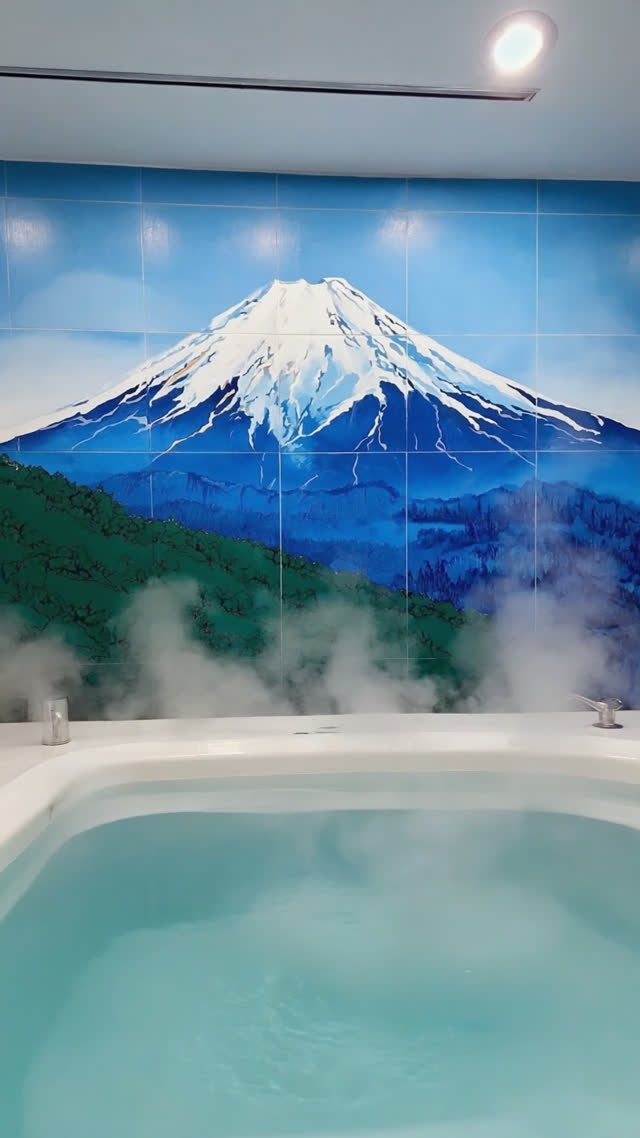
He painted Mt. Fuji
Kawagoe painted Mount Fuji — and the children loved it.
Fuji suits the wall it was painted on: instantly recognizable, wide enough to fill a long room, and something to look at from a tub. Whatever the reason for choosing it, the shape fits the space.
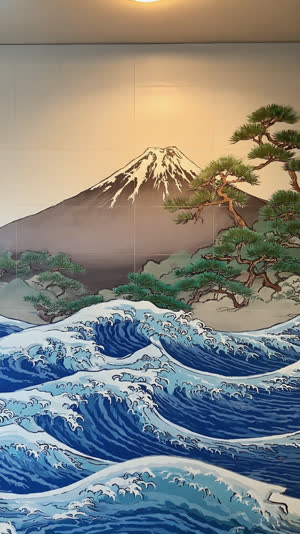
The idea spread everywhere
Other bathhouses copied the idea, and a tradition was born.
Copying is how this became a convention rather than a curiosity. Within a generation the mural was expected, which is why its absence in a modern bathhouse now reads as a decision.
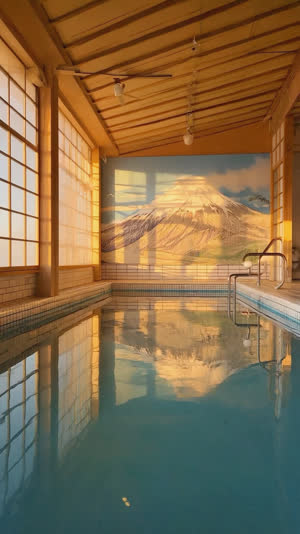
100 years and counting
Over a century later, Fuji still rises over the bath.
The habit outlived the reason for it. Children were the original audience, and the mountain is still there for everyone who was not.
The thread through Sento
Japan built its neighborhoods in the bath.
And who watches over this whole place? Meet the bandai, next.
Japanese terms in this story
Sources — primary only
- Chiyoda City
- Tokyo
Original Japanese source note
千代田区公式プレートで大正元年(1912年)神田猿楽町のキカイ湯が子ども向けに洋画家・川越広四郎へ描かせたのが銭湯初のペンキ絵と確認(千代田区)