The short answer
At the agarikamachi — a single raised step that has marked the border between outside and inside in Japanese homes for centuries. Removing shoes is among the first customs JNTO's official travel guidance notes for visitors, and temples and some restaurants keep the same quiet line.
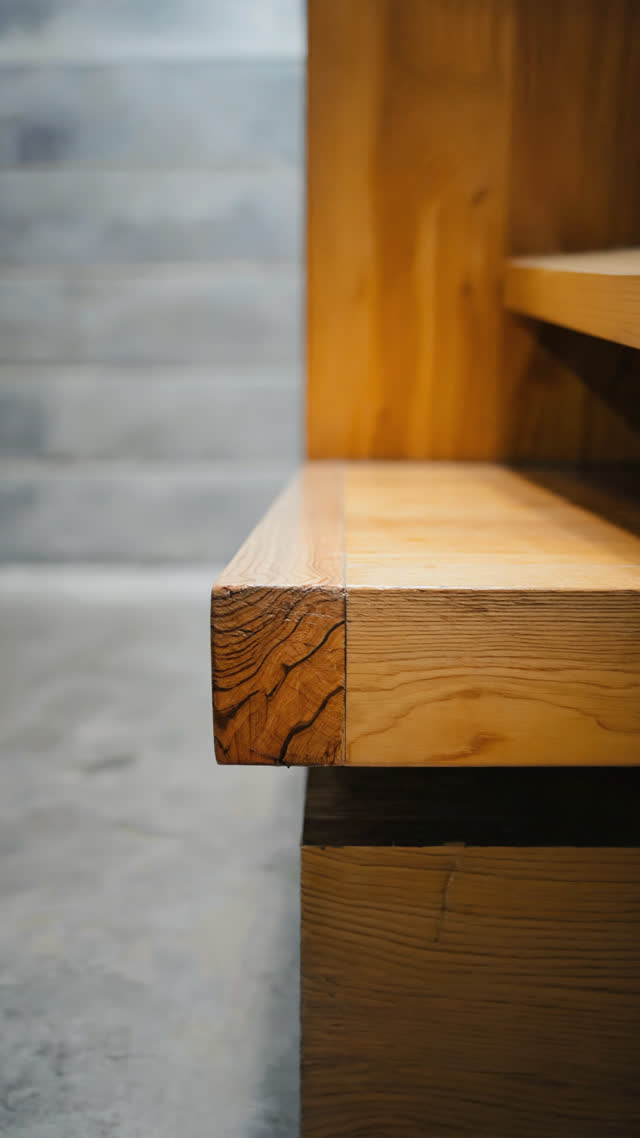
Why Shoes Stop at One Step
One wooden step at the ryokan entrance — and every pair of shoes stops there.
Removing shoes is among the first customs JNTO's official travel guidance notes for visitors. The reason is the agarikamachi — a single raised step that has marked the border between outside and inside in Japanese homes for centuries. Temples and some restaurants keep the same quiet line.
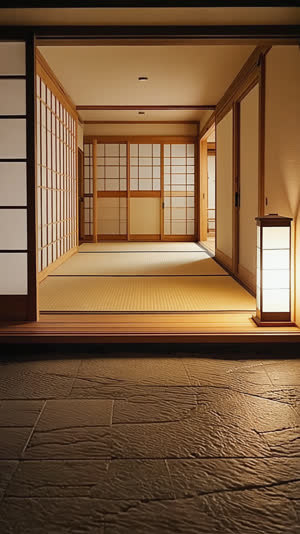
One step in. Everyone froze
One step in — everyone froze.
Crossing it with shoes on is the single most visible mistake a visitor can make indoors. The reaction is immediate because the line is not a preference but a boundary.
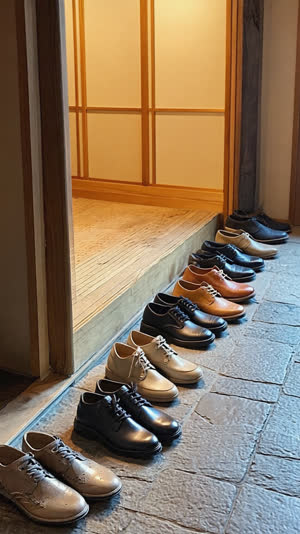
Shoes off at the ryokan
At a ryokan entrance, shoes come off. Every time.
A ryokan is a traditional inn, and its entrance is built for this: a lowered floor, room to turn the shoes, slippers waiting. The architecture says what to do before anyone speaks.
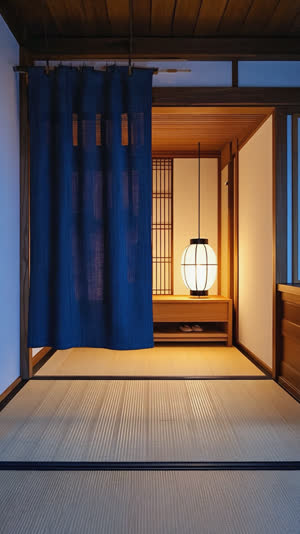
In the official travel guide
JNTO, Japan's tourism office, lists it in its official guidance.
It appears among the first things visitors are told, ahead of much else. That placement is a fair measure of how often it comes up and how much it matters when it goes wrong.
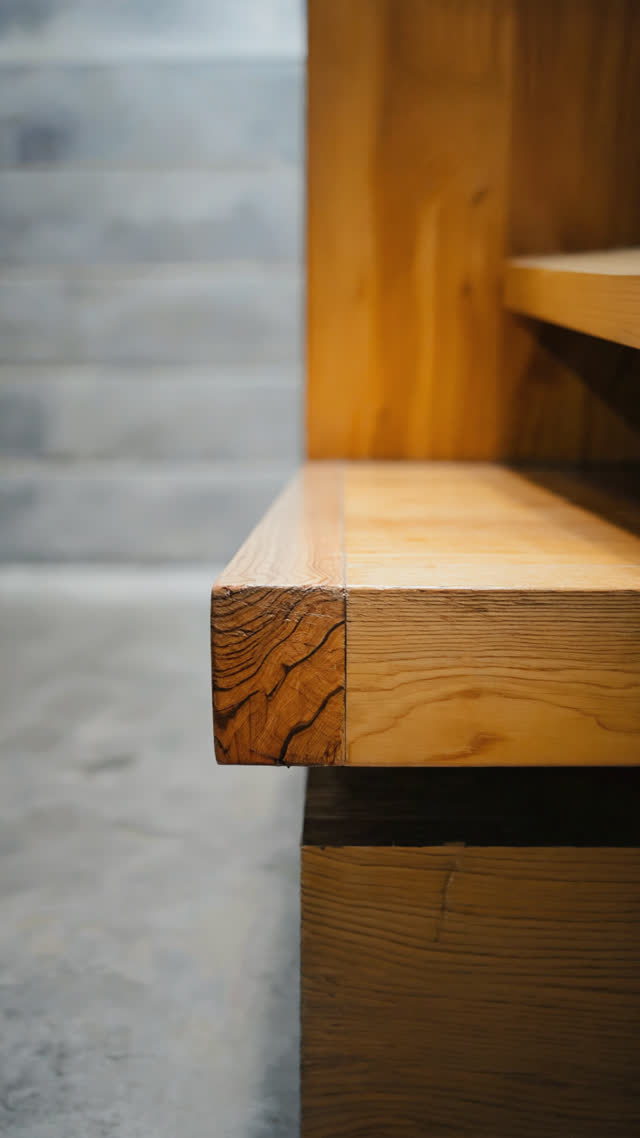
The agarikamachi step
The reason is one piece of wood: the agarikamachi.
The agarikamachi is the raised beam at the edge of the entrance floor. It is a piece of joinery with a job: to make the boundary visible, and to give the foot somewhere to change state.
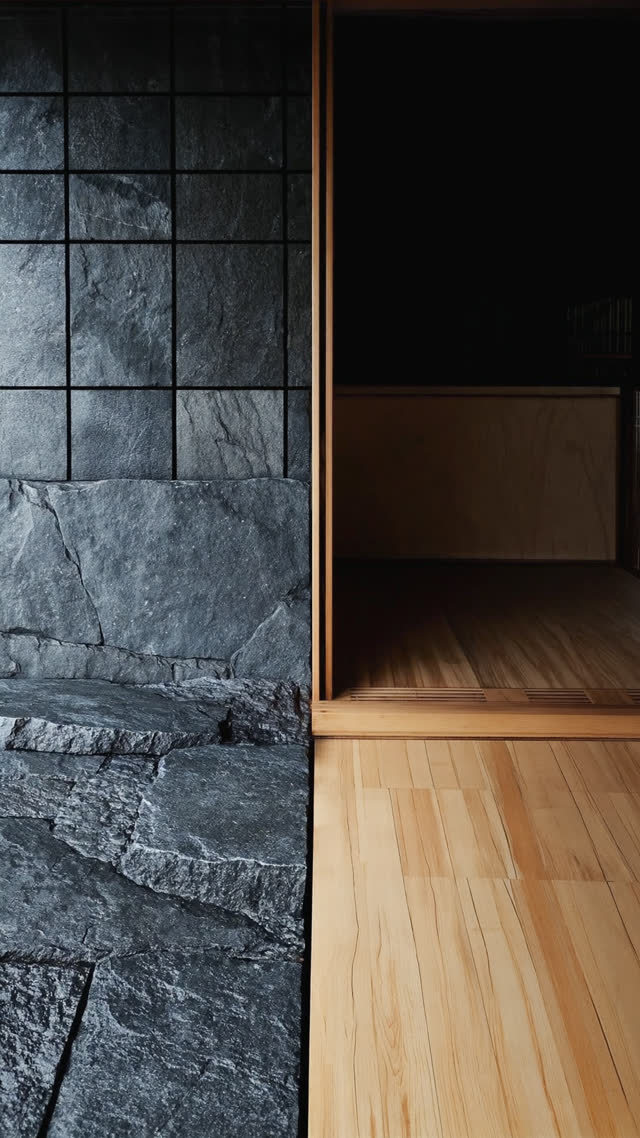
The border of inside and outside
It isn't a step. It's the border between outside and inside.
Inside and outside here are categories, not just locations. Everything on one side is street — dust, weather, other people's shoes — and the step is where that stops being allowed.
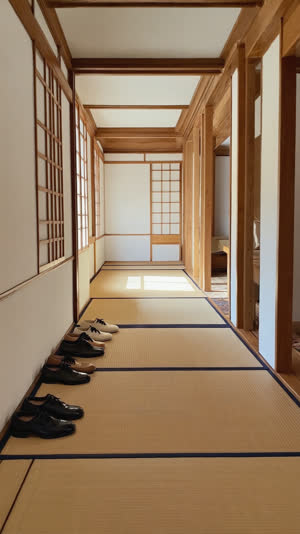
A line strangers agree on
No sign, no guard — just strangers agreeing where the street ends.
The series thesis, built into the building. The boundary needs no enforcement because it is legible: anyone can see the level change and see where the shoes have been left.
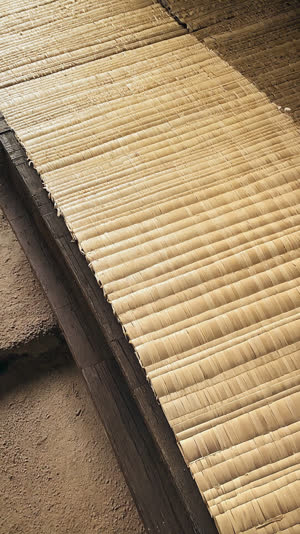
Dust below, clean above
Below the step: dust and streets. Above: clean floors, quiet feet.
The practical consequence is that floors indoors are sat on and slept on. Removing shoes is not symbolic hygiene; it is what makes a floor usable as furniture.
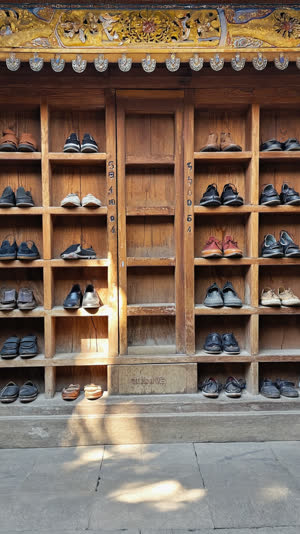
Temples and restaurants too
Temples and some restaurants keep the same invisible line.
The rule travels with the floor type rather than with the building's purpose. Where you find tatami or a raised wooden platform, expect the boundary, sign or no sign.
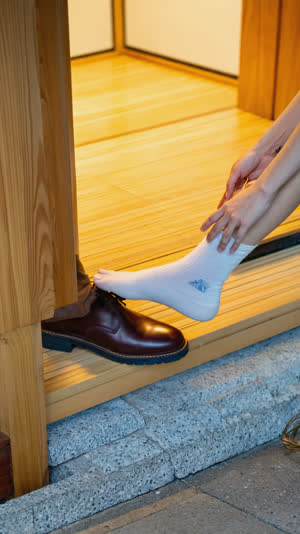
Try it on day one
Day one in Japan: pause at the step, slip off smoothly.
Shoes that come off without hands make this effortless, which is why slip-ons are the practical choice for a trip here. The pause is short; recovering from getting it wrong is not.
The thread through Manners
Japan's rules are not enforced. They are agreed.
Next: tattoos and onsen — the closed door, and the way in.
Japanese terms in this story
Sources — primary only
Original Japanese source note
JNTO公式が旅館の玄関で靴を脱ぐ習慣を明記・上がり框(あがりかまち)が内と外の境界という住文化の解説(JNTO・nippon.com)・寺院や一部飲食店でも脱靴