How does a Japanese gardener decide where a stone goes?
Place the stone where it asks to be
The short answer
The Sakuteiki, written in the 11th century, instructs the gardener to follow the request of the stone — not to command or conquer it. Each rock has a face, a posture and a direction, and the gardener's job is to find it, then set the stone half-buried as if it had always stood there.
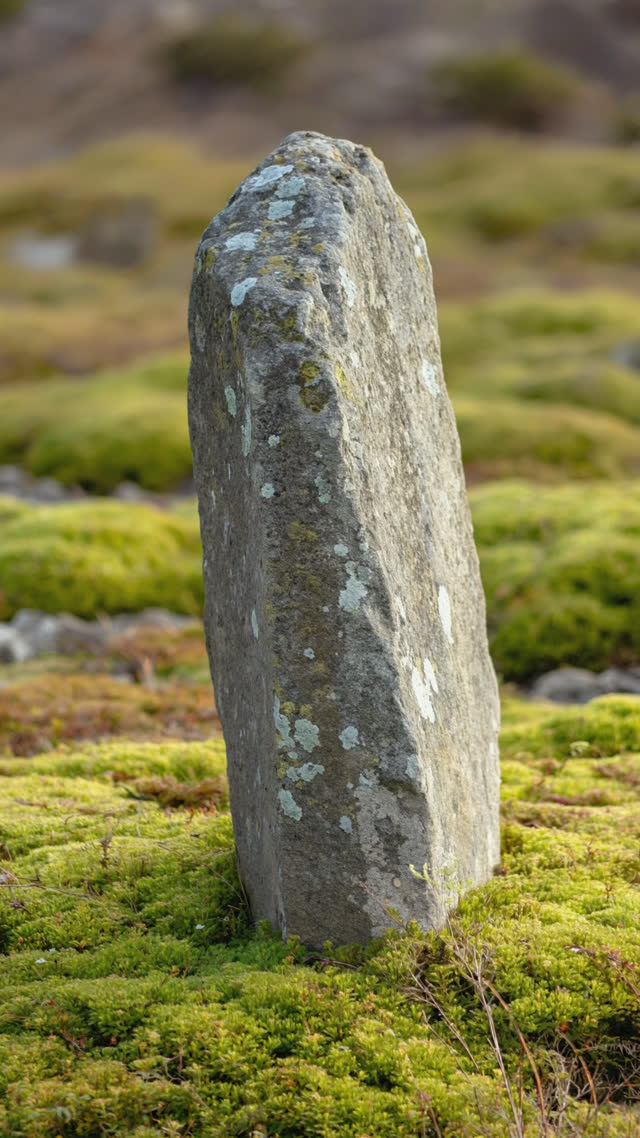
Where the Stone Wants to Stand
Stone-setting is the skeleton of every Japanese garden — and its oldest manual gives a strange instruction.
The Sakuteiki, written in the 11th century, says: follow the request of the stone. Not command. Not conquer. Listen. Each rock has a face, a posture, a direction, and the gardener's job is to find it — then set the stone half-buried, as if it had always stood there.
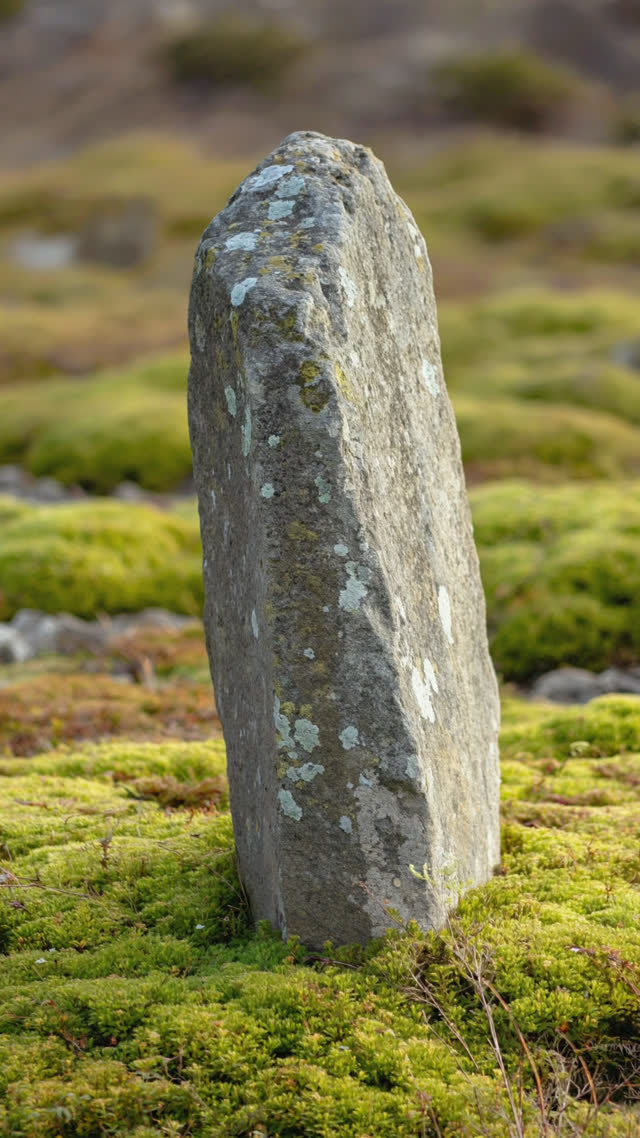
First, ask the stone
First, ask the stone.
The instruction sounds mystical and is meant practically. A stone has one orientation in which it looks settled, and finding that is a decision made before any digging starts.
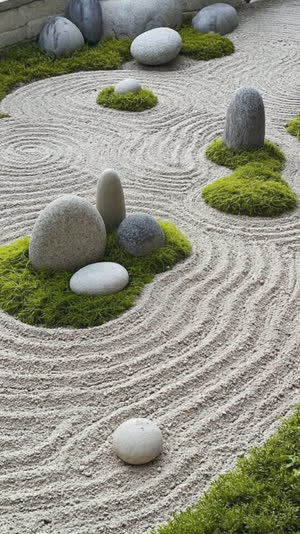
Stones: the garden's skeleton
Stone-setting is the skeleton of the garden.
Stones are placed first and cannot be adjusted later without dismantling what came after. Everything else in the garden is arranged around a structure fixed at the beginning.
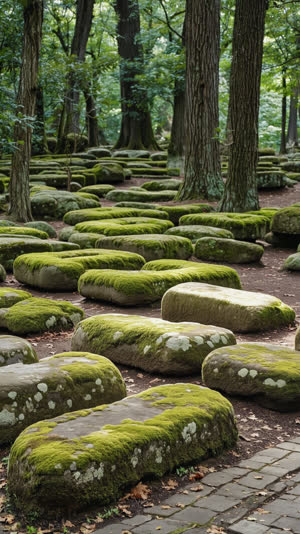
An 11th-century manual gives one rule
The Sakuteiki, an eleventh-century manual, gives one rule.
The same text the first part of this series introduced. It contains a great deal of practical instruction, and this is the line that has stayed quotable for a thousand years.
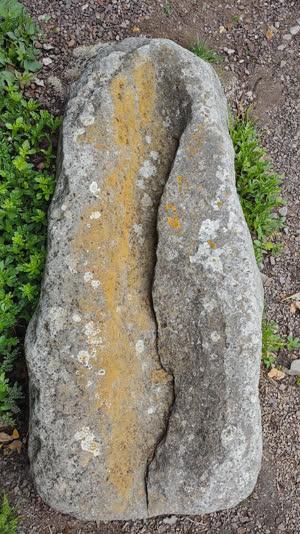
"Follow the request of the stone"
Follow the request of the stone.
The phrase is quoted directly from the Sakuteiki and is documented in Japanese landscape scholarship. It is not a modern reading of the text but the text itself.
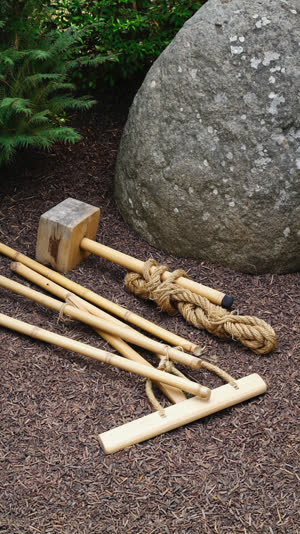
Not command. Listen.
Not command. Not conquer. Listen.
The verbs matter. A tradition that treats stone as raw material to be cut into shape produces a different garden from one that treats it as something to be positioned and obeyed.
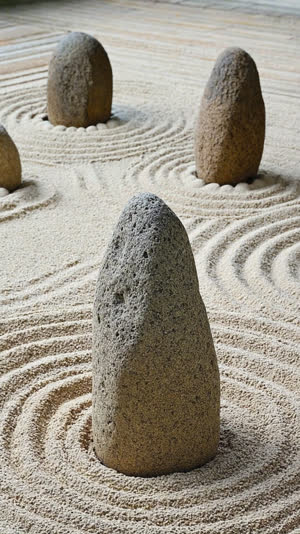
Every rock has a face, a posture, a direction
Each rock has a face, a posture, a direction.
Those three properties are what the gardener is reading. A rock has a weathered side, a way it wants to lean and an axis along which it reads as natural — none of it designed.
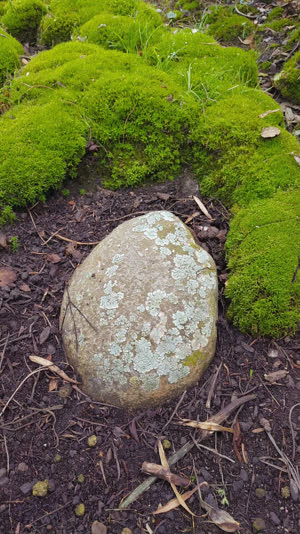
Set it half-buried
Find it. Then set the stone half-buried —
Half-buried is the technical instruction. A rock resting on the surface reads as delivered; a rock set into the ground reads as exposed by erosion, which is the effect being sought.
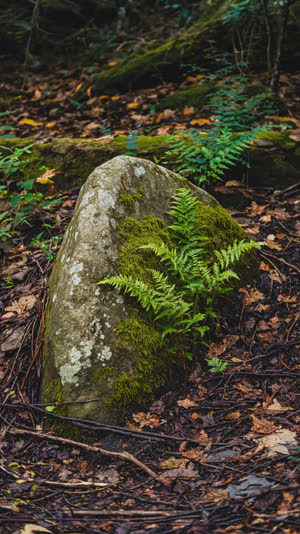
As if it always stood there
— as if it had always stood there.
This is the standard the whole craft is measured against. Success is the absence of evidence of work, which is an unusual definition for a discipline that takes a lifetime to learn.
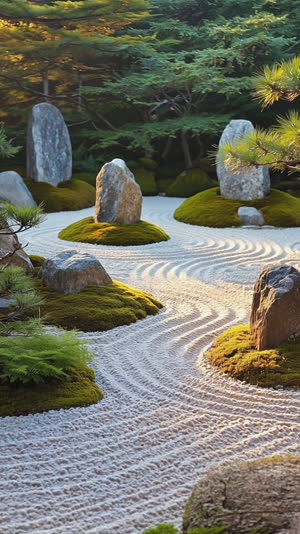
Gardens are read because stones were heard
A garden can be read because its stones were listened to.
The series thesis, in its source text. Every technique here depends on the material appearing to have arranged itself, and that begins with the first stone that was placed.
The thread through Gardens
Japan does not impose a garden on nature. It compresses nature until you can read it.
Next, the final part: drink tea inside a masterpiece.
Japanese terms in this story
Sources — primary only
Original Japanese source note
『作庭記』に「その石の乞はんにしたがひて立つべきなり」の一節(日本造園学会誌87巻・日本庭園学会誌2014年論文/J-STAGE)。自然に従い征服しない作庭思想の根拠として学術的に定着