Why do Japanese gardeners tie ropes to pine trees?
They tie the pines before snow falls
The short answer
It is called yukitsuri: cones of rope tied over the pines to shield their branches from heavy wet snow. At Kenrokuen in Kanazawa it begins every November 1st with the great Karasaki Pine, and more than 800 spots across the garden are roped by some 500 workers in total.
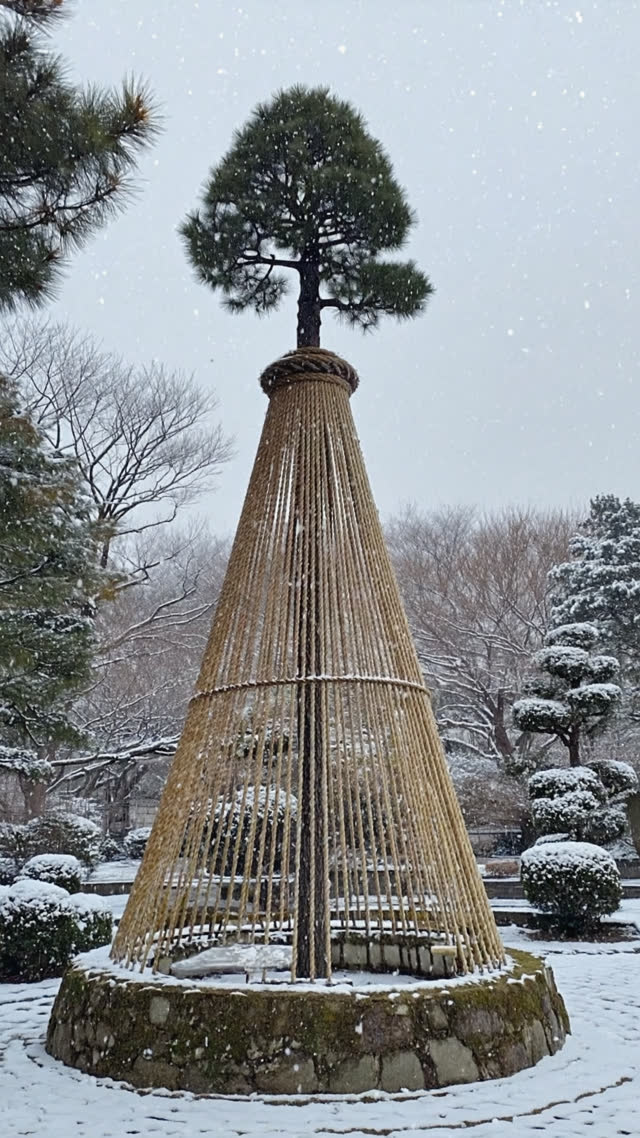
Yukitsuri: Ropes Before the Snow
Every November 1st at Kenrokuen garden in Kanazawa, the gardeners begin yukitsuri — tying cones of rope over the pines to shield their branches from heavy wet snow.
The first tree is always the great Karasaki Pine, grown from seeds a feudal lord had sent from Lake Biwa. Across the garden, more than 800 spots are roped by some 500 workers in total. It protects the trees — and it is beautiful. Both are the job.
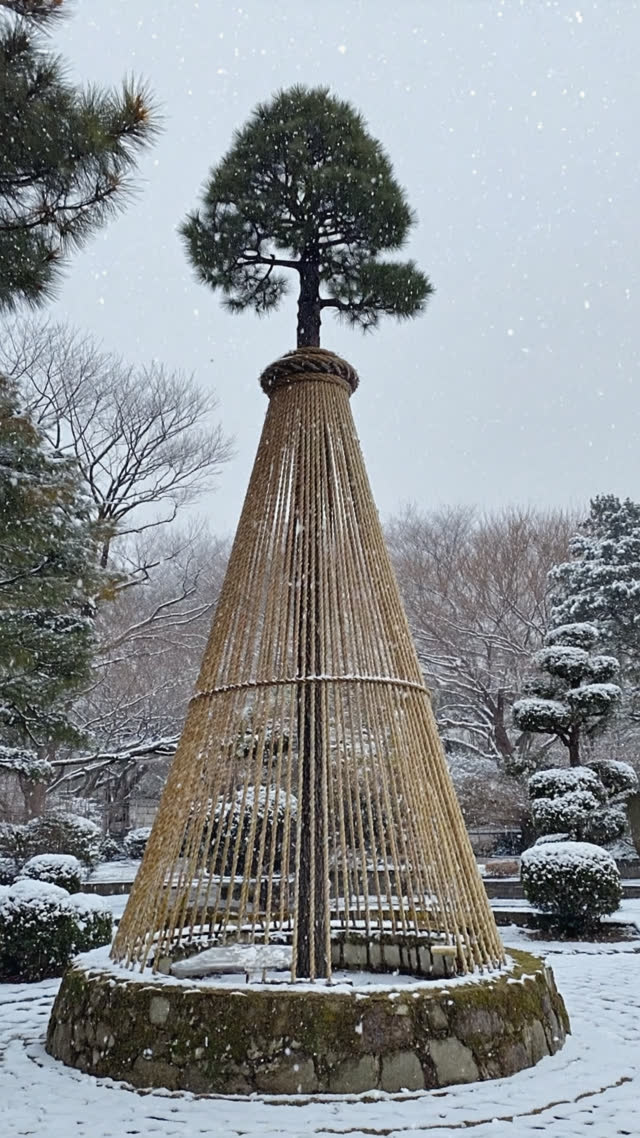
Winter is coming. Tie the trees.
Winter is coming. Tie the trees.
This is preventive work, done before there is any snow to see. The whole operation is a bet on weather that has not arrived yet.
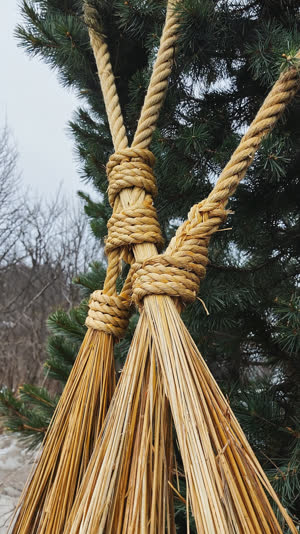
Yukitsuri: ropes against heavy snow
Yukitsuri: ropes that shield pines from heavy snow.
The problem is not cold but weight. Wet snow accumulating on a horizontal pine branch will break it, and a mature branch cannot be replaced inside a gardener's working life.
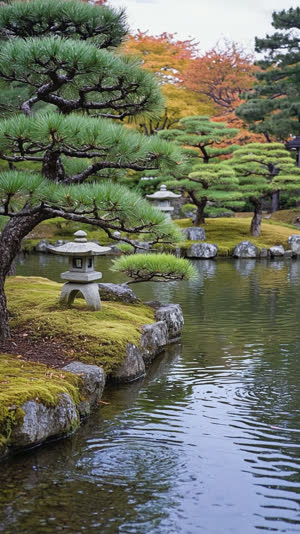
Kenrokuen: it begins every November 1st
Kenrokuen, Kanazawa. Every November 1st, it begins.
A fixed calendar date rather than a weather forecast. Kanazawa's snow is heavy and reliable enough that the garden does not wait to see whether this year will need it.
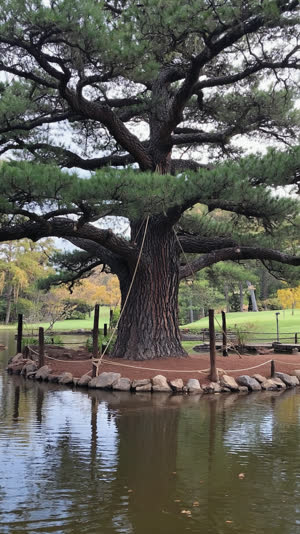
First: the Karasaki Pine, from Lake Biwa seeds
First tree: the Karasaki Pine, grown from Lake Biwa seeds.
The order is as fixed as the date. Starting with this particular pine every year makes the work a ceremony as much as a task, and it identifies which tree the garden considers principal.
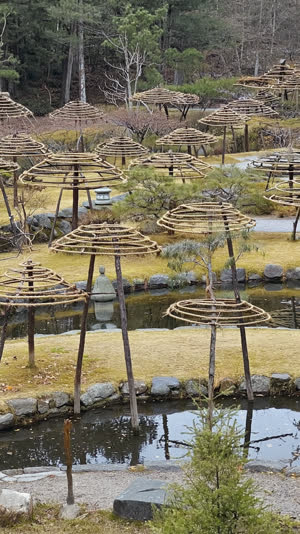
800+ spots, some 500 workers
More than 800 spots. Some 500 workers in total.
Those two figures describe a construction project rather than gardening, and the whole structure comes down in spring so that it can be built again the next November.
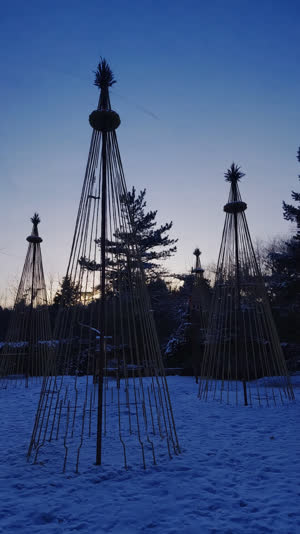
Cones of rope rise like tents
Cones of rope rise like tents over the garden.
The shape is functional: a pole raised above the tree and ropes fanning down to the branch tips, so the load is carried upward instead of pressing down.
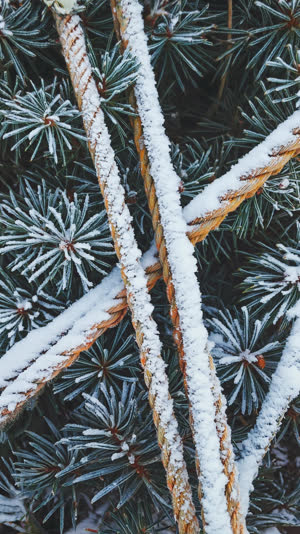
It protects. It is beautiful.
It protects. And it is beautiful. Both are the job.
This is the sentence to hold onto about Japanese gardening. The ropes could have been done plainly; they are arranged instead, because the winter garden is also on display.
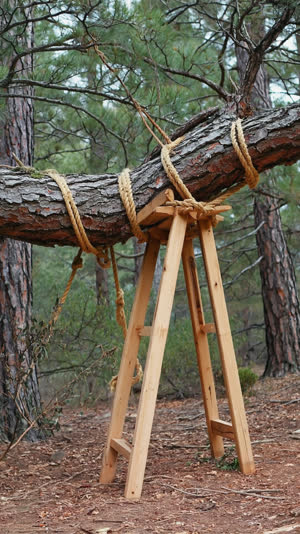
Helping trees grow old gracefully
The gardener's craft: helping trees grow old gracefully.
The verb is helping rather than shaping. A pine here is expected to outlive the person tending it, which turns the work from design into custody.
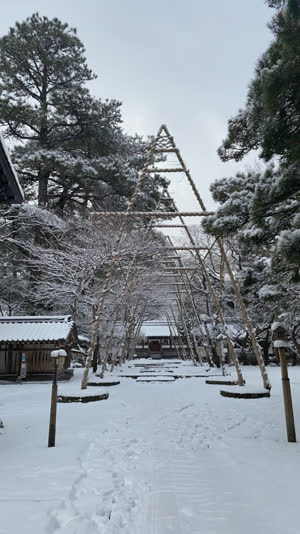
In winter, read the garden by its ropes
In winter, you read the garden by its ropes.
The series thesis, in a season with nothing green in it. When the planting has withdrawn, what is left to read is the work — and the ropes make the care visible for the first time.
The thread through Gardens
Japan does not impose a garden on nature. It compresses nature until you can read it.
Next: where does a stone want to stand?
Japanese terms in this story
Sources — primary only
- City of Kanazawa
- Kanazawa tourism association
Original Japanese source note
兼六園(金沢市)の雪吊り=毎年11月1日に唐崎松(13代藩主前田斉泰が琵琶湖畔から種を取り寄せた黒松)から開始、園内800カ所超・延べ約500人で施工(金沢市公式・金沢市観光協会)