Why is mold grown on katsuobushi on purpose?
Why do they grow mold on katsuobushi?
The short answer
Katsuobushi is skipjack tuna, simmered, boned and smoked over wood for weeks, then deliberately cultured with mold. For honkarebushi, mold-culturing with Aspergillus glaucus and its relatives and sun-drying are repeated four or more times, leaving a block said to be one of the hardest foods in the world.
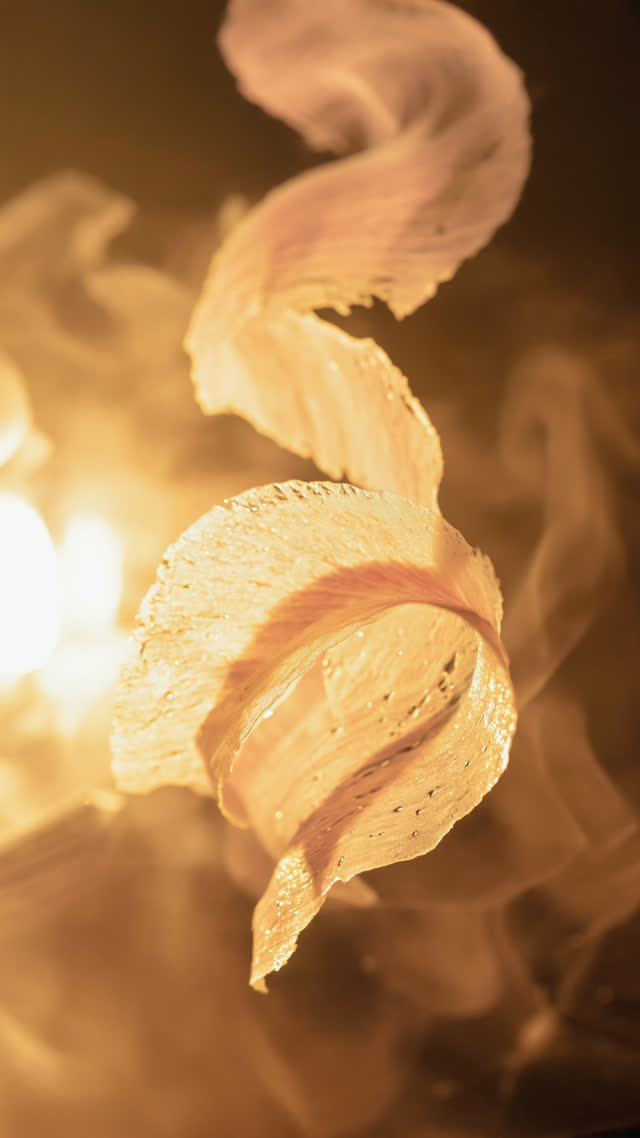
Katsuobushi: Mold, 4 Times
It looks like a piece of driftwood — and it is the heart of Japanese soup stock.
Katsuobushi is skipjack tuna, simmered, boned and smoked over wood for weeks, then deliberately cultured with mold. For honkarebushi, mold-culturing with Aspergillus glaucus and its relatives and sun-drying are repeated four or more times, leaving a block said to be one of the hardest foods in the world.
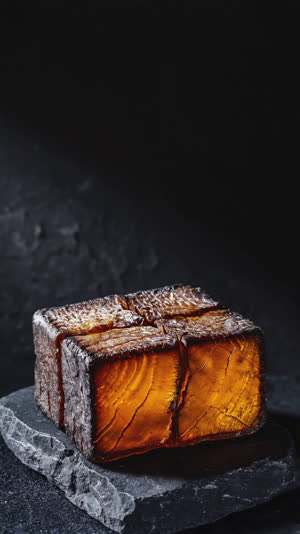
Not wood. It's fish
This is not wood. It's fish.
The block is dry enough to knock against a table and hear it ring. Nothing about the object announces that it began as a fish, which is exactly what weeks of smoking and drying are for.
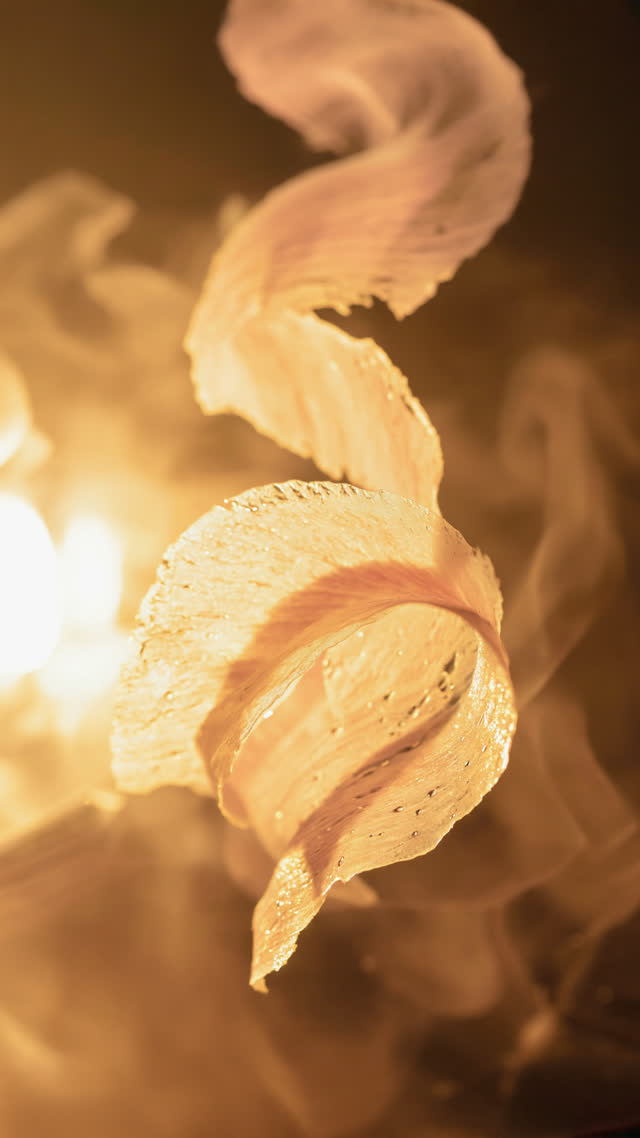
Shaved thin, it dances
Shaved thin, katsuobushi dances in hot dashi.
The shavings are thin enough to be translucent, and they curl as hot water hits them. That movement is the cue in a Japanese kitchen that stock is being made rather than merely heated.
The soul of dashi
That broth is the base of Japanese cooking.
Dashi sits underneath miso soup, simmered dishes, noodle broth and dipping sauces. It is not a flavor you notice on its own so much as the reason the other flavors hold together.
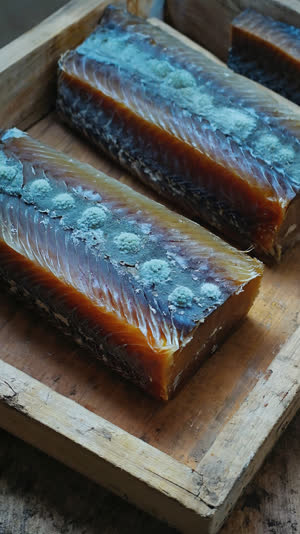
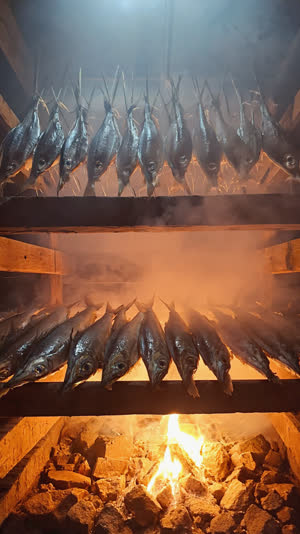
Simmered, boned, smoked
The fish is simmered, boned, then smoked for weeks.
Each step removes water. Simmering sets the flesh, boning takes out what would spoil, and weeks over wood smoke drive the moisture down far enough that mold can be introduced safely.
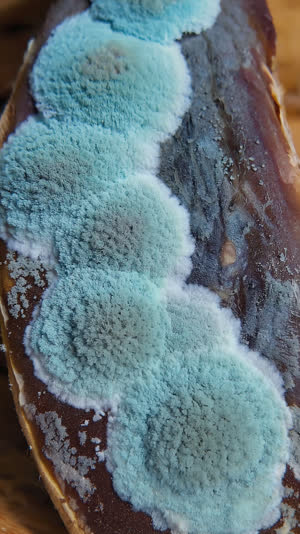
Mold, grown on purpose
Then the makers do what Japan always does: they hire the mold.
By this point the fish is already preserved. The mold is not added to keep it edible but to change it — the same move as koji, applied to protein instead of starch.
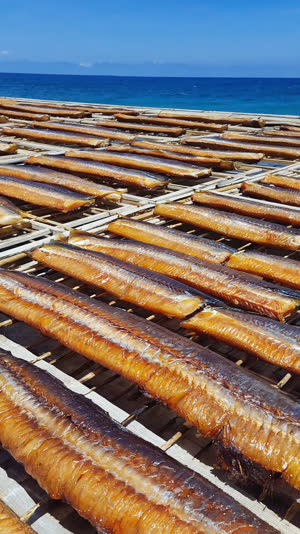
Mold pulls the water out
Aspergillus glaucus and its relatives pull the moisture out.
This is a relative of the brewing mold put to a different task. Here what matters is that it keeps drawing water out after the smoking has already stopped.
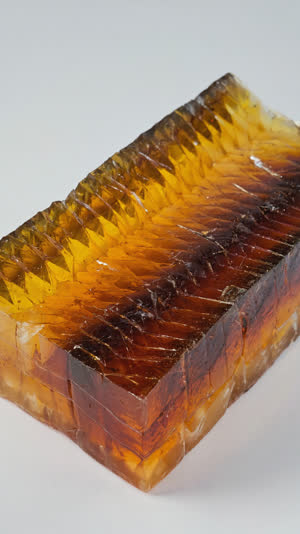
Four rounds of mold
Mold, then sun-drying — repeated four times or more.
That is the minimum for the honkarebushi grade, not an average. Each cycle takes the block further from a food that spoils and closer to one that has to be shaved with a blade.
Said to be the hardest
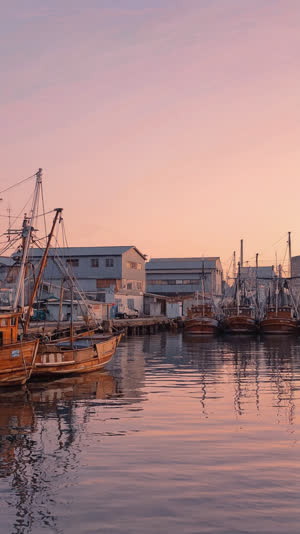
The result is said to be among the world's hardest foods.
The hedge is deliberate. The hardness is widely repeated but not something we could trace to a measurement, so the claim is left as it is usually stated rather than presented as fact.
Makurazaki, Ibusuki, Yaizu
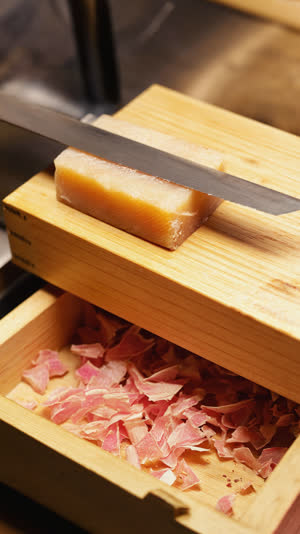
Makurazaki, Ibusuki, Yaizu — three towns still make it.
The first two are in Kagoshima at the southern end of the country; the third is in Shizuoka, on the Pacific coast. All three are fishing ports, which is the condition the craft needs.
Shave one at Yamaju, Yaizu
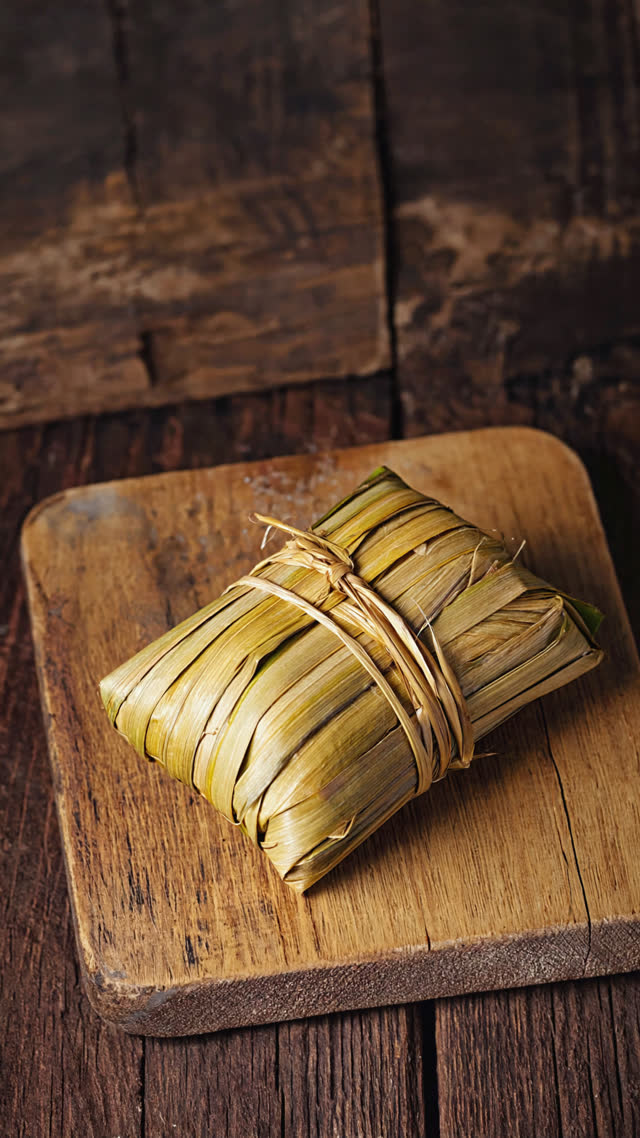
In Yaizu, Yamaju lets you shave one, 1,750 yen.
Shaving is done on a wooden box with a blade set into the lid, and it takes more force than it looks. Doing it once explains why pre-shaved packets exist at all.
The thread through Fermentation
Japan never fought the mold. It hired it.
Next: beans that fermented inside a bundle of straw.
Japanese terms in this story
Sources — primary only
- Yamaju
- katsuobushi producers in Kagoshima and Shizuoka
- Yaizu
Original Japanese source note
本枯節はカビ付け(Aspergillus glaucus等)と天日干しを4回以上繰り返す製法・産地は鹿児島県枕崎/指宿・静岡県焼津・硬さはモース硬度7〜8級と言われる(ギネス記録ではない)・体験:焼津「やまじゅう」削り体験(予約制1750円)